


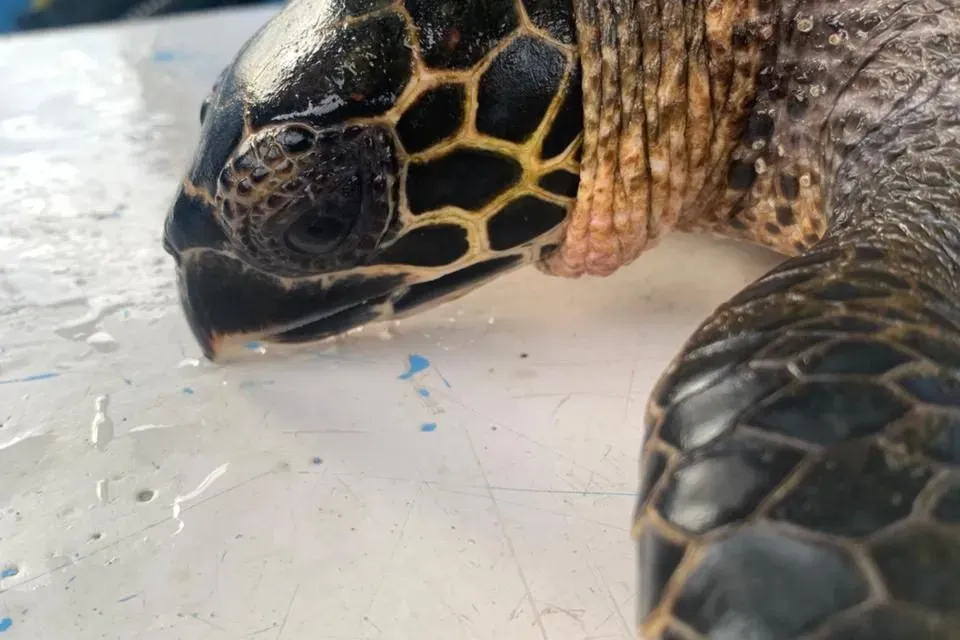
Panama’s Ministry of Environment confirmed that Coiba National Park has become a vital research and feeding ground for the critically endangered hawksbill sea turtle. Over twelve years of continuous monitoring on the island, a UNESCO World Heritage site, is now providing the scientific data desperately needed for regional conservation. The program has registered 887 individual turtles, with 106 processed during a major field operation this February.
The long-term study positions the protected marine area as a strategic sanctuary for the Eastern Tropical Pacific population. Historically, a severe lack of information hampered effective protection efforts for Eretmochelys imbricata across its range. The data collected in Panama is changing that dynamic by identifying population trends and the park’s specific ecological role.
Minister of Environment officials emphasized the project’s regional importance.
“The information generated during these 12 years has allowed us to identify population trends and better understand the ecological role the park plays in the Eastern Pacific,” a ministry statement said. [Translated from Spanish]
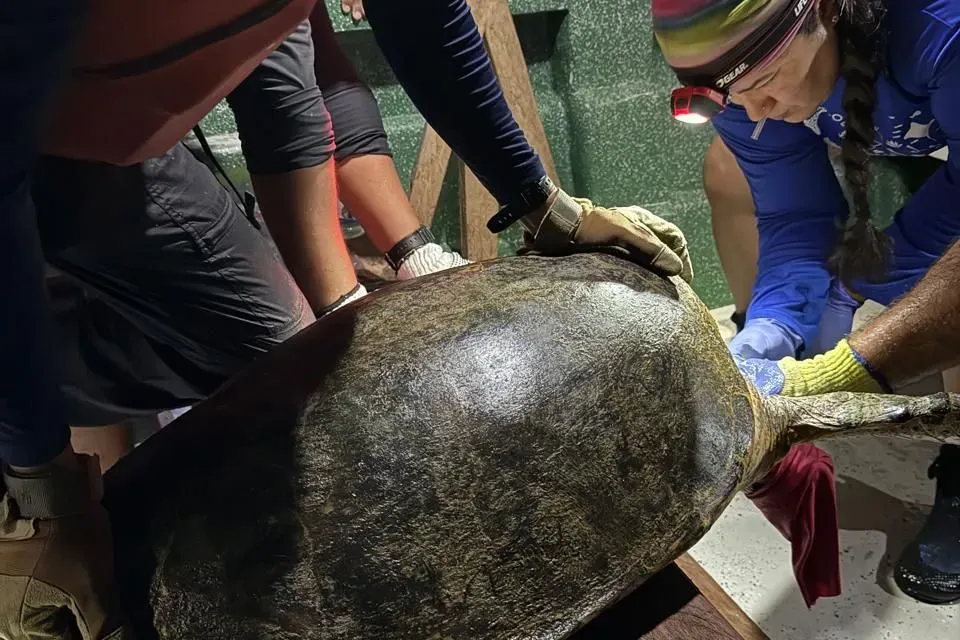
This recent monitoring session in early February 2026 brought together national and international biologists, park rangers, and veterinarians. Their work directly supports management decisions. The collaborative effort involves partners like the Campamento Tortuguero Mayto, the National Oceanic and Atmospheric Administration, and the Eastern Pacific Hawksbill Initiative (ICAPO).
International Cooperation Fuels Conservation Breakthroughs
One of the most significant findings proves the park’s international value. Researchers have confirmed that hawksbill turtles which nest in other nations use Coiba National Park as a key feeding area. This discovery underscores the necessity for cross-border conservation strategies to protect the species throughout its entire life cycle.
Articulated work between scientists and allied organizations has been fundamental. They face substantial challenges but execute concrete protective actions. The partnership’s success makes it one of the most effective monitoring projects for the species in the entire region.
With backing from the Mexican organization Gicoff A.C., researchers are now conducting the first-ever study on the health status of hawksbills within the Panamanian protected area. This new layer of data will offer a more complete picture of the threats these animals face in their marine habitat.
Every piece of information strengthens the scientific foundation. It guides where and how to focus limited conservation resources for maximum impact. The steady accumulation of knowledge over a decade is turning hope into actionable strategy.
A Model for Marine Protection
The ongoing effort at Coiba demonstrates how sustained, science-led initiatives can fill critical knowledge gaps. Protecting a migratory species like the hawksbill sea turtle requires understanding its movements and habitat use. Panama’s program provides a model for other nations in the Eastern Pacific.
Minister of Environment staff manage the population monitoring. They call the park a true sanctuary. The area’s health is crucial for the survival of a species that plays an important role in marine ecosystems, such as maintaining the health of coral reefs.
Panama continues to advance its broader environmental commitments. The country recently launched another season for turtle conservation efforts at a different parque nacional. These parallel projects highlight a national priority placed on marine stewardship.
The 887 turtles recorded so far represent more than just a number. Each documented individual contributes to a story of resilience and offers a clearer path toward preventing extinction. Scientists believe the work at Coiba is just beginning to reveal its full importance for regional biodiversity.