


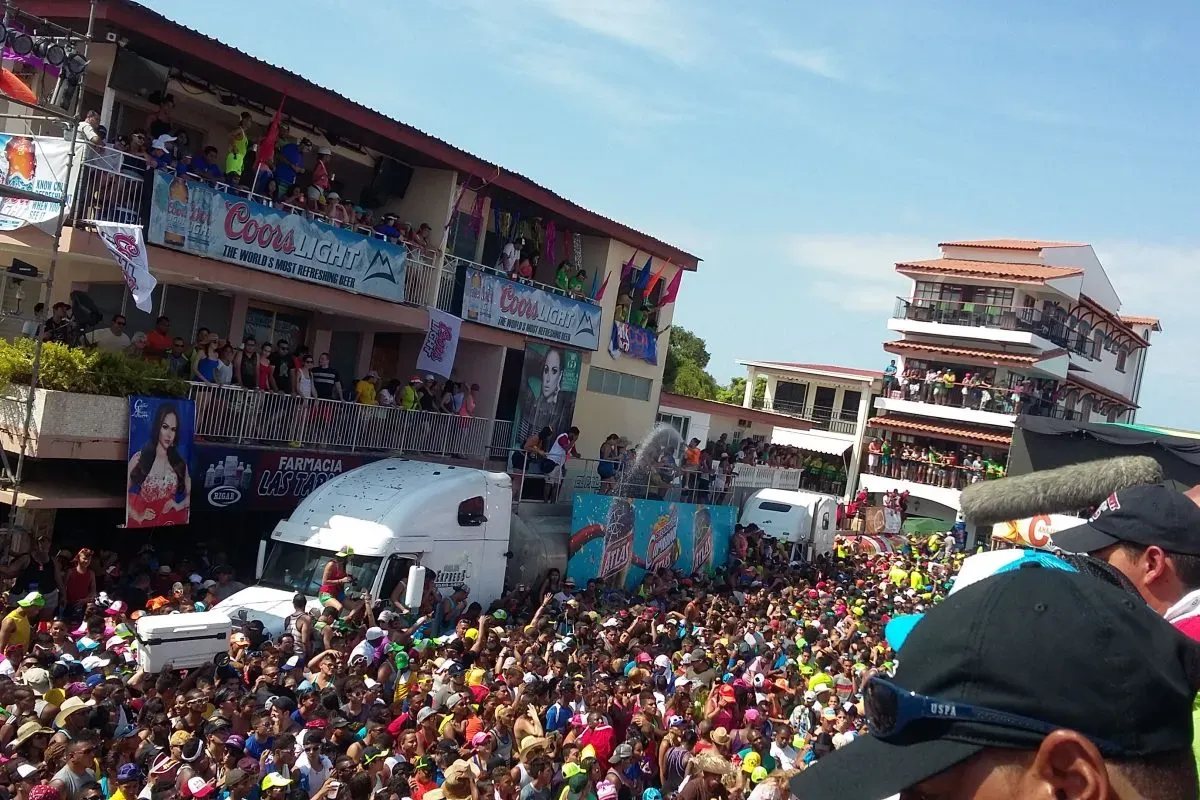
The coastal town of Las Tablas erupted in music and anticipation on Wednesday night. Thousands of residents and early arrivals gathered for the final rehearsals of the traditional ‘tunas,’ marking the unofficial start to one of Panama’s most iconic festivals. The rival factions of calle arriba and calle abajo held their last public practices before the official Carnival of Las Tablas begins.
As tradition dictates, the Calle Arriba ensemble positioned itself at the corner of Bolivar Street. Just blocks away, their rivals from Calle Abajo practiced at the Punta Fogón intersection. The event serves as a critical final tune-up for the musical showdown that defines the carnival. Supporters from both sides filled the streets, waving flags and lighting fireworks well past midnight.
“This rehearsal is the true heartbeat of our carnival. It is when we feel the energy of the people and the spirit of the competition come alive,” said a local cultural organizer. [Translated from Spanish]
The rehearsals feature ‘tonadas,’ satirical musical compositions unique to the festival. These songs praise each side’s carnival queen while simultaneously issuing playful challenges and taunts directed at the opposing street. The lyrics heard Wednesday night will echo through Porras Park for the next four days of celebration.
Centuries of Tradition Fuel Modern Festivities
The roots of the Las Tablas Carnival run deep into the 19th century. What began as pre-Lenten celebrations evolved into a structured, symbolic rivalry that now draws international attention. The division between the upper and lower streets, Calle Arriba and Calle Abajo, centers geographically around the historic Santa Librada Church. This landmark has witnessed generations of musical battles and coronations.
Historical records recognized by Panama’s Ministry of Culture of Panama affirm the festival’s national significance. Experts consider it one of the country’s most representative folkloric manifestations. Its organized structure, century-old traditions, and distinctive elements like the tunas and tonadas have preserved its cultural integrity.
The event is a cornerstone of identity for Los Santos Province. It blends religious history with vibrant, communal expression.
Wednesday’s rehearsals concluded with appearances from the incoming queens. Ana Isabel Carrizo Castillo, queen of Calle Arriba, and Astrid Carolina Sánchez Brandao, queen of Calle Abajo, greeted their supporters alongside the outgoing monarchs. Their formal coronations were scheduled for Friday night, February 13, immediately preceding the carnival’s official opening.
Local businesses reported a surge in activity as the town’s population swelled. Hotels in the region have been fully booked for months in anticipation of the event. The final rehearsals don’t just prepare the musicians. They signal to the entire community and the nation that the transformation of Las Tablas into Panama’s carnival capital is complete.