


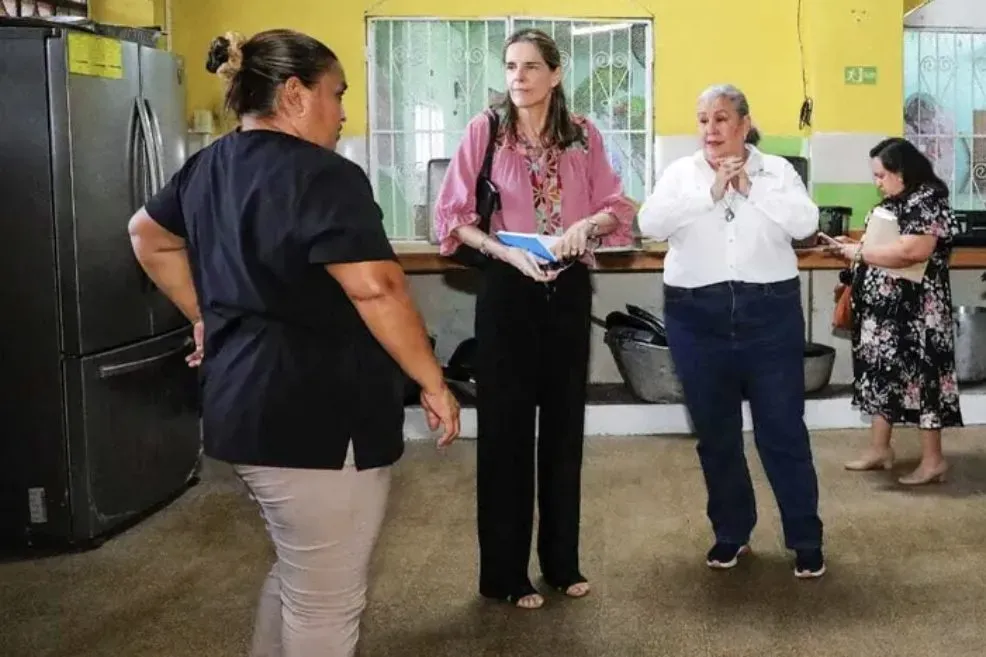
Panama’s Social Development Minister, Beatriz Carles, and UNICEF Regional Director Sandie Blanchet conducted a surprise inspection of the Tocumen Integral Care Center (CAI) on Thursday, February 12. The visit responds to a criminal investigation into alleged child abuse and sexual assault within the state-run shelter for vulnerable children. Minister Carles stated the government is taking immediate action to address any failures in the child protection system.
The inspection follows public denunciations made one week prior by Deputy Alexandra Brenes and the shelter’s former administrator, César Pérez. The Government of Panama has now launched a direct supervision strategy. Officials aim to strengthen safeguards for children under state care, a group that includes refugees and at-risk minors.
“This action is framed by the firm commitment we have as an institution to guarantee the best interests of the child at all times. We cannot and will not be indifferent to any situation that puts our children at risk,” said Minister Beatriz Carles. [Translated from Spanish]
Carles confirmed the national government is adopting concrete measures to correct any detected flaws. Investigators from the Public Ministry are leading the criminal probe into alleged mistreatment and sexual crimes. The shelter’s protocols and operational standards formed the core focus of the inspection by Carles and Blanchet.
Former Administrator Details Systemic Failures and Retaliation
César Pérez, the former national director of Prevention for the National Secretariat for Children, Adolescents and Family (Senniaf) and ex-head of the Tocumen CAI, provided disturbing testimony. He claims he began raising alarms with Senniaf’s leadership over a year ago. Pérez alleges he never received timely responses or solutions from the agency’s director, Ana Fábrega.
His attempts to expose the situation included appeals to magistrates of the Superior Court for Children and Adolescence. Those appeals, he says, were also ignored. Pérez highlighted several specific irregularities he witnessed, practices he says directly violated children’s rights.
“Our determination is clear: everything that is operating incorrectly in the protection system for children and adolescents must be corrected immediately,” Minister Carles asserted during the inspection. [Translated from Spanish]
One case involved a nearly adult-aged boy who could not walk. Medical staff at the Tocumen Health Center later diagnosed him with chronic tuberculosis. Pérez stated the infected adolescent had already spread the disease to three other children in the infant area. He waited nearly two months to isolate the patient. Another child from the Ngabe Buglé region spent two years at the center without any identification documents.
Pérez also criticized an official protocol for dealing with children who evaded the center. The procedure involved confiscating their spare clothing. He disagreed with the practice, though he says other staff members enforced it. He further reported an incident where an adult with psychiatric conditions engaged in masturbation in front of children.
National Assembly Demands Accountability as Calls for Suspensions Grow
The Panama National Assembly has formally approved a summons for Minister Carles. Legislators demand she answer a detailed questionnaire regarding the protocols meant to protect children in state institutions. This political pressure coincides with growing public outrage.
Deputy Alexandra Brenes, alongside civil society and the National Network for the Support of Children and Adolescents in Panama, is calling for immediate suspensions. The network released an official statement expressing profound concern over the public allegations and the ongoing criminal investigation.
The organization formally requested preventive administrative measures. Their primary demand is the temporary removal of Senniaf Director Ana Fábrega and the institution’s Director of Protection. They argue these suspensions should remain in effect for the duration of the judicial process.
These events underscore a critical need for robust child protection frameworks. The involvement of the United Nations Children’s Fund (UNICEF) signals the international importance of the case. Sandie Blanchet, the UNICEF director, emphasized the necessity of strengthening protection standards and promoting safe environments for children during the inspection.
“We are not going to minimize any warning sign. We are also not going to speculate; we are going to investigate seriously and objectively,” Minister Carles added, outlining the government’s approach. [Translated from Spanish]
Pérez described a culture of retaliation against whistleblowers. He claims a coordinator from La Chorrera filed a report stating children were being “handed over without protocols.” That coordinator was subsequently fired. A coordinator from Chiriquí suffered the same fate after presenting her own alerts. When Pérez submitted reports detailing irregularities, he says Director Fábrega responded with insults, framing him as an enemy of the institution.
The Public Ministry advanced its work on February 10 with procedures at the Denunciation Reception Office. This legal groundwork is part of a complex case that Pérez admits has “many things he cannot say” due to the active investigations. The situation reveals potential systemic issues, not just isolated incidents. It tests the state’s capacity to respond to internal failures within its own protective services.
Minister Carles’s direct involvement, paired with UNICEF’s scrutiny, places the Tocumen shelter under an unprecedented spotlight. The government’s next steps, including its response to the Assembly’s summons and the results of the criminal probe, will be closely watched. They will determine the future of child welfare policy in Panama and the safety of its most vulnerable residents.