


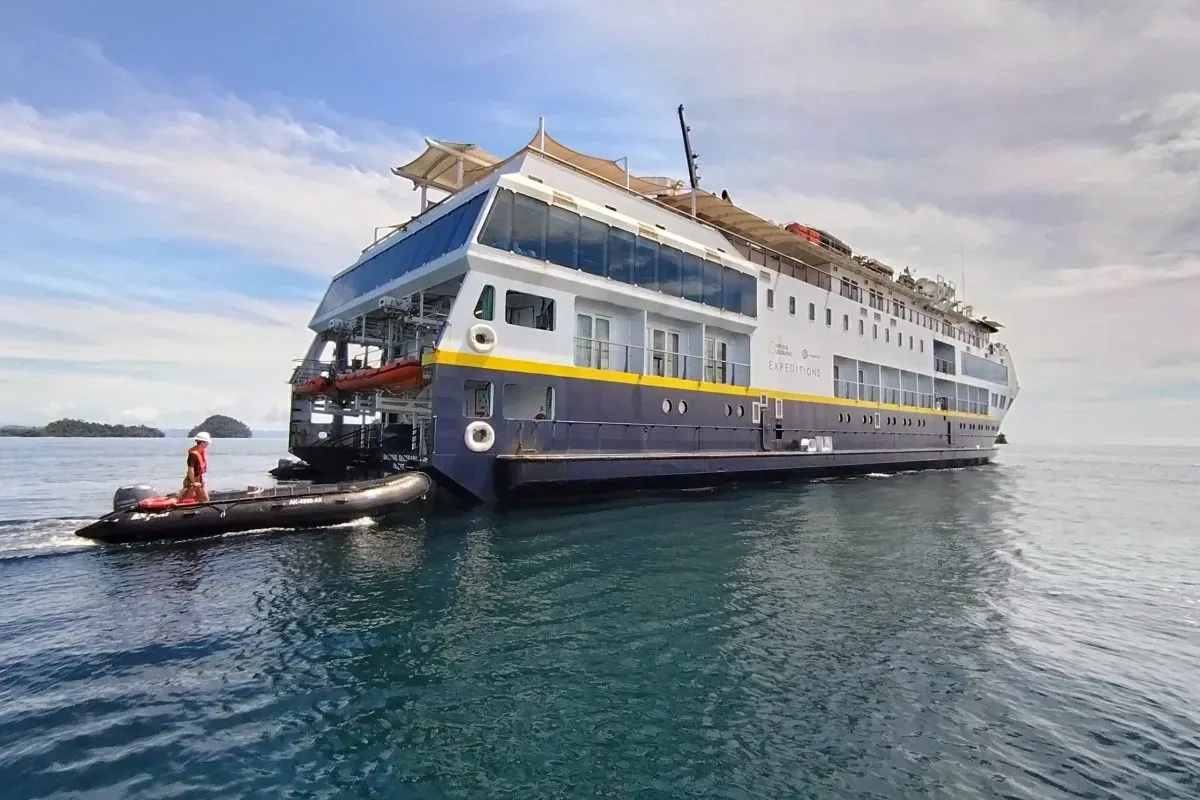
The expedition cruise ship National Geographic Quest arrived at Panama’s Coiba National Park on Wednesday, February 12, 2026. It carried 87 international tourists who participated in low-impact ecotourism activities under strict environmental protocols.
According to Panama’s Ministry of Environment (Panama), the visit was conducted with careful adherence to conservation rules for protected areas. The passengers, primarily from the United States with additional visitors from Costa Rica and France, engaged in guided tours of marine zones, beaches, and park trails.
Activities were organized in small groups. This structure respected the area’s carrying capacity and aimed to minimize environmental impact. The ministry shared images of the vessel’s arrival on its official social media channels, highlighting the controlled nature of the visit.
“We received a visit from a National Geographic cruise, whose passengers carried out ecotourism activities under strict entry and conservation protocols.” [Translated from Spanish]
Protected Area Welcomes Regulated Tourism
Established by Law 44 on July 26, 2004, Coiba National Park is a designated national heritage site. The park protects a vast marine and island area spanning 270,125 hectares within the Veraguas province. Its creation was pivotal for conserving one of the Pacific’s most vital marine ecosystems.
This visit underscores a growing trend of high-value, low-impact tourism in Panama’s remote natural areas. The model focuses on education and conservation rather than mass travel. It aligns with global ecotourism principles that many modern travelers now seek.
Managing such visits requires precise coordination. The Ministry of Environment (Panama) oversees all access to the park. Its rangers ensure compliance with rules designed to protect wildlife and habitats. This balance allows for public appreciation and scientific study while prioritizing preservation.
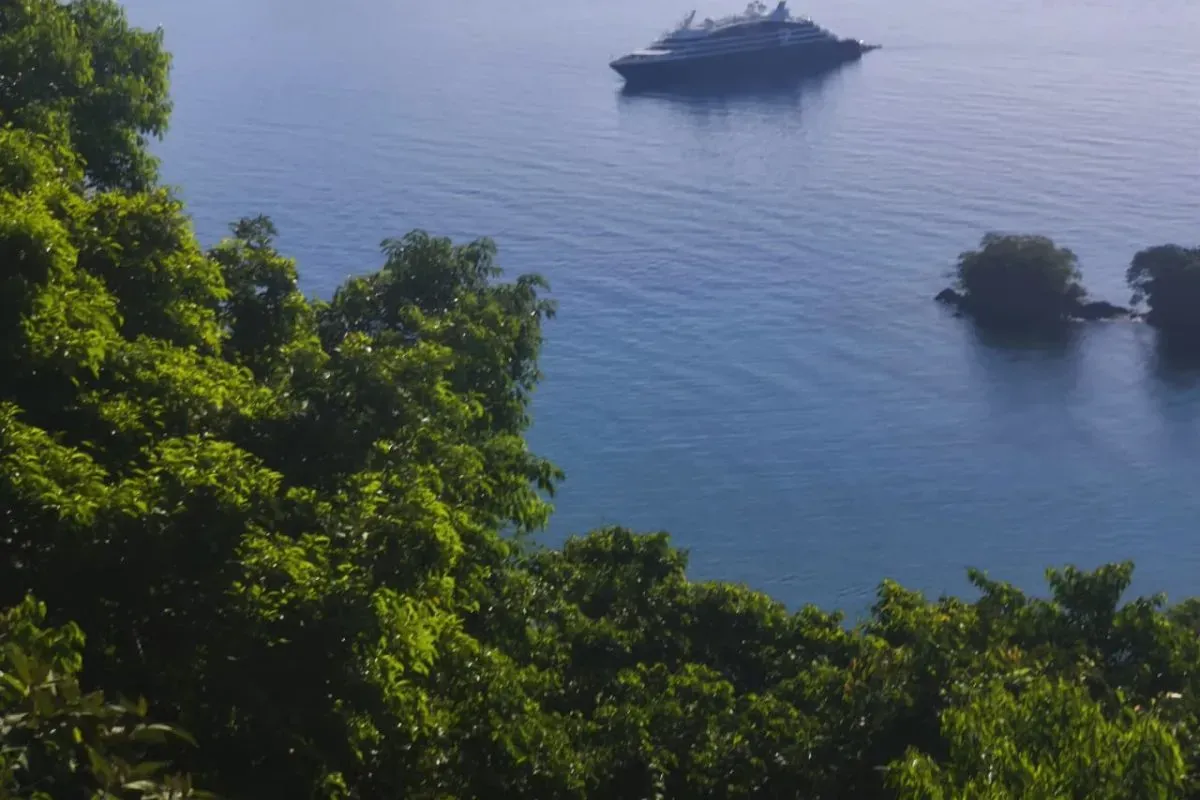
A Vessel Designed for Exploration
The National Geographic Quest is a U.S.-built expedition ship specifically engineered for exploratory travel. Its design prioritizes access to pristine environments with a reduced footprint. The vessel features advanced stabilization, satellite technology, and reinforced landing craft for coastal exploration.
With capacity for 100 guests in 50 exterior cabins, the ship offers dedicated observation decks and communal areas. These spaces are intended to enhance the guest experience in ecologically sensitive destinations. This national geographic quest to Coiba represents a typical itinerary for the line.
Expedition cruising has become a significant niche in maritime tourism. It often supports local conservation efforts through partnership fees and guest donations. The presence of such a vessel signals Panama’s appeal as a destination for discerning, environmentally conscious travelers. This sector complements the country’s broader national geographic and economic strategies.
Panama continues to promote its natural heritage internationally. The successful, regulated visit of the National Geographic Quest provides a case study in sustainable tourism management. It demonstrates that protected areas can facilitate controlled economic activity without compromising their primary conservation mission. Other National Park sites in the country employ similar managed access models.
The departure of the ship from Coiba National Park concludes this planned encounter. Park authorities will continue monitoring the visited sites for any environmental effects. This ongoing stewardship is crucial for ensuring the long-term health of the park as it occasionally hosts these specialized geographic quest voyages and other scientific missions.