


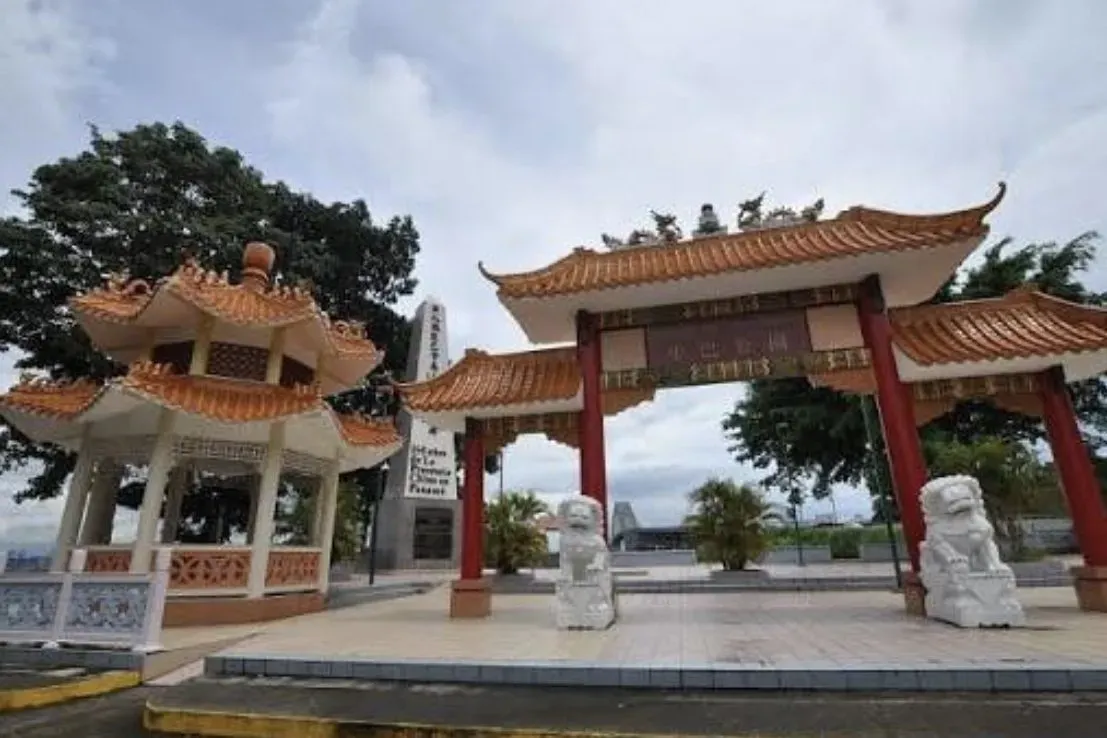
Municipal authorities in Arraiján, Panama demolished a prominent monument honoring the Chinese community on Saturday night. The structure, located at the Bridge of the Americas viewpoint, was removed after officials declared it a public safety hazard, sparking immediate controversy and diplomatic reaction.
Crews used heavy machinery to tear down the landmark on December 27. Videos of the demolition circulated widely on social media, drawing swift criticism from community leaders and politicians who accused the municipality of acting without proper notice or respect for cultural heritage.
Municipality Cites Structural Danger
The Arraiján mayor’s office defended the action in a formal statement. Officials claimed a technical assessment revealed critical flaws in the monument’s integrity, necessitating immediate preventive removal.
The Directorate of Works and Construction found visible deterioration in the main structure, including corroded bases, cracks in the facilities, and unstable areas. The administration stated it prioritized citizen safety above all else, preventing potentially compromised infrastructure from endangering families and tourists.
“The Bridge of the Americas viewpoint presents a structural risk, which is why we decided to proceed with its removal as a preventive measure. This decision obeys exclusively technical and safety criteria.” [Translated from Spanish]
The statement emphasized the municipality’s duty to protect lives and personal integrity, calling accident prevention a fundamental axis of its management.
Community and Diplomats Express Outrage
Panama’s Chinese community reacted with anger and disappointment. Representatives stated the demolition occurred during year-end festivities and without formal notice, despite previous discussions about renovating the site.
Chinese Ambassador to Panama, Xu Xueyuan, visited the site with members of the Chinese Association in Panama. Some individuals collected fragments from the rubble as keepsakes. The community highlighted a meeting held in March where they presented a maintenance proposal to the mayor’s office but received no further response until the demolition.
Political condemnation was swift. Former Panamanian Foreign Minister Jorge Eduardo Ritter called the act shameful and abject on his social media account. He questioned the timing, suggesting cowardice in scheduling the work for a Saturday night.
Congresswoman Patsy Lee, representing circuit 13-4, underscored the deep historical roots of the Chinese community. She noted their 171-year presence dating back to the construction of the Panama Canal Railway.
“They can tear down a monument, but not the history, nor the culture, nor the commercial exchange. Fried rice, chow mein, and siu mai remain. With families, businesses, and brotherhood, Panamanians of Chinese descent continue working for Panama’s progress.” [Translated from Spanish]
The monument’s location near the iconic Bridge of the Americas was deeply symbolic. It represented cultural unity and the Chinese community’s extensive contribution to the nation’s economic and social development.
Son 171 años de presencia china en Panamá, desde la construcción del ferrocarril, legado de una comunidad pujante y trabajadora.
— Patsy Lee (@patsyleer) December 28, 2025
Pueden derribar un monumento, pero no la historia, ni la cultura, ni el intercambio comercial.
El arroz frito, el chow mein y el siu mai se quedan.
Con… pic.twitter.com/qsrXST5cXK
A Longstanding Cultural Tribute
The demolished structure served as a tribute to one of Panama’s oldest and most influential immigrant groups. The first Chinese immigrants arrived in the 19th century, with many involved in monumental infrastructure projects.
Their early contributions were linked to the trans-isthmian railway and later to labors related to the Canal. Over generations, their role in commerce became an essential part of Panamanian daily life. The History of Chinese immigration to Panama is a core chapter in the nation’s development story.
President José Raúl Mulino had previously addressed the potential for the monument’s removal last July. He called it ridiculous to link any demolition with geopolitics or differences between the United States and China. When questioned about an alleged unconsummated agreement to maintain the monument, Mulino stated the matter fell under the jurisdiction of the Arraiján mayor’s office as the local authority.
The future of the site remains unclear. No plans for a replacement structure have been announced by municipal officials. The incident leaves a physical and symbolic void at a major Panamanian landmark, highlighting the complex intersection of public safety, cultural preservation, and community relations.