


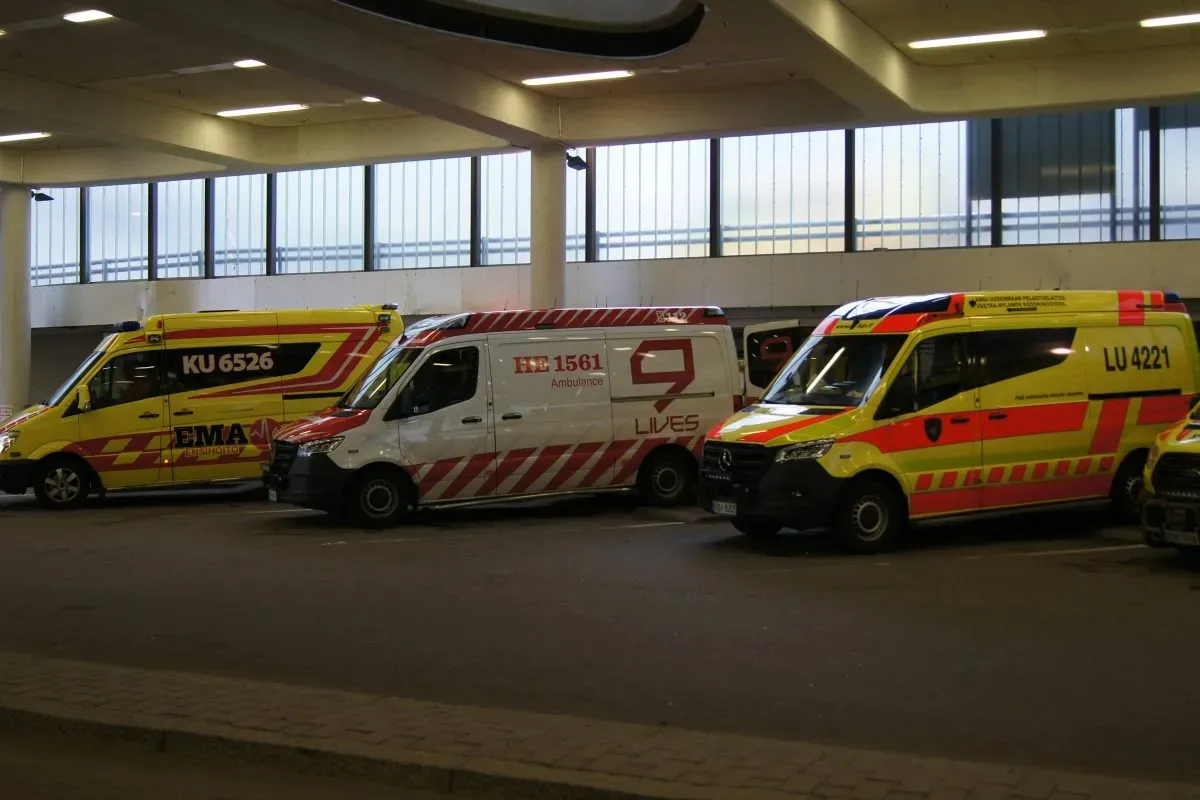
A significant portion of Panama’s public ambulance fleet sits idle in a parking lot, complicating patient transfers for the nation’s social security agency. The Caja de Seguro Social (CSS) currently has 59 operational ambulances serving the entire country. Another 32 vehicles, however, are out of service and parked at a facility on the Transisthmian Highway, a situation locals have dubbed the “ambulance cemetery.”
Officials attribute long patient wait times to high demand, traffic congestion, and driver behavior. The agency’s ambulances handle an average of 161 patient transfers daily across Panama. These transfers move people from primary care centers to major hospitals like Susana Jones in Villa Lucre and the Arnulfo Arias Madrid Hospital Complex.
Officials Cite Normal Fleet Management Processes
Carlos Cerrud, head of the National Department of Emergency, Disaster, and Patient Transport Management (Dengedtp), maintains the CSS fleet is fully operational. He described a national service running 24 hours a day with complete countrywide coverage. The parked vehicles, according to Cerrud, represent standard technical and administrative procedures for a heavily utilized fleet.
“The spare parts purchases have been managed. The execution time depends on the regular purchasing process that is underway. We are following up so that it is completed as soon as possible,” Cerrud told La Prensa. [Translated from Spanish]
Of the 32 inactive units, seven are in the process of being scrapped. Eight more require corrective maintenance from the supplier, but the vendor lacks the physical space to house them during repairs. The remaining 17 ambulances need part replacements and repairs estimated at $15,000, including labor.
The CSS has its own mechanical workshop and technical staff capable of fixing these units. Completion now hinges on the agency’s internal procurement timeline. This backlog occurs despite a recent infusion of new vehicles into the system.
Active Fleet Distribution and National Coverage
All 59 working CSS ambulances are equipped as Advanced Life Support units. They carry monitors, defibrillators, ventilators, and specialized gear for pre-hospital critical care. The fleet is a mix of 23 four-wheel-drive vehicles for difficult terrain and 36 standard ambulances for urban areas.
Geographic distribution of the active ambulances varies significantly. The province of Bocas del Toro has the largest allocation with 16 vehicles. Panama province follows with 10 units. Other regions operate with fewer resources. Coclé has six ambulances, Chiriquí seven, and Veraguas four. Panama Oeste, Los Santos, Colon, Panama Este (Chepo), and Herrera operate with between two and four ambulances each.
This distribution is based on service demand, geographic coverage needs, and regional operational requirements. The system recorded 58,959 responses in 2025. These included pre-hospital assistance and inter-facility transfers. Approximately 71.5 percent of those served were CSS beneficiaries, with the remaining 28.5 percent being uninsured patients.
Officials did not provide specific response time data. They acknowledged that wait times fluctuate based on location, traffic conditions, and seasonal illness outbreaks. Respiratory diseases at the start of the rainy season often create surges in demand.
Recent Renewal and Future Procurement Plans
The social security agency recently refreshed a large part of its fleet. It acquired 10 four-wheel-drive ambulances in December 2024. Another 45 standard ambulances were delivered in June 2025, bringing 55 new units into service over a seven-month period.
No active public tenders for additional ambulances are currently open. The administration stated it continuously evaluates the needs of all regions. Officials emphasized the necessity of maintaining backup units because emergency transport services never stop.
Future acquisitions will continue incorporating cutting-edge biomedical technology, the agency assured. The goal is to ensure that both active and reserve vehicles meet the latest medical standards. For now, the focus remains on repairing the 17 ambulances awaiting parts and navigating the logistical hurdle of servicing the eight units with the external provider.
The sight of dozens of emergency vehicles sitting unused underscores the challenges of maintaining complex public sector fleets. It also highlights the gap between official statements of full operability and the reality on the ground where usable assets are sidelined. Patients waiting for transfers experience the practical impact of this discrepancy daily.