


Global oil prices fell this week following a temporary truce between the United States and Iran, but Panamanian consumers should not expect immediate relief at the gas pump. Market analysts and government officials in Panama City confirmed that local fuel prices are insulated from short-term international volatility due to existing contracts and logistical factors. The price for a barrel of oil dropped to $96.76 just days after reaching a high of $113.
This recent decline stems directly from a two-week pause in hostilities announced by U.S. President Donald Trump. The fragile geopolitical calm prompted a sudden sell-off in crude markets. Experts warn the situation remains highly unstable, with prices prone to sharp swings based on any new developments in the Middle East or elsewhere.
“The fragile truce that was announced caused the market to plummet steeply that day, during that trading session,” said market analyst Harry Quinn. “That truce, which was announced, has been causing prices to rise again today and yesterday. We call this phenomenon ‘volatility.'” [Translated from Spanish]
The immediate impact on Panama will be minimal. The country’s fuel prices are set through a regulated adjustment mechanism that considers longer-term averages, not daily spot market fluctuations. Current prices remain at 1.25 balboas per liter for 95-octane gasoline, 1.19 for 91-octane, and 1.35 for diesel.
Logistical Bottlenecks Delay Potential Benefits
Even a sustained drop in global crude prices would take time to affect Panamanian stations. Economists point to persistent supply chain issues and existing purchase agreements as primary buffers. The recent reopening of a key global shipping lane has not instantly resolved deeper infrastructural damage.
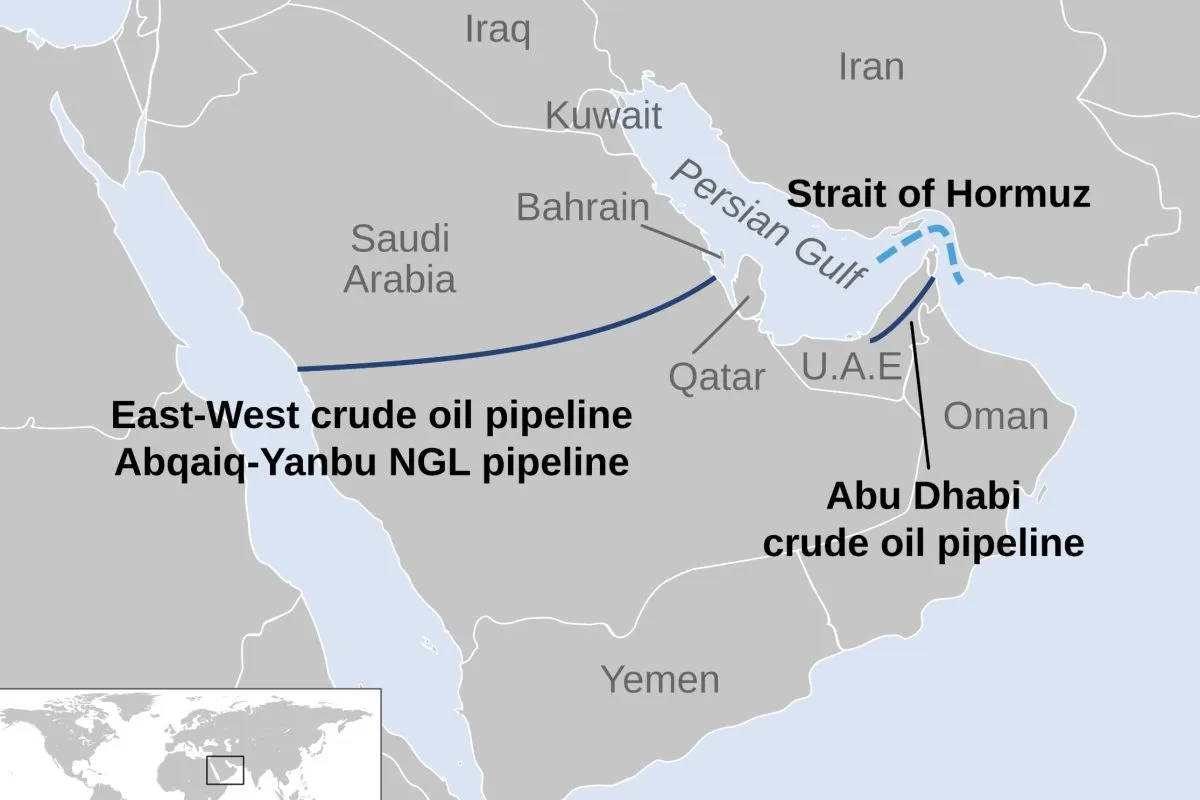
Rolando Gordon, a local economist, explained the delay. He noted that refinery outages and destroyed storage facilities continue to constrain global supply, offsetting the price benefits from eased tensions. The Strait of Hormuz is a critical chokepoint for oil shipments, and its operational status significantly influences oil price volatility worldwide.
“The lower price is not reflected here because there are still bottlenecks. Even though the Strait of Hormuz opened, bottlenecks remain. Refineries are not operating, and storage deposits were destroyed,” Gordon stated. [Translated from Spanish]
The National Energy Secretariat (Panama) holds responsibility for monitoring international price behavior and formulating local projections. This state entity uses a formula that incorporates costs over a period of time, smoothing out sudden spikes or dips to prevent erratic price changes for consumers.
Officials from the Secretariat are observing the international context closely. They agree with independent analysts that the current dip must hold for a more extended period before any price adjustment can be considered. The coming weeks will be crucial for determining if this is a lasting trend or merely a temporary market reaction.
For now, Panamanian drivers continue paying prices set before the recent decline. The potential for future relief exists, but it hinges on a stable and sustained decrease in global oil markets. Any resurgence of conflict or further supply disruptions could quickly reverse the current downward trend, keeping local prices firmly where they are.