


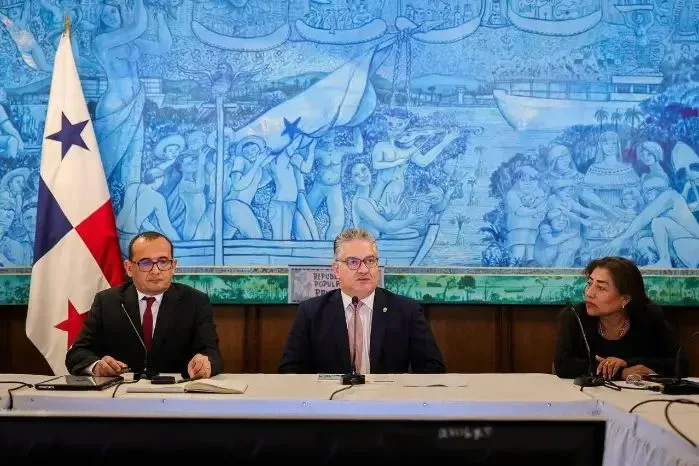
Panamanian government officials have defined a new consultation roadmap for the planned electricity interconnection with Colombia. The high-level meeting, held at the Presidential Palace on December 16, 2025, focused on advancing social agreements with Indigenous communities along the project’s path before construction begins.
The session was led by Minister of the Presidency Juan Carlos Orillac. He stated the goal was to evaluate progress in talks with communities located along the route of the future high-voltage line. This project is a stated priority for President José Raúl Mulino’s administration.
Orillac emphasized the need to address social concerns proactively to prevent future delays. The minister framed these consultations as essential for the project’s smooth execution.
“There are social matters here that we must address so the interconnection project does not face setbacks,” Orillac said. [Translated from Spanish]
Immediate next steps involve several critical consultations. Authorities confirmed pending talks with the Wargandí Congress must occur before year’s end. Dialogues with the Alto Bayano region are scheduled for January 2026, followed by a session with the Extraordinary Congress of Guna Yala in March.
Indigenous Communities Set Conditions for Project Support
The Panama-Colombia interconnection is a mega-project developed by Interconexión Eléctrica Colombia Panamá S.A. (ICP). This entity is a joint venture between Panama’s state-owned Empresa de Transmisión Eléctrica S.A. (ETESA) and Colombia’s Grupo ISA. During the dialogue process, several Indigenous communities expressed a willingness to support the initiative.
Their support comes with specific conditions tied to social impact components. Requests include building a road connecting the Pan-American Highway to Mulatupu. They also seek the electrification of approximately 730 homes in villages like Nurra and Mortí. Other demands involve relocating the Asnati School and implementing social programs in education, health, and food security.
These negotiations highlight the complex balance between national infrastructure goals and Indigenous rights. The process aligns with international standards for Prior Informed Consent.
Project Scope and 2026 Financial Timeline
The technical scope of the interconnection is vast. It will feature three distinct sections. A 220-kilometer terrestrial segment will run from Panama City to Mulatupu in Guna Yala. A submarine cable will then cross to Necoclí, Colombia. A final terrestrial leg will extend to Montelíbano. The system’s total electric power transmission capacity is estimated at 400 megawatts.
Officials outlined a clear financial and regulatory timeline for early 2026. Key deliverables include defining the remuneration system for affected communities. Authorities must also approve the final rural electrification regulation and concretize the project’s overall financing scheme. These steps are crucial for moving from planning to implementation.
Successfully navigating this consultation phase is vital for Panama’s energy security and regional integration ambitions. The government’s approach with Indigenous groups, particularly in sensitive regions like Guna Yala, will likely set a precedent for future large-scale infrastructure projects in the country.