


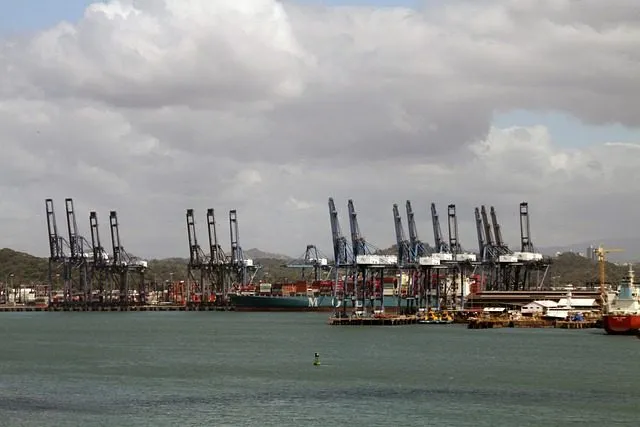
A major global ports deal involving two strategic terminals near the Panama Canal has reportedly reached an impasse. Negotiations for the sale of CK Hutchison’s port assets, including the Balboa and Cristobal terminals, to a consortium led by BlackRock and Mediterranean Shipping Company (MSC) have stalled due to new demands from China, according to a Wall Street Journal report published Tuesday.
The $22.8 billion transaction, announced in March, would involve more than 40 ports worldwide. Its fate is now entangled in broader geopolitical tensions between the United States and China over influence near the critical waterway. Washington has consistently expressed security concerns about Chinese presence near the canal, a vital conduit for global trade.
Beijing Seeks Control, Washington Pushes Back
Citing sources familiar with the matter, The Wall Street Journal reported that Beijing is pressuring for state-owned COSCO Shipping to obtain a controlling stake in the deal. While BlackRock and MSC were reportedly open to COSCO joining as an equal partner, China’s demand for majority control and veto rights over port management has been deemed unacceptable.
The White House has also rejected the proposition. A U.S. official explicitly stated the administration’s position.
“The President has made it clear that Chinese control of the Panama Canal is unacceptable and poses a risk to the national and economic security of the United States,” [Translated from Spanish] the official said.
Sources indicate the deal is now at a difficult stalemate. Analysts suggest China may be using approval of the port transaction as leverage within wider U.S.-China talks on trade and tariffs. Over 40 percent of U.S. container traffic relies on the Panama Canal for Asia-Americas trade, underscoring the terminals’ strategic value.
Legal Challenges Cloud Local Operations
While the international sale hangs in the balance, CK Hutchison continues to operate the Balboa and Cristobal ports through its subsidiary, Panama Ports Company (PPC). The company’s local concession, however, faces serious legal challenges within Panama.
Panama’s contralor general, Anel Flores, has filed two lawsuits before the nation’s Suprem Court. The actions seek to nullify the 1997 concession contract signed during the administration of former President Ernesto Pérez Balladares. Flores reiterated his office’s stance in a televised interview this week.
“That contract does not benefit Panama… It has been a predatory and harmful contract for national interests,” [Translated from Spanish] Comptroller General Anel Flores stated. He emphasized the audit and legal challenge are not about CK Hutchison’s Hong Kong origins but about contractual terms unfavorable to the state.
A detailed audit report published in April concluded the concession has cost Panama at least $1.337 billion in lost revenue. It cited irregularities and disadvantageous conditions, forming the basis for the nullification and unconstitutionality lawsuits filed by the comptroller’s office in July 2025. The legal process now awaits judicial resolution.
The confluence of high-stakes geopolitics and domestic legal battles creates a complex outlook for the ports’ future. Their operation remains crucial for regional logistics, but under a cloud of uncertainty. Any transfer of ownership must now navigate both international diplomatic pressures and Panama’s own judicial review of the foundational concession agreement.