


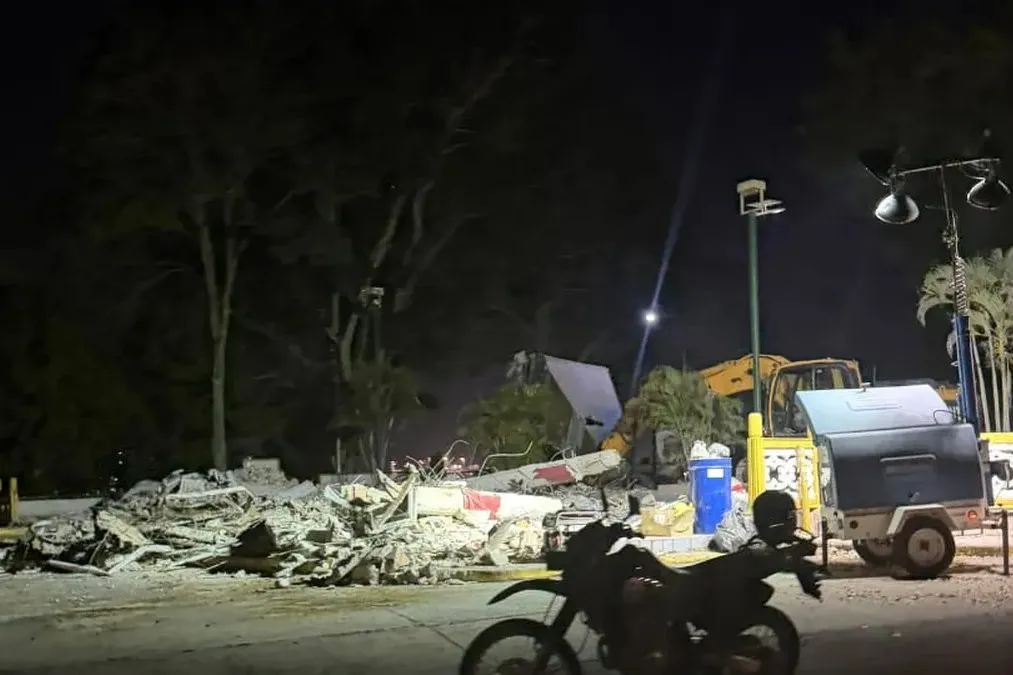
The Municipality of Arraiján in Panama spent $9,998.62 of public funds to demolish a monument honoring the Chinese community in late December. Official documents verified by the country’s Comptroller General show the contract was approved in October, fueling a growing controversy over the structure’s removal from the Bridge of the Americas lookout point.
Revelations about the contract’s cost and official approval emerged this week as public criticism intensified. The documents confirm the demolition was a planned municipal action, not an emergency measure, despite occurring at night and sparking immediate public outcry.
Deputy Patsy Lee published the procurement document on her social media accounts, questioning the process. “The problem was not the demolition itself, but the absence of dialogue with the Chinese community and the damage to a plaque that symbolized a historical relationship of more than a century,” Lee stated. [Translated from Spanish]
The demolition, captured on video and shared widely, occurred on December 27. It showed heavy machinery toppling the monument in the dark, alarming citizens and cultural groups.
Municipal Justification and Contract Details
Arraiján Mayor Stefany Dayan Peñalba defended the action in an official statement. She cited structural risks as the primary reason for the removal, calling it a necessary preventive measure. Photographs released by her office aimed to show the monument’s deteriorated condition.
The disclosed contract, dated October 29, 2025, authorized a company based in Lomas de Mastranto, La Chorrera district, to perform the work. The scope included demolishing deteriorated structures at the lookout, transporting debris to an authorized dump, moving equipment, and performing a general cleanup. The Comptroller General’s office stamped the document as “verified” on November 26, 2025.
The measure was preventive and based on technical and safety criteria.
Mayor Peñalba wrote this in her social media statement, later adding she assumed full responsibility for the preventive actions taken. [Translated from Spanish]
Technical reports from the Directorate of Works and Construction (DOYC) supported the mayor’s claims. They noted the monument had corroded bases, visible cracks, and unstable sections, posing a potential danger to the area’s many visitors and tourists.
Las mentiras tienen patas cortas.
— Patsy Lee (@patsyleer) December 31, 2025
Aquí no se trata de especulación, se trata de pruebas.
La evidencia muestra al Contralor aprobando el gasto aprox. de $10,000 del dinero de los arraijaneños para demoler el mirador, ejecutado por Big Truck Trabajando, S.A.
El problema no es la… pic.twitter.com/Ui7fJvQfD3
Community Reaction and Historical Significance
The Panama Chinese Association has expressed profound disappointment, calling the demolition disrespectful. Association leaders have requested the monument’s restoration, describing it as a piece of Panamanian history that was erased. The structure commemorated over a century of Chinese presence and contribution to national development.
Public debate now centers on two key issues. Critics argue the municipality failed to properly consult the Chinese community before destroying a culturally significant artifact. Others question whether the documented structural damage truly warranted complete destruction instead of repair or stabilization.
The late-night timing of the operation has also drawn scrutiny. Many see it as an attempt to avoid public attention, undermining official claims of a routine safety procedure.
This incident highlights ongoing tensions between urban development, public safety protocols, and cultural heritage preservation in fast-growing districts like Arraiján. The municipality has not yet announced plans for the site or addressed whether a new commemorative structure will be built.
As the political and social debate continues, the focus shifts to accountability and process. The verified contract proves the demolition was a planned expenditure, raising further questions about communication breakdowns between local government and the communities they serve.