


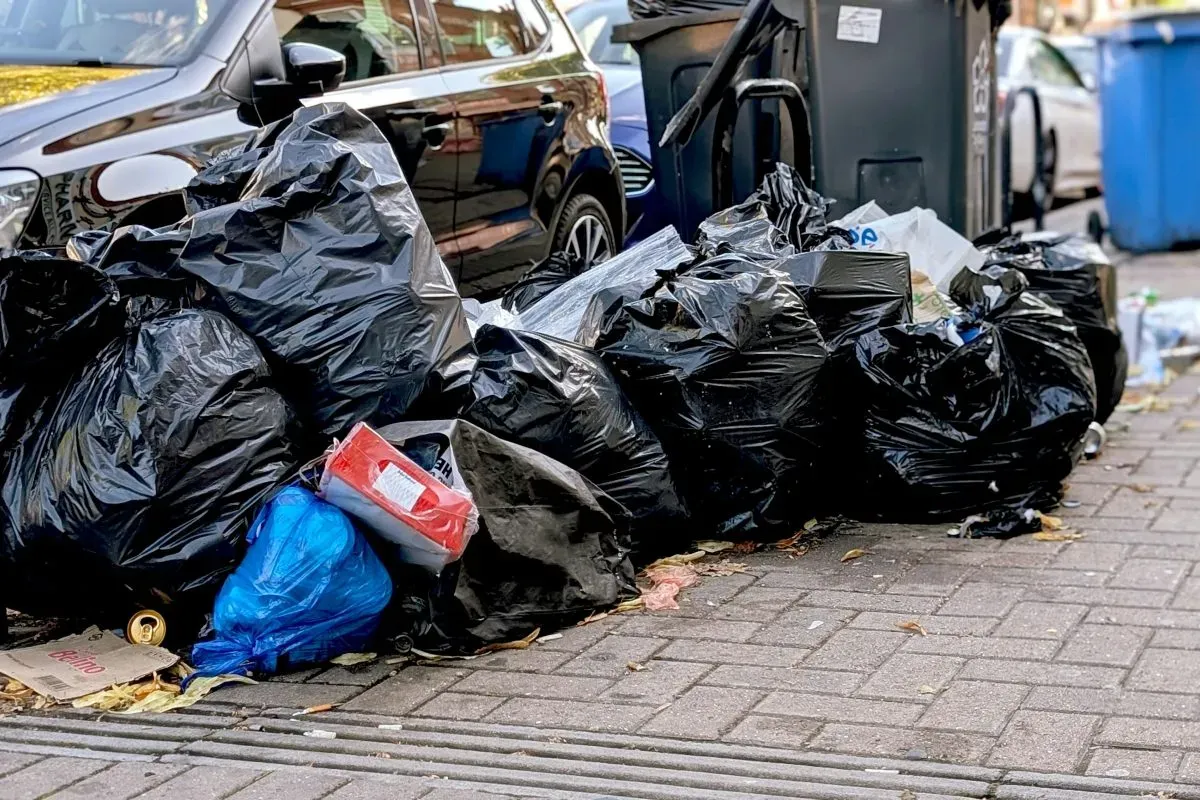
Irma Hernández, the mayor of Panama’s San Miguelito District, has publicly accused the national government of using a garbage collection crisis for political gain. The controversy centers on a six-month contract extension requested by the current waste management firm, a request mediated by the nation’s top auditor. Hernández revealed the details this week, framing the intervention as a direct threat to municipal autonomy.
The dispute involves Recicladora Vida y Salud, S.A. (Revisalud), the company responsible for residential waste collection in San Miguelito. Mayor Hernández stated that the company’s owner, Sandra Vélez, formally asked for a six-month addendum to its contract during a meeting arranged by Comptroller General Anel Flores. This intervention, according to the mayor, exposes underlying political interests rather than a genuine effort to solve the persistent service failures.
Hernández expressed sharp criticism of the comptroller’s involvement. She argued the mediation was unnecessary and inappropriate for a municipal contract matter.
“If the owner of Revisalud had requested the meeting directly with us, there would be no problem,” Hernández said in a Radio Panamá interview. [Translated from Spanish] She described Flores as acting as an unwanted “bridge” between the company and her administration.
The mayor’s office has already initiated a tender process to find a new service provider, making the request for an extension particularly contentious. Hernández views the addendum as a tactic to prolong the tenure of a company with a questionable performance record. She connected this move to a broader pattern of central government interference in local affairs, a trend she has consistently opposed. This stance on defending local governance aligns with her previous public clashes with this situation involving national officials.
A Clash Over Control and Centralization
For Mayor Hernández, the garbage collection issue represents a fundamental battle over who controls local services. She warned that allowing the national government to dictate terms in San Miguelito sets a dangerous precedent.
“What comes next?” she asked rhetorically. “Will they take control of other services? What will happen to municipal autonomy?” Her administration is a staunch defender of local governance, believing that stronger mayoral offices lead to more efficient public services. The intervention in waste management, a historically municipal function, is seen as a direct challenge to that principle. The political friction highlights ongoing tensions between local leaders and the gobierno central under President José Raúl Mulino.
The mayor’s frustration is compounded by a perceived lack of coordination from the national executive branch. She stated her team has been left in a state of uncertainty regarding concrete plans to resolve the sanitation emergency, despite the obvious health and environmental risks for residents. The crisis has seen piles of uncollected trash accumulate in neighborhoods across the San Miguelito District, a densely populated area bordering Panama City.
“I don’t know if you can call it work, but the truth is that the company has not managed to solve the garbage problem in San Miguelito,” Hernández stated bluntly. [Translated from Spanish] She emphasized that residents care less about who collects the trash and more about reliable service. “People need to know that the funds they pay for sanitation rates are being used correctly, not to sustain a deficient service.”
Her administration claims it is advancing plans for a more efficient and sustainable waste system independent of firms with poor track records. This approach would ideally adhere to modern principles of Municipal solid waste management.
National Government Insists Focus is on Solutions
President José Raúl Mulino addressed the growing political dispute during a weekly press conference. He sought to deflect claims of political motivation, insisting his administration’s only goal is to provide a rapid solution for affected citizens.
“This is not a contest of egos,” Mulino stated. [Translated from Spanish] “This is about solving a problem for the population of San Miguelito, who have every right to live without garbage.”
The president’s remarks aimed to depersonalize the conflict and reframe it as a technical and logistical challenge. This perspective contrasts sharply with Mayor Hernández’s interpretation of events as a calculated political maneuver. The involvement of Comptroller General Anel Flores adds another layer of institutional complexity to the standoff. The office of the Comptroller General of the Republic typically audits public funds and processes, making its role in mediating a private contract negotiation unusual in the eyes of the mayor.
Hernández remains defiant despite the pressure. She interprets the contract extension request as one piece of a larger political puzzle designed to undermine her leadership. The mayor has built a reputation as a vocal critic of centralization, and this episode strengthens her narrative of a national government overstepping its bounds. Her resolve mirrors the firm stance she took during the initial garbage collection disaster declaration.
The immediate future of sanitation in San Miguelito now hangs in the balance. Two parallel processes are underway, the mayor’s tender for a new contractor and the nationally mediated push for a six-month extension with Revisalud. This creates confusion and risks further service deterioration. Residents continue to bear the brunt of the impasse, facing health hazards and urban blight daily.
Financial accountability also remains a core concern. Mayor Hernández has repeatedly questioned the use of public sanitation fees paid to the underperforming company. These concerns about fiscal oversight resonate in a country where the office of the comptrollor general has investigated major public fund mismanagement in other sectors. The outcome of this conflict will likely influence how other municipalities across Panama negotiate their autonomy with the national government, setting a significant precedent for local governance.