


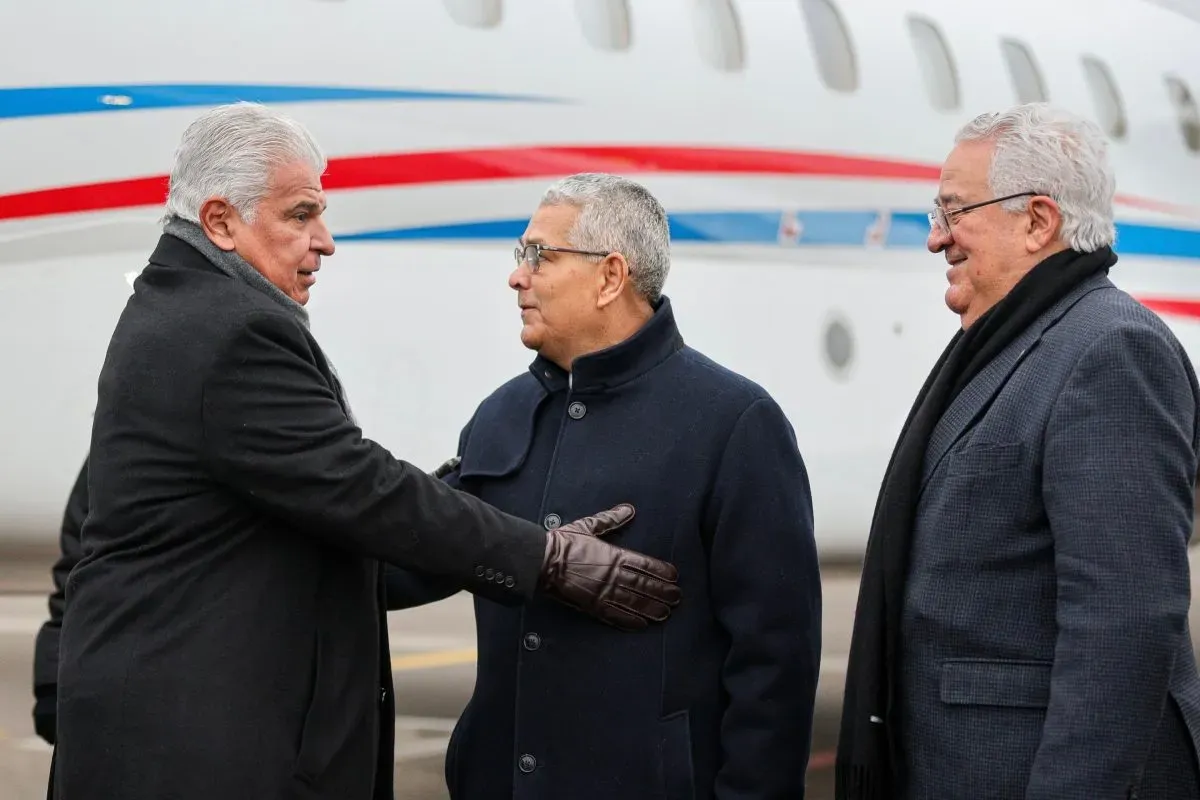
Panamanian President Jose Raul Mulino arrived in Davos, Switzerland on Monday to participate in the annual World Economic Forum. His three-day working visit aims to secure strategic foreign investment for Panama’s energy and logistics sectors, according to a statement from his office.
The president leads a high-level delegation including First Lady Maricel Cohen de Mulino and Foreign Minister Javier Martinez Acha. Their agenda features meetings with heads of state from Switzerland, Singapore, the Netherlands, Ecuador, and Austria. The forum expects 64 heads of state and over 3,000 political and business leaders from 130 countries to attend this year’s gathering, themed “Spirit of Dialogue.”
Securing Strategic Investment for Panama
Mulino’s schedule includes critical meetings with representatives from multinational corporations and international financial organizations. Confirmed appointments involve executives from banking giant Citi, shipping company Maersk, and the Inter-American Development Bank. The delegation also plans talks with energy, logistics, and port companies like DP World from the United Arab Emirates and American energy firm AES.
Panama’s full delegation showcases its economic priorities. Accompanying the president are Economy and Finance Minister Felipe Chapman, Canal Minister Jose Ramon Icaza, Commerce and Industries Minister Julio Molto, and Kristel Getzler, Secretary of Economic Affairs and Competitiveness for the Presidency. This composition signals a focused push on infrastructure and trade.
“The objective is to promote and finalize strategic investments for Panama,” stated the official presidential release. [Translated from Spanish]
Mulino’s participation continues Panama’s tradition of engaging with global leaders at the World Economic Forum. The event serves as a premier platform for shaping international policy and directing global capital flows. For a developing nation like Panama, attracting foreign direct investment remains crucial for sustaining economic growth and infrastructure development.
The president’s agenda reflects his administration’s broader economic goals. Since taking office, presidente mulino has emphasized modernizing Panama’s logistical advantages and expanding its energy capacity. Success in Davos could translate into new port facilities, renewable energy projects, or expanded canal-related services.
Broader Diplomatic and Economic Context
This diplomatic mission occurs alongside other international engagements by Panama’s government. Foreign Minister javier mart has been active in bilateral talks, recently focusing on trade and travel agreements. The Davos trip provides a multilateral complement to those efforts, placing Panama’s needs before a concentrated audience of decision-makers.
Regional economic forums also play a role in Panama’s strategy. The country frequently participates in discussions through the foro econ and similar bodies that address Latin American development. The World Economic Forum offers a larger, more diverse stage with access to capital from Asia, Europe, and the Middle East.
Concrete outcomes from these meetings may take weeks or months to materialize. Officials typically use the forum to establish initial contacts and frame investment proposals. Follow-up negotiations will likely continue through Panama’s ministries and its embassy network. The delegation’s immediate goal is to generate serious interest and schedule detailed technical discussions for the coming quarter.
President Mulino returns to Panama later this week. His administration will then assess the connections made and begin the substantive work of turning dialogue in Switzerland into signed contracts and construction projects on the isthmus.