


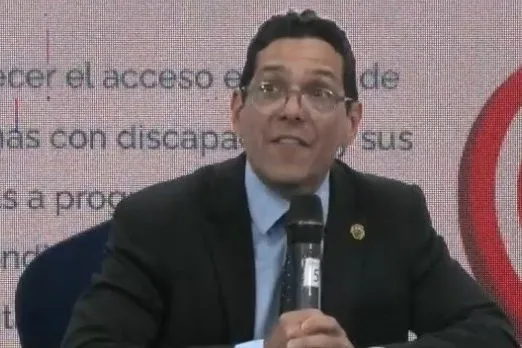
The Panamanian government unveiled a major economic stimulus plan this week, detailing 37 public investment projects set for 2026. Officials from multiple state institutions presented the plan at an inter-agency press conference in Panama City, stating it will generate approximately 30,000 new jobs nationwide.
This coordinated initiative involves the Ministry of Labor, the Social Security Fund (Caja de Seguro Social), the National Migration Service, and the Micro, Small, and Medium Enterprise Authority. The goal is to boost formal employment while enforcing labor and migration laws.
Enforcement and Labor Protection Efforts
Labor Minister Jackeline Muñoz emphasized that protecting Panamanian workers remains a top priority. She explained that inter-agency coordination has already intensified. A total of 2,673 workplace inspections have been conducted, many jointly with migration authorities.
These inspections identified 1,693 foreigners working without proper permits. The government is now applying legal measures against both the workers and their employers.
“Our articulated work between institutions seeks to protect the Panamanian workforce and guarantee compliance with labor and migration legislation,” said Labor Minister Jackeline Muñoz. [Translated from Spanish]
Erly Miranda, the acting director of the National Migration Service, provided further context. She noted that nationwide operations throughout 2025 identified thousands of irregular foreign workers. Her agency continues to apply corresponding sanctions.
These enforcement actions are part of a broader strategy to formalize the labor market. The government aims to ensure job creation from its new projects benefits the legal workforce.
Expanding Employment and Support Programs
Beyond enforcement, the announcement included significant program expansions. The small business authority, Ampyme, is extending its “My First Job” initiative. This program will create 5,000 new positions funded by revenue from the national mining concentrate sales.
Ampyme also renewed its call for people with disabilities and their families to access its support services. This focus aims to integrate more citizens into the formal economy through entrepreneurship and training.
Another critical announcement came from the Social Security Fund. Its director, Dino Mon, presented advances in a preventive health program for banana workers in the Bocas del Toro Province. This occupational medical surveillance program is a key part of reactivating the agricultural sector.
“The program, of a preventive nature, is developed in three phases and includes comprehensive medical evaluations, laboratory sample collection, and vaccination days,” explained CSS Director Dino Mon. [Translated from Spanish]
To date, the program has completed 1,099 lab tests and provided 709 medical consultations. Preliminary findings have already uncovered previously undiagnosed cases of hypertension and diabetes. Other common issues include mild kidney affectations, muscle-skeletal pain, parasites linked to environmental conditions, and some cases with altered cholinesterase levels.
These results underscore the vital need for a preventive Occupational Health approach in high-risk industries. The CSS continues to develop its role in worker safety, a topic also covered in our analysis of the social security / seguro social system’s challenges.
Government officials confirmed that more details on the execution and timelines for all 37 investment projects will be released in the coming days. The plan represents a significant push to stimulate Panama’s economy through direct state investment and strengthened labor frameworks.