


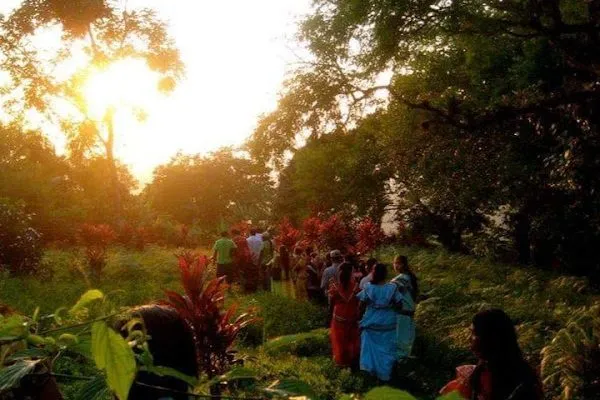
Panama’s highland coffee harvest depends each year on thousands of seasonal workers, most from the Indigenous Ngäbe Buglé community. Families migrate to western mountain farms, providing the essential labor that harvests some of the world’s most expensive coffee beans. This tradition faces a critical shortage of workers, threatening a sector where culture and economic opportunity intertwine.
The work unfolds in the districts of Boquete and Renacimiento in Chiriquí province. This region produces the celebrated Geisha variety, a bean that commands record-breaking prices at global auctions. The annual harvest, or “zafra,” begins each September and relies heavily on migratory labor from the Ngäbe Buglé comarca, one of Panama’s seven Indigenous territories.
A Lifelong Journey from Picker to National Judge
Moisés Montezuma personifies this deep connection. Now a respected national coffee judge, his journey started in the fields five decades ago. He began picking coffee in 1975, driven by a passion for the crop that would define his life. Montezuma is the only Ngäbe Buglé judge who helps select the finest lots for Panama’s premier international competition.
“I started harvesting coffee in 1975. I had a passion for the things I did and one of them was learning to process coffee, later to taste it. Little by little I became a taster without realizing it,” Montezuma told EFE. [Translated from Spanish]
He served as a pre-judge before becoming an official national judge in 2006. His role places him on the expert panel for the Best of Panama (BOP) event, organized by the Specialty Coffee Association of Panama (SCAP). Montezuma’s story highlights a potential career path within the industry, moving from fieldwork to specialized, high-skill roles.
Harvest Funds Dreams and Builds Futures
For many workers, the coffee harvest is not just a job but a vital funding mechanism for broader ambitions. Yamileth Pinto, a 21-year-old university student, uses her earnings to pay for her physical education studies. She learned the craft from her father, migrating with her family each year to the famous Hacienda La Esmeralda.
“When classes end, I migrate immediately for the harvest. That harvest helps me with the money I get at the end, it helps me to study,” Pinto explained. Her experience is common. Students and entire families plan their annual budgets around the seasonal income from coffee picking, a labor combination of necessity and opportunity.
Leopoldo Pinto Rodríguez offers a longer-term perspective. He started picking 35 years ago and learned a trade that provided lifelong stability. He was even among the workers who handled the first famed Geisha lot that revolutionized global specialty coffee in 2004.
“For Leopoldo, the greatest achievement is not having been part of that agricultural milestone in the history of Panamanian coffee in 2004, but that his children are university professionals,” the EFE report noted, attributing this success directly to consistent work in the sector. [Translated from Spanish]
His refined palate can now distinguish between coffee varieties just by tasting the bean’s honey. This skill symbolizes the deep, generational knowledge held within the Indigenous workforce, knowledge that directly contributes to Panama’s coffee quality and reputation.
A Tradition Under Pressure from Labor Shortages
This cultural and economic ecosystem now confronts a severe threat. Industry leaders report a growing scarcity of harvest labor. Ricardo Koyner, president of SCAP, and Quintín Pitti, mayor of the Renacimiento district, both identify this shortage as a primary challenge.
Mayor Pitti provided specific figures, noting that approximately 10,000 people migrate to Renacimiento each year for the harvest. A significant number of these workers, he said, subsequently cross the border seeking work in Costa Rica. This movement jeopardizes the later harvest stages in higher altitude zones, creating uncertainty for farm owners.
The mobility of workers like Lucas Hernández illustrates the transnational nature of the labor force. Hernández started picking at 18 with his mother, traveling across Panamanian farms and later following harvests into Costa Rica. He acknowledges the difficulty of the work but calls it rewarding, a core part of his people’s cultural fabric.
Producers are actively seeking solutions to secure enough hands for the annual pick. The sector’s sustainability hinges on balancing economic viability for farms with fair wages and conditions that retain workers. Without this balance, the tradition that supports global luxury coffee and local aspirations could erode.
For now, the work continues. Individuals like Yamileth, Leopoldo, Lucas, and Moisés sustain a complex chain of effort, knowledge, and hope. They connect Panama’s remote highlands to exclusive coffee cups worldwide, one precious bean at a time.