


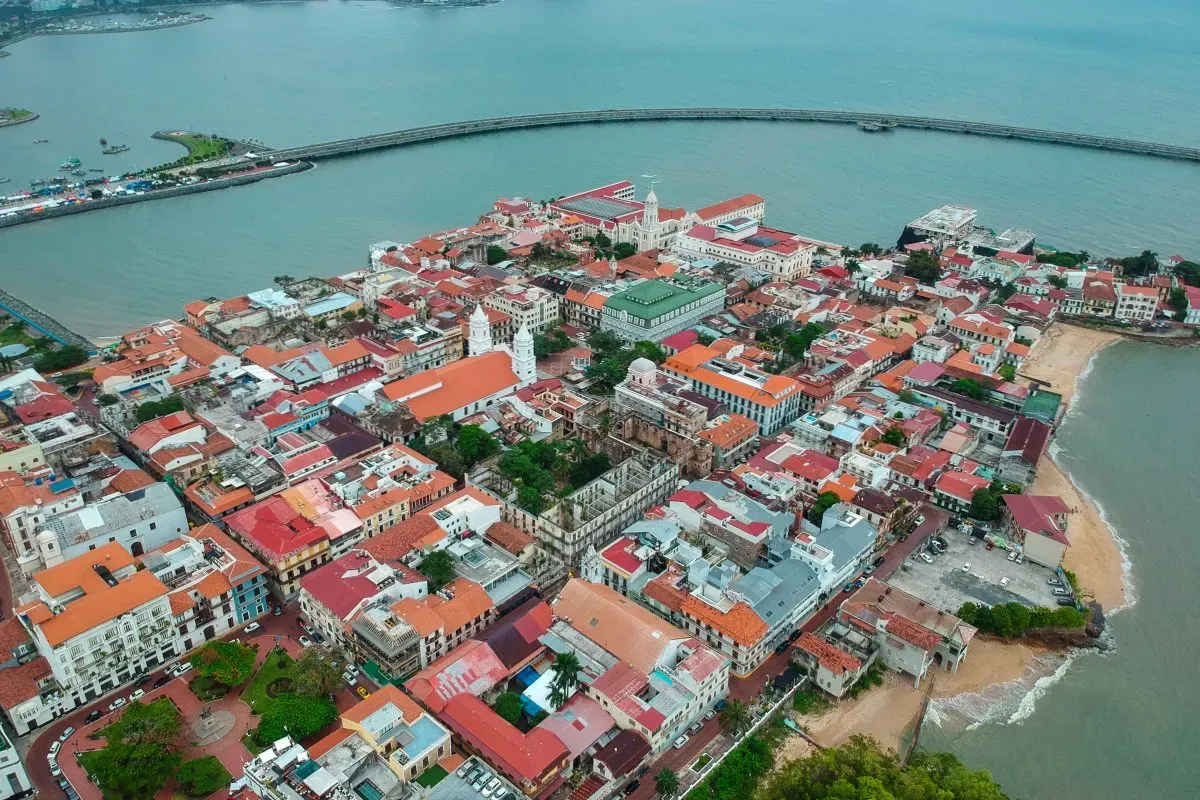
The Panama City municipal government reopened the historic Playa Prieta to the public on January 25, 2026, renaming it “La Playita de Las Garzas.” The move is part of a broader initiative to restore public access to seven historic beaches in the city’s Casco Antiguo (Panama) district. Heritage experts and community leaders immediately raised alarms, warning that inadequate protection measures could damage the site’s colonial seawall and delicate ecosystem.
Located near the Presidential Palace, the small beach is encircled by centuries-old defensive walls. Officials envision the area as a new public recreation space with established rules. The reopening marks a key step in the city’s “Ruta de las Playas” program, which aims to improve resident and tourist access to the historic center’s coastline. The project includes Playa Santo Domingo, Punta Chiriquí, and Playa Noria, among others.
Fernando Díaz Jaramillo, director of the Historic Center Community Coalition and former head of the Old Town Office (OCA), criticized the recent cleanup work performed on the adjacent colonial wall. He argued the methods used were inappropriate for a protected structure and may have caused harm. “The vegetation should first be treated to weaken the root and reduce its volume, and only then removed, so that the damage to the wall is minimal and the holes that remain can be repaired,” Díaz Jaramillo stated.
“Mechanical removal of macroflora by crews from different institutions was identified. This procedure is inadequate for heritage structures because the roots of the vegetation penetrate the wall’s masonry, and when manually torn out, they can detach original material from the wall.” [Translated from Spanish]
The city plans to manage visitor flow and enforce regulations to prevent littering and vandalism. Immediate next steps involve increased signage and coordination between municipal police and institutional protection services. The success of this phase will likely determine the pace of reopening for the other six beaches in the circuit.
Experts Warn of Structural Damage from Improper Maintenance
Díaz Jaramillo’s primary concern centers on the preservation of the colonial seawall, built with traditional calicanto (masonry) techniques. He explained that the wall is not a single, solid piece but a composite of different materials and joints. These joints are particularly vulnerable to aggressive mechanical action. The expert also warned against using pressure washing, a common but damaging practice for historic fabric. He stressed that maintenance must be constant, specialized, and carefully planned by professionals familiar with historic masonry pathologies.
According to his assessment, the involved institutions, which included the Panama City municipal government, the San Felipe Communal Board, and units of the Institutional Protection Service, failed to consult properly. They should have sought advice from the National Directorate of Cultural Heritage at the Ministry of Culture, he said. Technical accompaniment from the Old Town Office was another missed opportunity. That office maintains crews with decades of experience in treating exactly these kinds of conservation issues.
The debate highlights a recurring tension in historic districts worldwide. Balancing public access and enjoyment with the rigorous demands of conservation is a complex challenge. A misstep can lead to irreversible loss. In this case, the concern is that well-intentioned but uninformed cleanup efforts have already compromised the wall’s integrity. Repairing such damage requires significantly more resources and expertise than preventive, careful maintenance would have.
A Name Change Erases Layers of Local History
The decision to rename the site has also sparked controversy. For specialists, changing Playa Prieta to “La Playita de Las Garzas” ignores the cultural value embedded in the original name. Historical records from 1875 refer to the area as Playa Peña Prieta, a name derived from a large black rock that once stood there. That rock was destroyed during the city’s modernization. The location served multiple purposes throughout the 20th century, with ties to the old public market and local fishing activity. Boats once landed there regularly.
“Very close to that site, in the first decades of the Republic, there was a dock where cattle arrived from the interior to supply meat to the capital city,” Díaz Jaramillo explained. [Translated from Spanish] The beach also served as an entry point for immigrants of various nationalities, particularly Asians, adding to the rich narrative of the Casco Antiguo. Renaming it, critics argue, severs a tangible link to that past. It prioritizes a new, picturesque identity over the authentic, layered history that defines the district’s character.
This top-down rebranding feels dismissive to long-time residents and historians. It represents a shift from acknowledging a working-class, utilitarian history toward marketing a sanitized version of heritage. The new name references the herons near the presidential palace, a pleasant image but one disconnected from the site’s true economic and social origins. Preserving the name Playa Prieta, they contend, is a fundamental act of cultural conservation.
Community Seeks Balance Between Access and Protection
Local reaction to the beach reopening is mixed. Many residents welcome the return of public access to a long-closed waterfront space. It promises new recreational opportunities and enhances the neighborhood’s appeal. However, this enthusiasm is tempered by practical worries about security, public health, and environmental protection. Without a robust management plan, the site could deteriorate quickly. Problems like garbage accumulation, graffiti, and further physical damage to the walls are real possibilities.
Octavio Del Moral, a consultant for the Association of Neighbors and Friends of Casco Antiguo (Avaca), acknowledged the initiative’s positive intent. He and other community stakeholders now urge authorities to implement adequate protection measures. Effective surveillance and clear public education are essential. They want guarantees that conservation will not be sacrificed for tourism. The goal is a sustainable model where people can enjoy the beach without loving it to death.
The reopening of Playa Prieta is a test case. It will measure the city’s ability to manage its historic assets responsibly in the modern era. The coming months will reveal if visitation can be successfully managed. They will show if the colonial seawall receives the expert care it requires. For now, the small beach stands open, a piece of living history at the intersection of celebration and concern. Its future depends on the lessons learned today.