


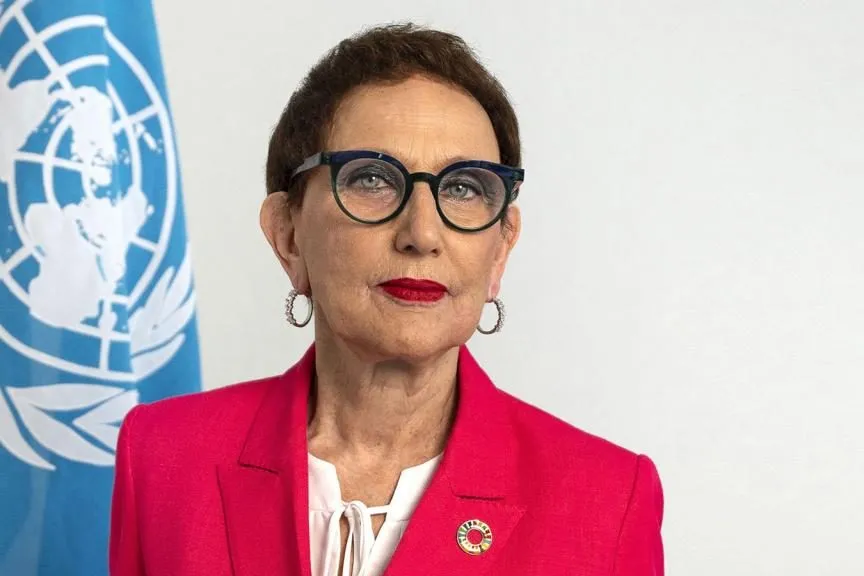
Rebeca Grynspan, Secretary-General of the United Nations Conference on Trade and Development, issued a stark warning about the global economy during a major regional forum in Panama City. Speaking at the 2026 Latin America and Caribbean International Economic Forum, she described a world at a crossroads defined by anxiety and accelerating geopolitical shifts.
📑 Table of Contents
The event was organized by the CAF – Development Bank of Latin America and the Caribbean. Grynspan argued that international dialogue has transformed from a mere formality into a strategic necessity. This change comes amid rising tariff pressures and a noticeable increase in global Protectionism.
Resilience Amidst Rising Protectionism
Despite a hardening of trade policies in 2025, Grynspan noted international commerce demonstrated unexpected resilience. A key driver has been the explosive growth of South-South trade. This segment now accounts for 30 percent of all global trade, with the broader Global South involved in 40 percent of total exchanges.
Seventy percent of world economic growth originates in the Global South today. That dynamic growth, however, coexists with severe inequality. Millions still wait for a genuine opportunity to escape poverty, she cautioned.
“It is still January, and 2026 has not begun, it has exploded. History is accelerating,” Grynspan stated. [Translated from Spanish]
She painted a picture of a world navigating multiple conflicts, rapid technological change, and an increasingly decentralized economy. The United Nations Conference on Trade and Development (UNCTAD) leader emphasized that a multipolar world could evolve into cooperating blocs or colliding ones. The outcome hinges on decisions made now.
A Call for Latin American Unity
Grynspan pressed Latin America and the Caribbean to present a unified front. Division makes the region more fragile, she insisted. Regional integration should be treated as a matter of strategic relevance, especially when geopolitics and geoeconomics are intertwined more tightly than ever.
She pointed to practical avenues for progress. Integration can advance through shared infrastructure, trade facilitation, regional investment, and scientific cooperation. In the current climate, she argued, strong regionalism is itself a form of multilateralism.
“A multipolar world without multilateralism will lead us to fragmentation; a multipolar world with multilateralism opens the door to cooperation and inclusion,” Grynspan concluded. [Translated from Spanish]
The multilateral system itself faces a crucial test. Being a multilateralist today means being a reformist, Grynspan asserted. Institutional sluggishness creates costs the world can no longer afford. Her remarks underscore the high stakes for global governance forums struggling to adapt to new economic realities.
Grynspan specifically praised Panama as the perfect venue for this critical dialogue. The country demonstrates that cooperation is not an abstraction but a basic infrastructure for understanding between peoples. This forum occurs as Panama continues to solidify its role as a hub for international dialogue within the Secretary General of regional affairs. The call for unity presents both a challenge and an opportunity for the diverse nations of Latin America and the Caribbean as they navigate an uncertain global landscape.