


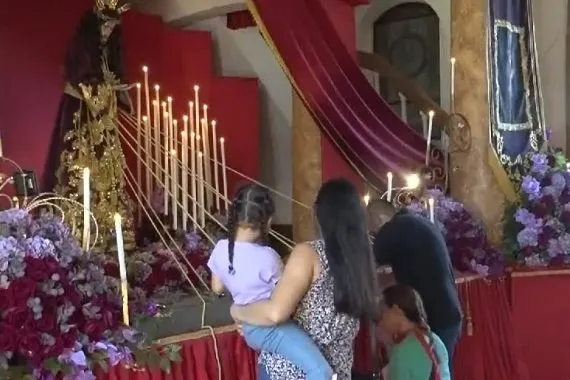
Hundreds of Panamanian families converged on the town of Atalaya this week for its annual religious pilgrimage honoring Jesus of Nazareth. The event, a cornerstone of local tradition in the Veraguas Province, sees devotees travel on foot to fulfill promises and express gratitude. For many, the journey represents a profound spiritual commitment renewed each year during the lead-up to Holy Week.
📑 Table of Contents
Personal stories of faith and devotion define the gathering more than its sheer scale. Each pilgrim carries a unique narrative, often centered on requests for healing or thanks for blessings received. Town officials note the event transforms the community every March, creating a vibrant tapestry of shared belief and personal sacrifice.
“We have been coming with him for 11 years now,” the mother of a young pilgrim named Jesús said. She emphasized the pilgrimage has become an essential part of their family life. [Translated from Spanish]
The story of eleven-year-old Jesús underscores the tradition’s deep personal roots. His birth followed a high-risk pregnancy, prompting his parents to make a promise to Jesus of Nazareth. They vowed to bring their child on the annual pilgrimage if he was born healthy. He was, they named him Jesús, and the family has returned faithfully every year since to fulfill that vow.
A Tradition Forged From Gratitude
For young Jesús, the walk is now an act of heartfelt thanks. He has even expressed a wish for a longer journey in future years, a statement that surprised and moved his parents. His desire reaffirms his personal connection to the tradition started on his behalf. This continuity from one generation to the next is precisely what community leaders say keeps the pilgrimage vital.
His mother’s account reflects a common sentiment among attendees. The pilgrimage is not merely a ritual but a lived experience, a thread woven into the fabric of their annual calendar. It represents a physical enactment of spiritual gratitude, a promise kept visible through the simple, powerful act of walking together.
Other families share similar testimonies. They traverse kilometers to give thanks for recovered health, for family wellbeing, or for guidance through difficult times. The collective sound of their footsteps on the road to the sanctuary forms a rhythm of faith that has persisted for decades.
Community and Continuity
The influx of pilgrims provides a significant annual boost to Atalaya’s local economy. Small businesses, food vendors, and temporary housing all see increased activity as the town opens its doors to visitors. This economic interplay blends with the religious significance, creating a holistic event that sustains both spirit and community.
Local authorities coordinate closely with church officials to manage the crowd flow and ensure safety for all participants. Their planning focuses on preserving the event’s solemn and traditional character while accommodating its growing popularity. The pilgrimage’s ability to maintain its core devotional purpose amid increasing attendance is a point of local pride.
As another successful observance concludes, families like Jesús’s begin looking toward next year. They will return, as they always do, to walk the familiar path. Their stories, individually poignant and collectively powerful, guarantee this tradition’s endurance for years to come. The pilgrimage remains a living testament to faith passed down through families, one step at a time.
Fe y devoción. Peregrinos de distintas partes del país siguen llegando a la Basílica Menor Jesús Nazareno de Atalaya. La Iglesia Católica prepara las eucaristías. pic.twitter.com/1p8qr4jG0J
— Telemetro Reporta (@TReporta) February 17, 2026