


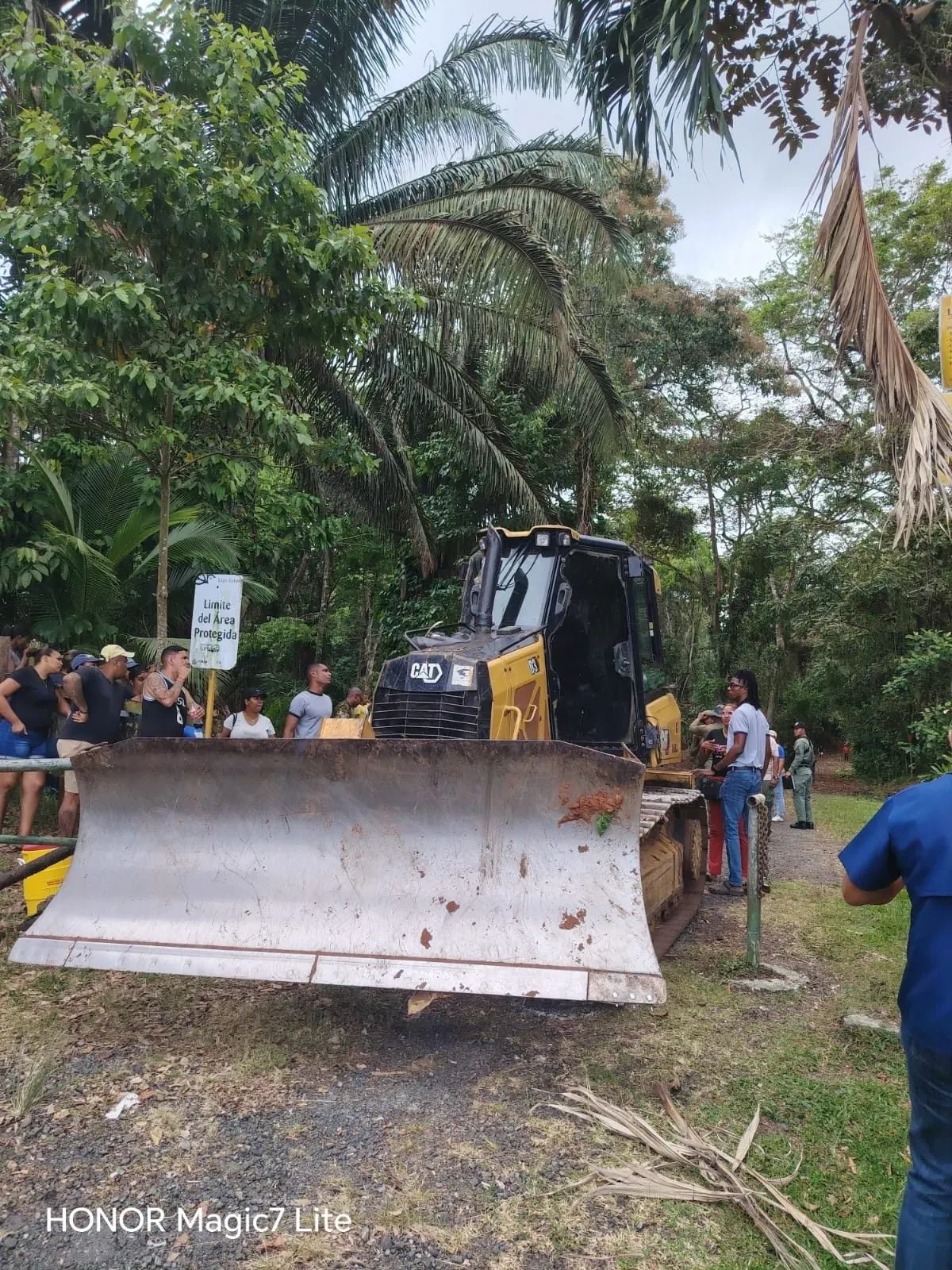
Panama’s Ministry of Environment ordered an immediate halt to unauthorized logging and land clearing this week. The action targeted a protected sector within the Gatun Lake area in Colon province following a citizen’s complaint.
Inspectors from the ministry’s regional office and rangers from the Gatun Lake Recreational Area conducted a field visit to the Villa Atlantica sector. They discovered significant violations during their inspection. The lock on the main access gate had been broken, and heavy machinery was operating inside the protected perimeter without any authorization.
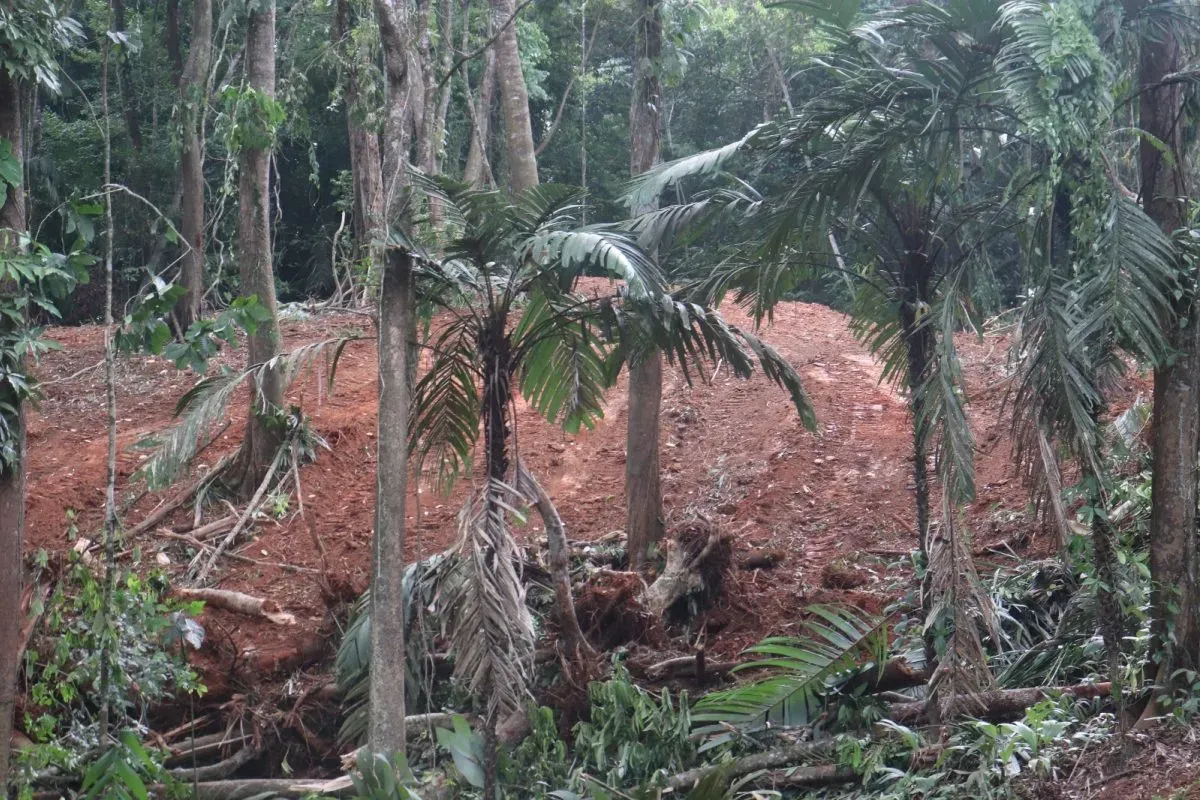
Officials confirmed the illegal activity damaged approximately 8,000 square meters of forest cover. That is equivalent to 0.80 hectares of protected land. The ministry swiftly moved to retain the machinery and suspend all work on the site.
“The Ministry of Environment ordered the immediate suspension of clearing and logging activities within the Gatun Lake Protected Area.” [Translated from Spanish]
Protected Zone Faces Biodiversity Threat
The affected land is part of Panama’s National System of Protected Areas. Any intervention in these zones requires prior permits and environmental impact studies, none of which existed for this operation. The case is now being forwarded to the Public Ministry for potential criminal prosecution.
Authorities cite possible damage to local biodiversity and an intermittent water source as serious concerns. The Gatun Lake area is a crucial ecological and economic region, forming a key part of the Panama Canal watershed.
Units from the Environmental Police and the National Police supported the ministry’s technical and legal staff during the operation. This interagency collaboration underscores the severity with which the government views the incident.
The Ministry of Environment (Panama) reiterated its call for public vigilance. Citizens are encouraged to report similar environmental crimes to help safeguard natural resources.
Legal and Administrative Actions Proceed
Administrative proceedings are advancing in line with the country’s environmental laws. The ministry’s investigation will determine the full scope of the violation and identify responsible parties. Penalties can include substantial fines and mandated restoration of the damaged ecosystem.
This event highlights ongoing challenges in managing the nation’s Protected Areas of Panama. Enforcement across vast and sometimes remote territories remains a complex task. Officials rely heavily on community cooperation to detect illegal activities early.
The retained machinery remains in government custody as evidence. Its presence inside the protected zone, behind a forcibly opened gate, provided clear evidence of the unauthorized work.
Protecting these areas is not just about conservation. It is also about water security and maintaining the ecological balance that supports local communities and national infrastructure. The ministry’s rapid response aims to set a clear precedent. Unauthorized development within protected zones will not be tolerated.
Further updates are expected as the legal process unfolds. The case serves as a stark reminder of the constant pressure faced by Panama’s protected natural reserves.