


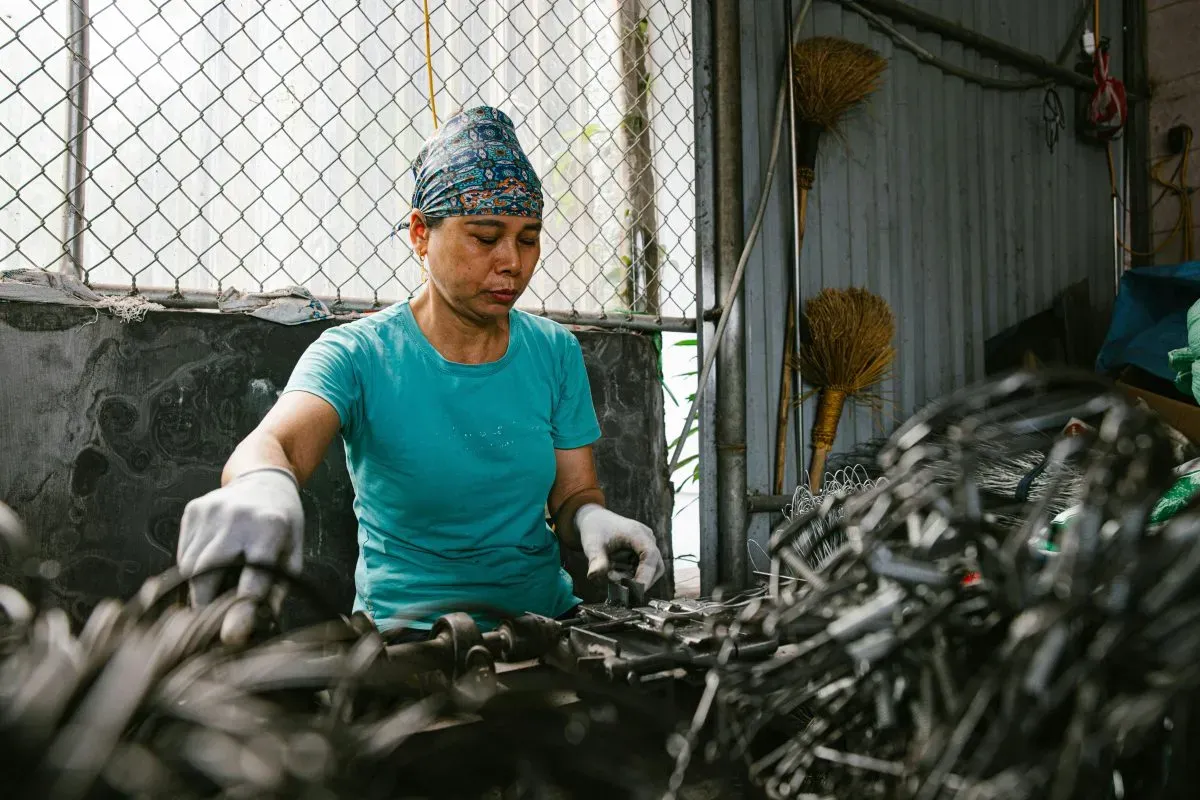
Panama’s government has officially enacted a landmark law designed to overhaul the nation’s approach to waste and production. The new legislation, known as Law 502, establishes a comprehensive legal framework for a circular economy, aiming to reduce pollution and create green jobs. President Laurentino Cortizo sanctioned the law this week, setting the stage for a systemic shift from a disposable model to one focused on resource efficiency.
📑 Table of Contents
The law moves far beyond traditional recycling concepts. Its core objective is to eliminate waste at the design stage of products, keep materials in use for as long as possible, and regenerate natural systems. Officials frame the policy as a critical step for protecting the environment for Panama’s population of over four million people while simultaneously fostering new economic opportunities.
The legislative process culminated in October when the National Assembly of Panama approved the proposal with unanimous support. Fifty votes secured its passage, a rare show of consensus on a major environmental policy. The bill’s sponsor, Congressman Manuel Samaniego, emphasized the transformative potential of the new rules.
“This regulation represents an innovative advance that lays the foundation for a new economic model,” Samaniego said. [Translated from Spanish] He explained that the law prioritizes sustainability and the well-being of current and future generations by design.
Immediate next steps involve developing specific regulations and implementation plans across multiple government ministries. The law mandates the creation of a national strategy, signaling that detailed policies on extended producer responsibility and waste management hierarchies will follow in the coming months.
From Linear Waste to Economic Opportunity
Panama’s adoption of this framework places it among a growing group of nations formally embracing circular economic principles. The traditional linear system of “take, make, dispose” has led to significant landfill strain and environmental degradation. This new approach seeks to close those loops, treating waste as a resource for industry.
One of the law’s most touted benefits is its potential to generate sustainable employment. By incentivizing repair, refurbishment, remanufacturing, and recycling industries, the government anticipates a wave of green business innovation. This could transform trash into revenue streams for both new enterprises and existing sectors seeking to minimize material costs.
The concept of a Circular Economy is not entirely new globally, but its codification into national law marks a significant commitment for Panama. It aligns with broader regional sustainability goals and international climate agreements. Success will depend heavily on effective public-private collaboration and consumer education campaigns to change deep-seated habits.
Infrastructure for sorting, processing, and repurposing materials will require substantial investment. The law is expected to attract both public funding and private capital interested in sustainable development projects. Its passage has already sparked discussions among business groups about adapting operational models to meet the forthcoming standards.
Building a Legacy of Sustainability
Environmental advocates have celebrated the law as a foundational achievement. They argue it provides the necessary tools to tackle plastic pollution in waterways, reduce methane emissions from landfills, and conserve natural resources. The legislative text explicitly includes goals to regenerate ecosystems, suggesting future projects may involve restoring degraded lands using organic waste.
This legal shift arrives as Panama continues to define its modern identity, balancing development with ecological stewardship. The country has previously made headlines for its architectural landmarks focused on nature, such as the Biodiversity Museum. That iconic building was designed by the late architect Frank Gehry, whose work drew global attention to the isthmus’s rich ecology.
Law 502 now sets a different kind of landmark, one of policy rather than physical form. Its real-world impact will be measured in reduced waste tonnage, increased recycling rates, and the growth of a green workforce. For ordinary citizens, the changes will gradually manifest in altered product designs, new recycling options, and perhaps even community-based reuse initiatives.
Panamanian officials express confidence. They view the law not as a constraint on industry but as a catalyst for smarter, more resilient growth. The coming years will test that vision as the nation begins the complex work of turning legislative text into tangible environmental and economic results.