


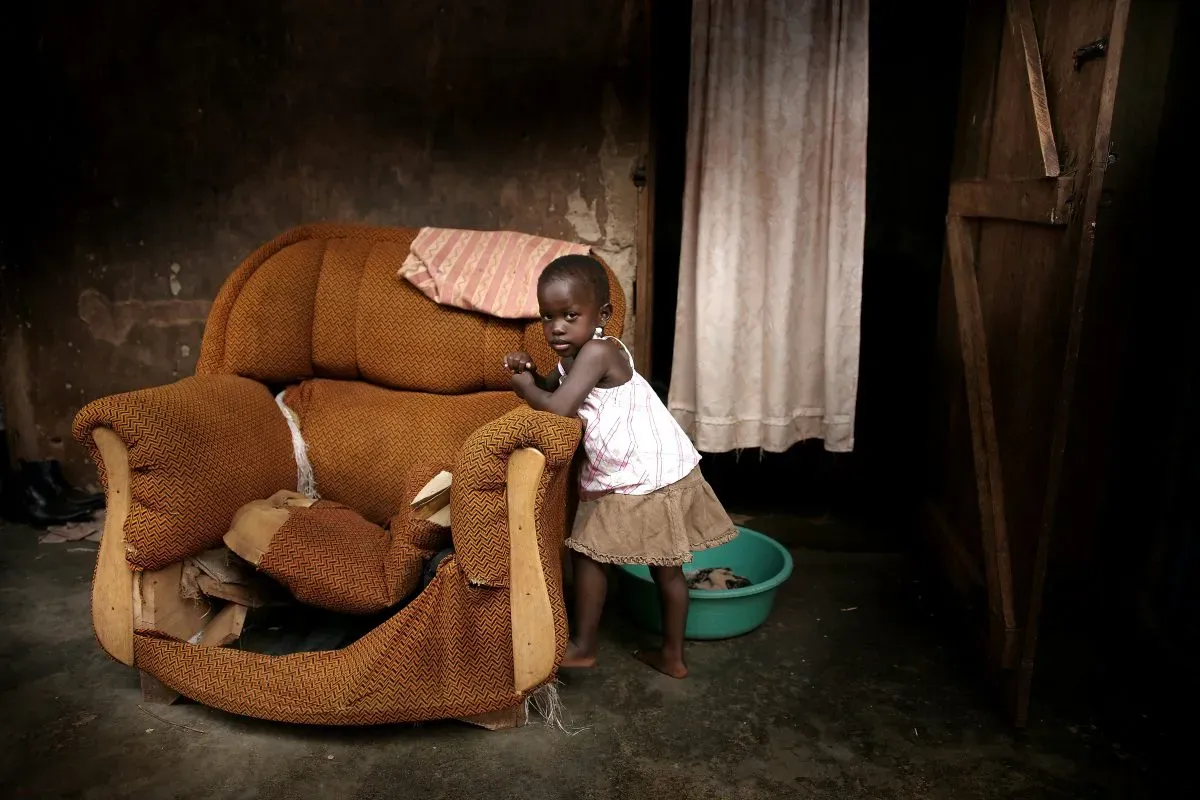
A new report from Panama’s Ombudsman’s Office details the severe and systemic inequalities facing the nation’s Afro-descendant children. The investigation, supported by the United Nations Children’s Fund (UNICEF), exposes widespread poverty, violence, and discrimination that limits the development of over 312,000 young people. These children represent 26 percent of Panama’s total child population.
The “Defensorial Report on the Situation of the Rights of Afro-descendant Girls, Boys and Adolescents in Panama” compiles direct testimonies and institutional data. It was presented this week to government authorities, international organizations, and the Afro-descendant community groups who participated in its creation. Researchers conducted focus groups and consultations in the provinces of Panama and Colon.
Ombudsman Eduardo Leblanc Gonzalez stated the findings reveal deep structural gaps that systematically exclude Afro-Panamanian youth. He emphasized the urgent need for policy transformation based on the children’s own accounts of their lives.
“Afro-descendant girls, boys and adolescents have spoken to us with profound clarity about the inequalities they face, from gaps in health and education to the multiple forms of racism and violence that cross their lives. Their testimonies remind us that these are not isolated situations, but structural realities that we must transform urgently,” said Leblanc Gonzalez. [Translated from Spanish]
The report serves as a direct roadmap for state action. It insists that listening to these children is a legal obligation, not a symbolic gesture. Their words, officials argue, must lead to concrete decisions that change their daily realities.
A Landscape of Persistent Inequality
Panama’s demographics show one in three citizens identifies as Afro-descendant according to the 2023 census. Despite this significant presence, the report paints a picture of childhoods defined by deprivation. Many grow up in environments lacking clean water, living in dilapidated housing, and facing discrimination in schools.
Access to basic healthcare remains limited for these communities. Exposure to normalized violence in their neighborhoods is a common thread. The document identifies the most violated rights for this group as protection within the family, living free from violence and discrimination, accessing education, and participating in cultural life.
Community leaders described realities that contradict official statistics. While data may show high access to safe water, families in neighborhoods like Curundu or El Chorrillo often deal with intermittent supply. They rely on water trucks, paying more for water that is not always safe. Children sometimes miss school to wait for water deliveries.
Testimonies collected include stories of children walking for hours to fetch water. One account summarized the stark inequality. “A classmate lives in Samaria. He had to carry water for a year. One day he spent the whole day waiting for water and didn’t go to school.” [Translated from Spanish]
Poverty Defines Daily Life and Future Prospects
The economic data within the report is stark. It shows 22 percent of Afro-descendant children live in poverty. Another 7 percent live in extreme poverty. Two out of every ten Afro-descendant children experience multidimensional poverty. This reflects simultaneous deprivations in housing, basic services, income, education, and health.
This poverty is not just about limited food or services. The report concludes it conditions futures, perpetuates injustice, and leaves deep emotional scars. In some marginalized barrios, only 39 percent of children have access to social security. Most depend on the informal work of their parents.
Housing conditions compound these struggles. Homes made of wood with zinc roofs and damaged floors are common in predominantly Afro-descendant neighborhoods. Constant leaks and flooding create unhealthy living spaces. Overcrowding is nearly the norm.
“In my house we all live piled on top of each other,” one child reported. Others described sleeping at relatives’ homes because there is no more room in their own. [Translated from Spanish]
This precarity is now intensified by gentrification in areas like El Chorrillo. Afro-descendant families face displacement due to real estate and tourist development around the historic Casco Antiguo district. Community leaders express a desire for improvement that includes them. “We want improvements, yes, but for us too,” one leader stated. [Translated from Spanish]
Violence and Discrimination in Schools and Streets
The report documents a pervasive climate of violence. A shocking 51 percent of Afro-descendant children and adolescents suffer violence within their own homes according to the data. This domestic violence exists within a broader context of community danger and institutional neglect.
Children described playing among sewage water. They attend schools closed due to rat infestations and dengue outbreaks. These situations, community members note, have persisted for twenty or thirty years without resolution. The lack of sanitation disproportionately affects girls, who struggle to manage menstrual hygiene and often miss school due to inadequate bathroom facilities.
Within the education system, the evidence of structural racism is clear and damaging. The investigation records racist taunts and nicknames used against Afro-descendant students. School regulations often penalize traditional Afro hairstyles, forcing children to conform to Eurocentric standards.
These daily aggressions create hostile learning environments. They directly contribute to the disengagement and dropout rates observed among Afro-Panamanian youth. The report highlights the story of one adolescent girl who abandoned school simply because she could not afford the bus fare, a basic economic barrier exacerbated by systemic neglect.
A Call for Accountability and Immediate Action
The presentation of the report marks a formal demand for accountability. The Ombudsman’s Office (Panama) has placed the findings directly before the government agencies responsible for child welfare, education, housing, and health. The involvement of UNICEF provides an international framework for the recommended actions.
Officials stress that the testimonies within the report are not anecdotes. They are evidence of policy failure. The documented realities of interrupted water access, overcrowded homes, and racist school policies point to specific areas where intervention is required.
Leblanc Gonzalez framed the next steps as a matter of legal and moral imperative. The state has an obligation to convert the rights promised on paper into daily practice for every child. This means investing in infrastructure in historically marginalized communities. It requires training for educators to eliminate bias. It demands social programs that reach the poorest families with tangible support.
“Listening to and valuing the opinion of Afro-descendant girls, boys and adolescents is not a symbolic gesture; it is an obligation of the State and of all society. This report is a roadmap to ensure that their rights become everyday practices and not promises. Their word must have real consequences in the decisions that affect their lives,” added Leblanc Gonzalez. [Translated from Spanish]
The report concludes that poverty, racism, and violence form an interlocking trap for Panama’s Afro-descendant youth. One young mother recounted being yelled at in the delivery room, “you ruined your life.” [Translated from Spanish] This moment captures the weight of stigma these children carry from birth. Breaking this cycle, the authors argue, requires a targeted, adequately funded, and sustained national effort that prioritizes the children who have been left behind for generations.