


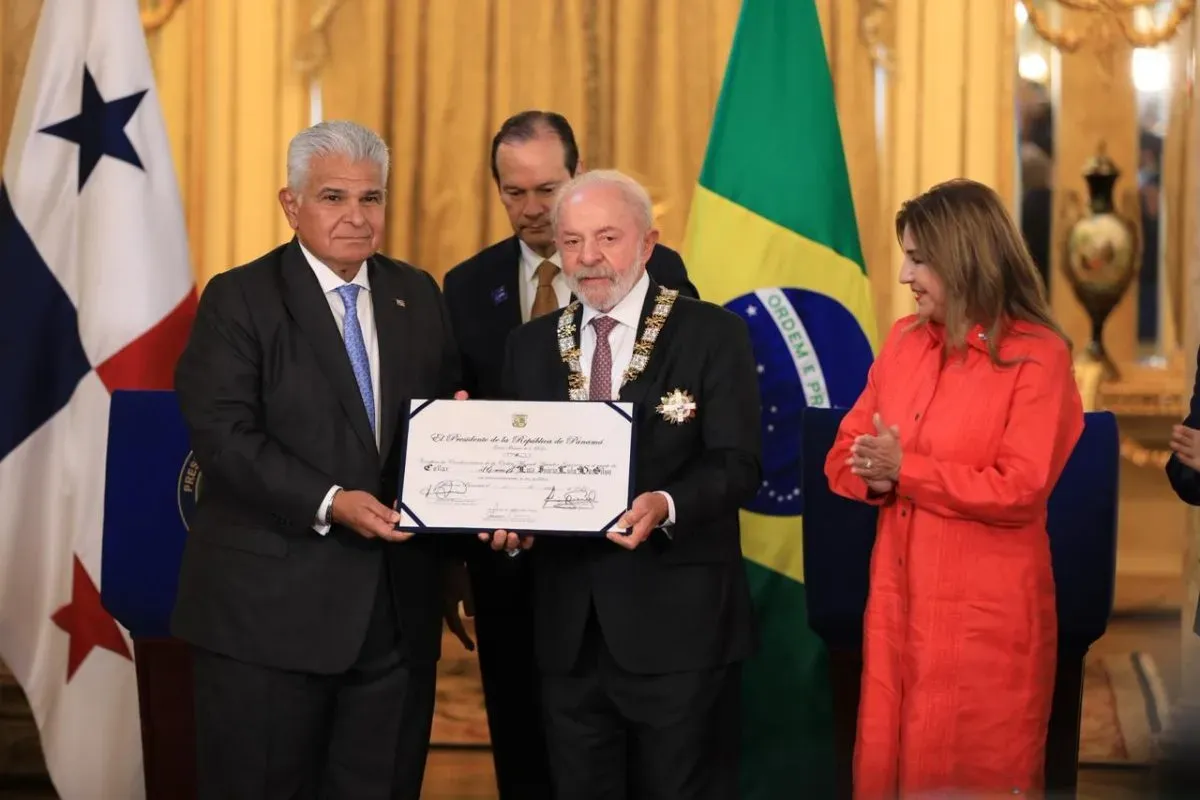
Panamanian President Jose Raul Mulino and Brazilian President Luiz Inacio Lula da Silva signed four cooperation agreements in Panama City on Tuesday. The bilateral deals aim to facilitate investments, boost trade, and promote tourism between the two nations. This high-level meeting marks a significant diplomatic push to strengthen economic ties across the region.
The signing ceremony took place at the Palacio de las Garzas (Presidential Palace of Panama) following an official welcome with full state honors for the visiting Brazilian leader. Both presidents agreed to establish a permanent consultation mechanism to advance shared bilateral interests moving forward.
Four Key Agreements Signed
Officials formalized cooperation across several strategic sectors. The signed instruments include an agreement on investment cooperation and facilitation. A second document sets terms for negotiating a partial scope trade agreement. Another memorandum of understanding links Brazil’s Ministry of Ports and Airports with Panama’s Maritime Authority.
The fourth pact is an Action Plan to implement an existing Tourism Cooperation Agreement. These frameworks are designed to reduce bureaucratic barriers for businesses and create new commercial pathways. The agreements come as presidente mulino has emphasized attracting foreign investment as a core economic priority.
“This is the first time in 30 years that Panama and Brazil have maintained such a solid relationship. We must take advantage of this moment to bring our positions closer on strategic issues,” President Mulino stated during the expanded meeting. [Translated from Spanish]
Mulino expressed a clear desire for Brazil to view Panama as a hub for its re-export operations. He detailed Panama’s competitive advantages for Brazilian partners during the talks.
Mercosur Membership and Economic Opportunities
President Lula da Silva used the summit to encourage Panama to accelerate its integration process as a full member of Mercosur. Panama currently holds associate state status in the South American trade bloc. Lula’s push aligns with his broader vision for expanded regional cooperation.
Mulino highlighted Panama’s international financial center and top-tier logistics infrastructure, including its container ports. He also pointed to the country’s energy development, noting opportunities for exporting surplus power. Projects managed by the Panama Canal Authority, such as two megaports, a gas pipeline, and the Rio Indio reservoir, were presented as areas for potential collaboration.
“We are very interested in Brazil seeing Panama as the center for its re-exports,” President Mulino told the assembled ministers and officials. [Translated from Spanish]
The Panamanian leader specifically requested Brazilian technical support for the agricultural sector. He cited a need for experience transfer in rice cultivation to improve local yields. Commercial opportunities for Panamanian meats in the Brazilian market were also discussed.
Foundations for Future Growth
This presidential summit establishes a new chapter in Panama-Brazil relations. The signed agreements provide a concrete roadmap for cooperation that both administrations can now implement. Focus will shift to working groups and technical teams who must translate the frameworks into actionable policies.
Mulino concluded the meeting on a note of strong optimism about the partnership’s future. He referred to Brazil as Panama’s “godfather” before the Mercosur bloc. The comment underscores the strategic importance Panama places on its relationship with South America’s largest economy.
“Panama is happy with this relationship with Brazil,” Mulino said. [Translated from Spanish] The sentiment captures a mutual intent to build lasting economic bridges. Both nations appear committed to transforming diplomatic warmth into tangible commercial results.