


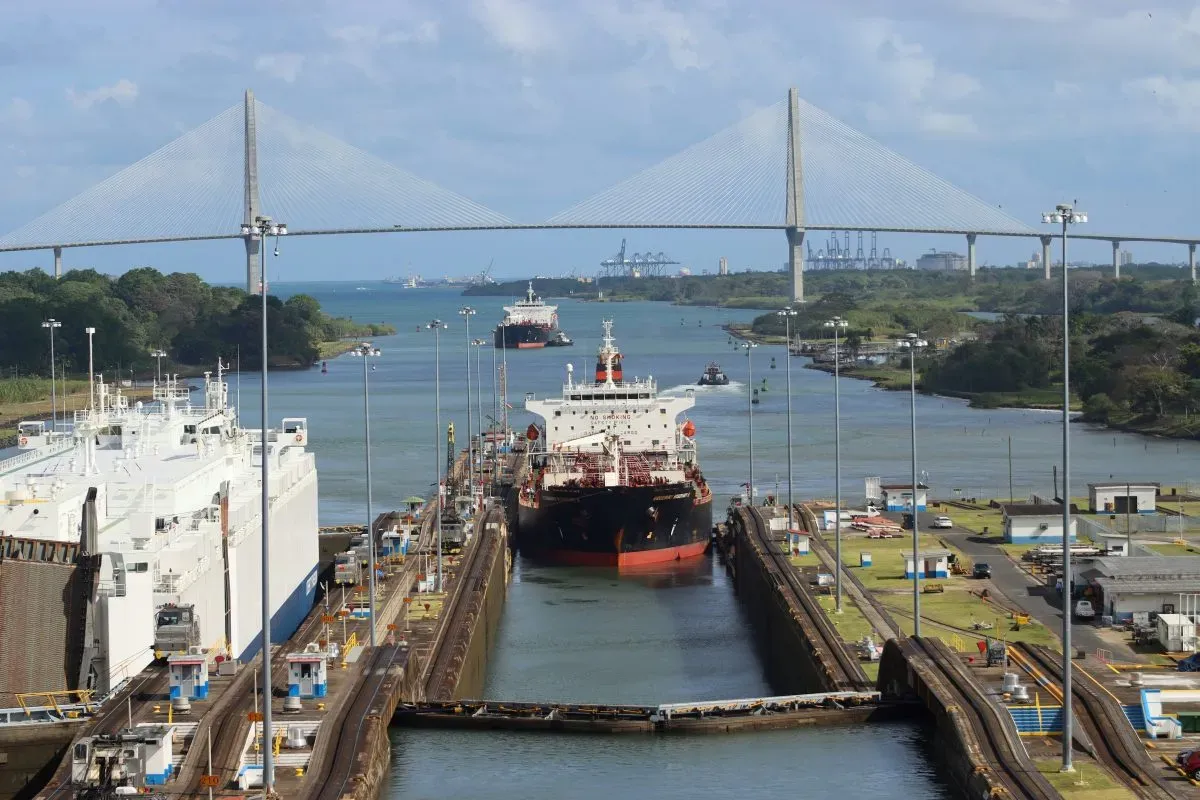
Official statistics show a sharp rebound in maritime traffic through the Panama Canal. The vital waterway recorded 3,107 total transits from October through December 2025, a significant increase compared to the same period last year.
This data, released by the Panama Canal Authority (ACP), covers the first quarter of fiscal year 2026. The figures point to a sustained recovery following previous operational restrictions imposed due to water scarcity. The daily average for high-draft vessel transits reached 34.6 during this three-month span.
Boris Moreno Vásquez, the ACP’s Vice President of Operations, signed the monthly report detailing this growth. He connected the positive results to efficient management despite scheduled maintenance.
“These results were achieved in a month that included scheduled maintenance on the Panamax locks, without significantly affecting service continuity,” [Translated from Spanish] the operations report stated.
Panamax and Neopanamax Vessels Drive Recovery
Breaking down the numbers reveals where the growth originated. Transits of traditional Panamax size vessels jumped to 2,226, an increase of 430 transits year-over-year. The larger Neopanamax ships, which use the canal’s post-2016 expanded locks, also saw substantial growth. They reached 881 transits, adding 146 more crossings than the previous year.
While Panamax ships still constitute 71.64 percent of total traffic, the Neopanamax segment continues to gain share. It now represents 28.36 percent of all transits. This shift underscores a long-term trend toward larger vessels utilizing the modernized Panama Canal infrastructure.
Container ships dominated the Neopanamax lane with 517 transits. Liquefied petroleum gas (LPG) carriers followed with 268 transits through the larger locks. Bulk carriers and chemical tankers, in contrast, continued to rely primarily on the original Panamax locks for their passages.
Market Segments and Capacity Utilization
Combining both lock systems, container ship transits reached 714, slightly above the previous year’s total. Other segments also showed robust activity. The canal recorded 562 bulk carrier transits, 604 chemical tanker crossings, and 450 transits by gas carriers.
Vehicle carriers, passenger ships, and liquefied natural gas (LNG) carriers also contributed to the quarterly total. The data confirms the waterway’s broad importance to global shipping logistics.
Operational efficiency remained high throughout December. The canal consistently utilized more than 100 percent of its available booking slots. For Neopanamax transits, 147 slots were used against 121 available, exceeding 120 percent occupancy. Regular vessel slots and auctioned reservations also saw usage rates above initial capacity.
The ACP reiterated its normal transit capacity ranges between 34 and 36 daily transits for Panamax locks. The Neopanamax locks can handle 9 to 11 transits each day. The authority estimates a maximum sustainable capacity of 36 to 38 total transits daily across the entire system.
This strong quarterly performance provides optimism for the canal’s fiscal year. It demonstrates the route’s resilience and continued demand from global shippers. The recovery comes as a welcome development after periods of drought-induced draft restrictions that challenged operations.