


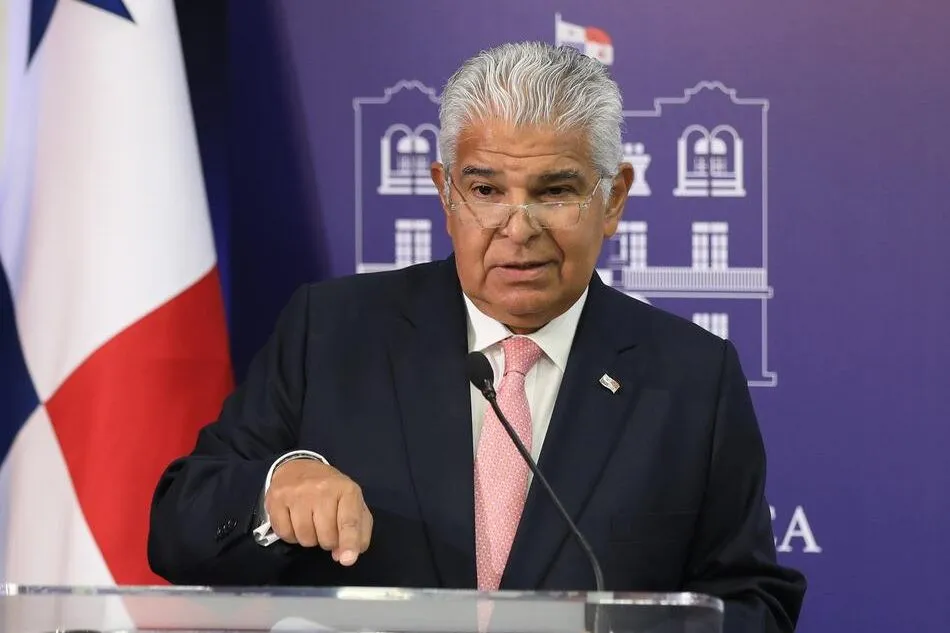
Panamanian President Jose Raul Mulino announced on Tuesday, February 17, 2026, that his government will continue barring European companies from public tenders. This decisive move is a direct response to the European Union’s decision to keep Panama on its list of non-cooperative tax jurisdictions. The ongoing diplomatic and economic standoff centers on international tax transparency standards.
The EU’s latest review, confirmed the same day, maintained Panama’s position on its so-called “grey list.” This list identifies countries the bloc believes have insufficient tax governance. Fiji, Samoa, and Trinidad and Tobago were removed for making sufficient reforms, while Vietnam and Turks and Caicos were added. Panama remains alongside nations like Russia and Vanuatu, awaiting another review in October 2026.
A Firm Presidential Directive
President Mulino used the social media platform X to communicate his administration’s position. He framed the continued restriction on European bidders as a measured retaliation, stating the country had anticipated this outcome. The policy specifically targets companies seeking government contracts, not private European investment within Panama.
“Although we knew that in this EU review we would not be removed from the list and we are preparing for the October review, we maintain the restriction that no European company can bid on our projects from now on. I have asked the different entities to do so,” wrote Mulino. [Translated from Spanish]
The directive from the Government of Panama applies immediately to all state entities. Officials have not yet detailed the exact start date for the enforcement of this ban, though Mulino first proposed the idea in 2024. The policy fundamentally alters the competitive landscape for major infrastructure and service projects in the country.
The Core of the EU’s Concerns
Panama’s inclusion on the European Union list of non-cooperative jurisdictions for tax purposes stems from specific critiques of its tax code. EU finance ministers have repeatedly flagged the country’s unconditional exemption from tax on foreign-source passive income. They argue this system is harmful and can facilitate tax avoidance by multinational corporations without real economic activity in Panama.
In an effort to address these concerns, Panama’s Ministry of Economy and Finance has already drafted proposed legislation. The reform focuses on amending the Fiscal Code to introduce “economic substance” requirements. This legal change would force multinational entities operating in Panama to prove they have genuine physical presence and activity. That includes employing qualified staff, maintaining offices, and incurring adequate operational expenses within the country.
The proposed Article 694-A would impose an exceptional tax on certain foreign passive income, like dividends and royalties. Entities could only avoid this new tax by qualifying as having adequate economic substance in Panama. The legislation is Panama’s primary tool for convincing the EU to change its status later this year.
Implications for Business and Bilateral Relations
The ban creates immediate uncertainty for European firms engaged in or planning to bid on Panamanian public procurement. It signals a hardening of Panama’s stance in what has been a years-long dialogue with European authorities. The move also coincides with other significant policy reviews in Panama, including discussions on energy policy that could affect foreign investment in different sectors.
For the Panamanian government, the strategy carries both political and economic risks. It projects a strong, sovereign image in the face of external pressure, a potentially popular domestic position. Conversely, it could limit the pool of qualified bidders for state projects, potentially increasing costs or delaying development initiatives. The government is betting that the threat of lost commercial opportunities will pressure EU member states to advocate for Panama’s removal from the list.
All eyes now turn to the October 2026 review. Panama’s success hinges on passing its proposed fiscal reforms and demonstrating their effective implementation to EU assessors. The coming months will see intense lobbying and technical discussions. The outcome will determine whether this restrictive policy on European companies is a temporary tactic or the new long-term reality for bilateral economic relations.