


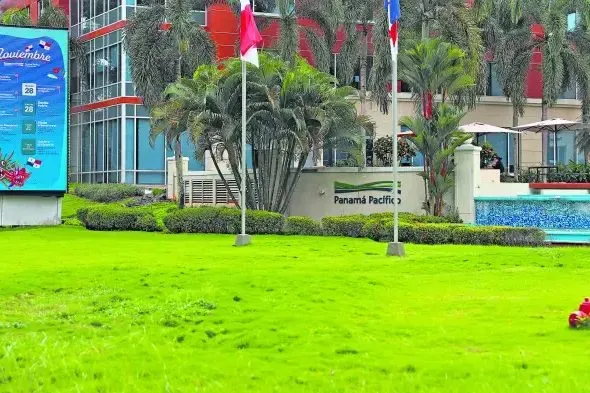
Panama’s Panama Pacifico Special Economic Zone is accelerating a series of major infrastructure projects designed to solidify its position as a premier investment hub. The zone’s administrator confirmed this week that connectivity, a current challenge, will see dramatic improvements with the completion of the Fourth Bridge over the Panama Canal, a new Metro station, and a future railway link. These developments come as demand for space in the zone has already reached full capacity, forcing an accelerated construction timeline for new warehouses and residential units.
The zone, located near the Pacific entrance to the canal, is strategically positioned between Panama City and its most populous western districts. Its current growth, however, is tempered by the severe traffic congestion affecting the Bridge of the Americas, the primary existing crossing. Officials argue this pain point is temporary and will be resolved by the incoming infrastructure, which is actively under construction and funded through a public-private partnership.
“We are currently experiencing what everyone trying to leave the city or leave Panama Oeste faces: the bottleneck caused by the Bridge of the Americas,” said Javier Suarez Pinzon, Administrator of the Panama Pacifico Agency. [Translated from Spanish] “As the President of the Republic has stated, it is this administration’s mission to finish the fourth bridge, which will create better road connectivity between the two areas.”
Pinzon detailed the full scope of planned improvements. Beyond the bridge, the Panama Metro Line 3 will feature a station within Panama Pacifico. A planned extension of the Panama Railway will also include a stop in the zone. These projects aim to transform the area from a traffic-choked corridor into a fluid multimodal hub.
Logistics and Location Drive Investment Boom
Despite the present congestion, investor interest has not wavered. Pinzon revealed that all existing warehouse space is at 100 percent occupancy. This demand has pushed the agency to fast-track construction of additional square meters for delivery by late 2026, with tenants already lined up. A parallel rush is on for residential construction to house the growing workforce, a key cost for multinational companies establishing operations.
The zone offers a unique package under a special legal framework. Companies can operate within a secure, master-planned community where employees can also live, socialize, and access education. This integrated model is a significant draw for foreign direct investment. The zone’s law provides incentives across six business sectors, with logistics currently dominating.
“Fifty percent of the companies in Panama Pacifico are logistics businesses, and the other important sector would be maritime and aviation,” Pinzon stated. [Translated from Spanish] “Whenever we go out to promote the zone, which we have done extensively abroad, there is always great interest. We are not talking about a project that might be; it is already a reality.”
Connectivity extends beyond the canal crossing. The zone utilizes a paid logistics corridor road managed by the Panama Canal Authority to move cargo between oceans in roughly ninety minutes. This links Panama Pacifico directly with the Colon Free Zone on the Atlantic coast, creating a complementary commercial axis. Two major ports are within a fifteen-minute drive, further cementing its logistical appeal.
Future Plans Include Airport Integration
Looking ahead, Panama Pacifico is positioning itself to absorb the operations of Marcos A. Gelabert Airport, the domestic airport currently located in Albrook. Pinzon confirmed discussions with the presidency and the railway secretary, offering the agency’s readiness to develop a master plan. The agency believes it is the best entity to ultimately administer the Panama Pacifico International Airport, tying air travel directly into the zone’s economic ecosystem.
The zone’s development is spearheaded by master developer London & Regional Panama, a Panamanian company with foreign capital. This private partner is contractually committed to a minimum investment of 705 million balboas in the project. Their role has been crucial in addressing immediate congestion issues within the zone’s internal road network as development continues.
For now, the narrative is one of growth straining against current infrastructure limits. The promise of the Fourth Bridge and rail links serves as the primary relief valve. Officials are betting that the short-term traffic frustrations, a reality for the entire region, will soon be eclipsed by a connectivity advantage that few other Special Economic Zone locations can match. With 410 companies already operating within its confines, Panama Pacifico’s foundation is set. The coming infrastructure, they argue, will launch its next phase of expansion. This growth occurs within a broader national context where economic benefits do not always reach all workers, a challenge highlighted in recent discussions on Panama’s mica especial continued development strategy.