


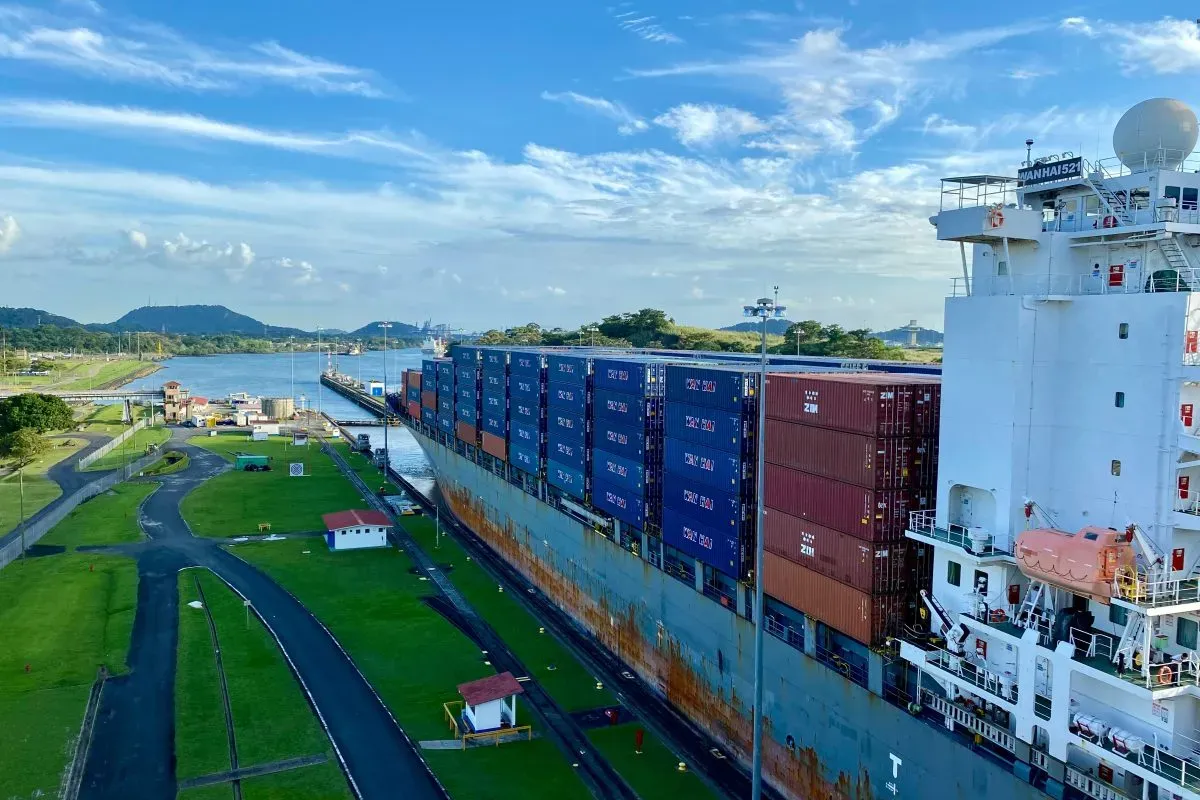
Panama’s economic activity grew 4.77 percent in October 2025 compared to the same month last year. The expansion was primarily driven by strong performance in the Panama Canal, national ports, and air transport, according to official data released this week.
The National Institute of Statistics and Census (Panama) reported the figure through its Monthly Index of Economic Activity. While positive, the October growth rate was slower than the 8.36 percent surge recorded in October 2024. For the first ten months of the year, cumulative economic growth stands at 4.36 percent.
Government analysts pointed to sustained momentum in key service sectors. “The country’s economic activity presented positive results in the majority of productive sectors during October,” the INEC report stated. National Institute of Statistics and Census (Panama) data highlighted transportation, financial intermediation, and construction as major contributors.
Transportation and Logistics Power Growth
Panama’s strategic role in global trade continues to anchor its economy. The transportation, storage, and communications sector led October’s expansion. This was fueled by higher toll revenues and net tons transported through the Panama Canal, increased air traffic, and a significant jump in national port container movement.
The interoceanic waterway itself recorded 1,029 vessel transits in October. That number marks a 5.6 percent increase from the 974 transits reported in October of the previous fiscal year. Simultaneously, the national port system moved 872,157 TEU (twenty-foot equivalent unit) containers in the month. This represented a robust 11.1 percent year-on-year increase.
“The result is located below the 8.36% observed in October 2024.” [Translated from Spanish]
Air travel also showed remarkable strength. Tocumen International Airport handled 1.81 million passengers in October, with 75 percent being connecting travelers. Top destinations included Bogotá, San Jose, Miami, Punta Cana, and Medellín. The airport has moved over 17.3 million passengers from January through October, reinforcing Panama’s status as a regional international airport hub.
Construction Shows Mixed Signals Amid Sectoral Shifts
The construction sector registered growth compared to September 2025. Officials linked this to building, additions, and repairs as measured by municipal permits. This activity boosted demand for inputs like premixed concrete and gray cement, benefiting mining and quarrying operations.
A more nuanced picture emerges from annual comparisons. The value of private construction, additions, and repairs actually fell 12.9 percent in October compared to the same month in 2024. The Panamanian Chamber of Construction cautioned that the sector has not fully recovered. It cited a paralysis of preferential mortgage loans during the first half of the year due to legislative uncertainty as a continuing drag.
Other sectors posted moderate gains. Commercial activity saw positive rates in local retail and wholesale trade, new car registrations, and imports. Financial intermediation grew due to increases in local deposits and loans. The insurance industry performed well in segments including auto, fire, and personal accident coverage.
Tourism and Hospitality Benefit from Visitor Influx
Hotels and restaurants sustained positive performance, supported by a steady inflow of tourists arriving by air and on cruise ships. This increased traffic also boosted restaurant revenues. Entertainment and recreation services saw gains linked to online gaming revenue, casino table games, and horse racing activity.
Panama is increasingly seen as an attractive destination for international visitors, which supports broader economic activity in the services sector. The government has actively promoted the country’s diverse tourism offerings, from its metropolitan capital to its ecological treasures.
Additional sectors contributing to October’s growth included electricity and water, driven by renewable and thermal energy generation. Industrial production grew thanks to output of pork and chicken meat and alcoholic beverages. The agricultural sector reported positive rates in pig farming, poultry, and pineapple cultivation for export.
Several Sectors Face Contraction and Economic Headwinds
Not all sectors shared in the October expansion. The Colon Free Zone, a major re-export hub, recorded a negative growth rate. Officials attributed this to a lower value of re-exported goods, a trend that has concerned business leaders in the zone for several months.
Industrial production showed weakness in specific areas. Output of tomato derivatives, milk, and carbonated beverages declined. The agricultural sector also saw setbacks in the cultivation of bananas and watermelons destined for export. Fishing activity contracted due to reduced exports of refrigerated and frozen fish and fish fillets.
Economist Carlos Araúz emphasized that broader household economic improvement hinges on job creation. He told local newspaper La Prensa that generating more formal employment remains a critical challenge for Panama’s policymakers. The current growth, while positive, has not yet translated into sufficient new jobs across all regions of the country.
The cumulative port activity data underscores the logistics sector’s resilience. From January to October, the National Port System handled a total of 8,240,994 TEUs. This represents a 3.1 percent increase over the same period in 2024, confirming a steady upward trend in maritime cargo despite global economic uncertainties.
Panama’s economy continues to navigate a complex path. Its performance is bifurcated, with trade and logistics powering ahead while other traditional sectors and consumer-facing industries face stronger headwinds. The coming months will test whether growth can broaden beyond its current core drivers.