


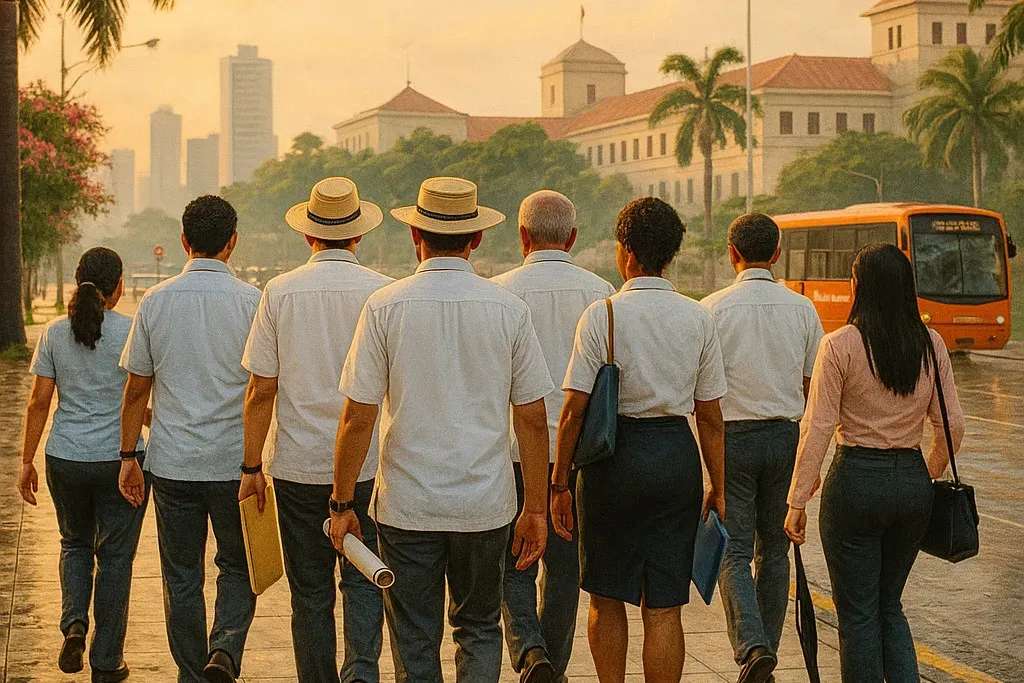
Panama confronts a critical workforce dilemma where high unemployment coexists with companies unable to fill essential positions. Finance expert Federico Marengo issued this warning, describing a systemic skills gap that threatens national productivity. The situation demands immediate action from both private sector leaders and government officials.
Marengo, CEO of ADEN University, explained the regional challenge during a recent television interview. He stated that while unemployment figures remain a concern, business growth is simultaneously hampered by a shortage of qualified talent. This creates a significant drag on economic development and social security funding.
An Immediate Crisis Requiring Urgent Solutions
The consultant framed the issue as a pressing emergency. “The sun rises tomorrow and our people remain unemployed while our companies still need labor,” Marengo said. He stressed that waiting for long-term educational reform is not a viable option for addressing current vacancies. The focus must shift toward rapid, practical upskilling of the existing workforce.
“It is a reality across Latin America that employability has two faces. On one side we see unemployment, on the other we see major company growth, and on yet another we have these companies and their leaders saying they cannot capture the talent they need.” [Translated from Spanish]
Marengo pointed to the Panama Canal Authority as a prime example. The authority has publicly stated its need for human resources but must retrain many new hires because they lack the specific competencies required for modern operations. This retraining cycle represents a costly delay for a critical national entity.
Corporate leadership carries a heavy burden in this scenario. Marengo argued that executives must develop strategic foresight while mastering talent acquisition and development. They need to accurately assess the skills applicants possess and identify the gaps that internal training must fill.
Investing in Internal Training and Future Sectors
The proposed solution centers on aggressive internal workforce development. Companies should view training not as an expense but as a vital investment in productivity. “The key is training,” Marengo emphasized. He believes this direct approach is the only way to quickly align available workers with the needs of growing businesses.
“We have the social security fund without contributors. We need to increase the volume of employment to improve the country’s productivity and, in some way, we have people who are not trained or sufficiently skilled to enter those positions.” [Translated from Spanish]
Looking ahead, Marengo identified technology and logistics as Panama’s most promising career fields. The nation’s expanding service platform provides a strong foundation. “Everything related to logistics and services in general will always be the north star for value creation,” he stated.
Artificial intelligence implementation into business models represents a particularly urgent area for skill development. Marengo also highlighted transportation and service sectors linked to new ports, pipelines, and rail projects as growth areas. His advice to young people is to pursue studies with clear and immediate career pathways, especially in tech.
Panama’s relatively high regional wages, according to Marengo, must be justified by maximum worker productivity. Closing the skills gap can create a virtuous cycle. More productive companies achieve better results, which in turn generates more formal employment and broader social security contributions.
This labor paradox of joblessness alongside unfilled vacancies is common across Latin America. Marengo contends that with trained leadership and urgent upskilling programs, Panama has a realistic chance to resolve its workforce mismatch by 2026. The time for coordinated action between industry and the state is now.