


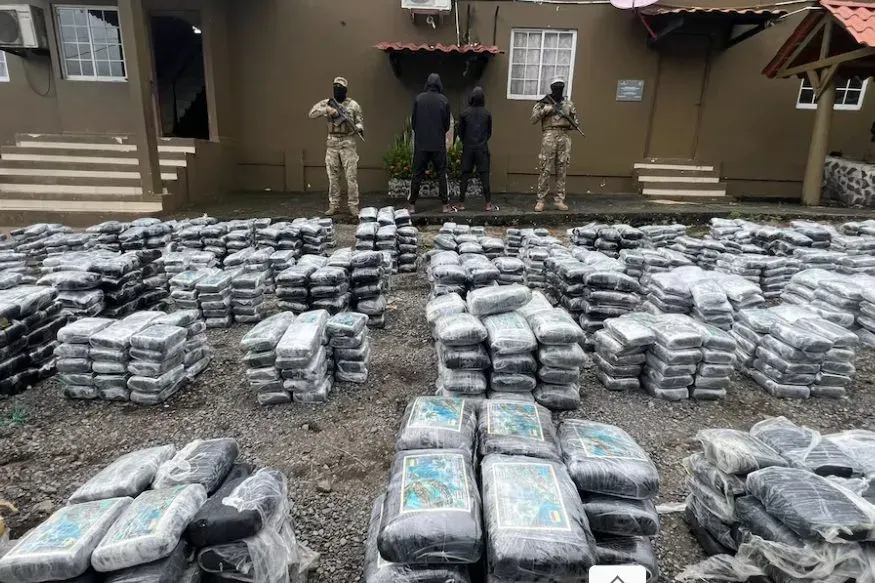
Panamanian security forces confiscated 112 tons of narcotics and arrested 92 individuals during 2025. A series of thirteen major operations throughout the year exposed the sophisticated and adaptable methods used by criminal networks operating within the country’s borders.
The seized drugs were primarily found hidden inside shipping containers, fast boats, and clandestine storage sites on islands in the Pearl Archipelago and in Pacific coast estuaries. Authorities highlighted a troubling trend of traffickers exploiting official ports and the nation’s main airport, while also adopting low-tech methods like backpackers and drones.
“The security forces are making great efforts to seize drugs and capture members of these criminal organizations,” said Security Minister Frank Ábrego. [Translated from Spanish] He warned, however, that greater investment in equipment and technology is required to confront organized crime effectively.
Minister Ábrego acknowledged a measurable increase in the volume of drugs entering Panama by sea from Colombia and Ecuador, a fact reflected in the year’s rising seizure totals. He also confirmed that some leaders of these networks reside in European countries and remotely control shipment movements from there.
Major Operations Target Airport and Port Networks
Two operations, named Eros and Colibrí, stood out as significant blows to trafficking infrastructure. These actions led to 54 arrests and the seizure of three tons of drugs. Investigators uncovered a well-articulated criminal structure that used Tocumen International Airport as a hub for moving narcotics via luggage to Europe and the United States.
The group included airport employees, suppliers, and private individuals who introduced the drugs from the Darién Gap and Pacific coast areas. Another operation, Nodriza, dismantled a network using the port of Vacamonte in Panama Oeste as a route, resulting in eight arrests and two tons of seized cocaine.
The single largest seizure in the nation’s history occurred in November. Authorities intercepted a tugboat carrying 13 tons of narcotics, arresting two crew members on a vessel that had allegedly departed from Colombia.
Low-Tech Methods and Prison Infiltration
Not all seizures involved massive maritime shipments. The same month as the record tugboat bust, a vehicle from the Ombudsman’s Office was stopped in Chepo with 12 kilos of cocaine. This incident revealed a new overland route using backpackers to move drugs along trails from Darién to Chepo.
Traffickers also turned to aerial technology for prison deliveries. Authorities dismantled a group using drones to drop narcotics into La Joya prison, arresting four people and confiscating their drones. In a stark revelation, Minister Ábrego stated that inmates held at Punta Coco prison were controlling the shipment of drugs inside containers arriving at ports in Colón province.
Investigations show many of these shipments are destined for European markets, particularly Belgium, Spain, and France, with some headed to Australia. The pervasive nature of the drug trafficking threat continues to challenge national institutions.
Clan del Golfo Shifts Focus to Narcotics
Security officials also reported a strategic shift by one of the region’s most notorious criminal groups. Intelligence reports from the National Border Service indicate the Clan del Golfo has reoriented its operations in Darién province. Following the closure of migrant passage routes they once controlled, the criminal structure is now focusing heavily on drug trafficking.
They utilize backpackers and fast boats that move between Colombia and Panama. This adaptation demonstrates the fluid nature of transnational crime in the region, where criminal enterprises quickly pivot to the most profitable illicit ventures. The group’s continued presence underscores the complex security challenges in remote border areas.
Other significant seizures throughout the year included 1,500 kilos of cocaine found hidden in two vehicles in Arraiján in October, and 604 kilos seized in August across Condado del Rey, San Miguelito, and Colón. Port interceptions remained a key tactic, with over 3,300 kilos confiscated from transit containers in Colón ports on August 6th alone.
Another 526 kilos were located inside a container in Villa Zaíta. The consistent use of Panama’s aeropuerto internacional and commercial port infrastructure points to a persistent effort by traffickers to exploit legitimate trade and travel corridors.
Minister Ábrego cited a recent operation linked to an international network at Tocumen International Airport as an example of both the successes and ongoing needs of security forces. The 112-ton seizure total for 2025, while showcasing enforcement efforts, also paints a clear picture of the immense volume of illicit drugs transiting the isthmus. Panama’s geographic position remains both an economic advantage and a persistent security vulnerability.