


A 74 year old man was killed in Panama City last week after a Carnival traffic diversion led him into a neighborhood controlled by criminal gangs. The death of Rafael Parada has reignited a difficult public debate about so called “red zones,” territorial control by gangs, and the invisible boundaries that divide the capital. The incident occurred in the early hours of Tuesday, February 17, 2026, in the Patio Pinel area of the Santa Ana district.
Authorities confirmed that Parada was using a digital navigation app to reach the Casco Antiguo historic district when road closures for Carnival festivities rerouted his path. The app directed him down a narrow, poorly lit one way street in Patio Pinel. According to police reports, armed individuals at a corner perceived his slowly moving vehicle as a threat and opened fire. Parada later died at Santo Tomás Hospital.
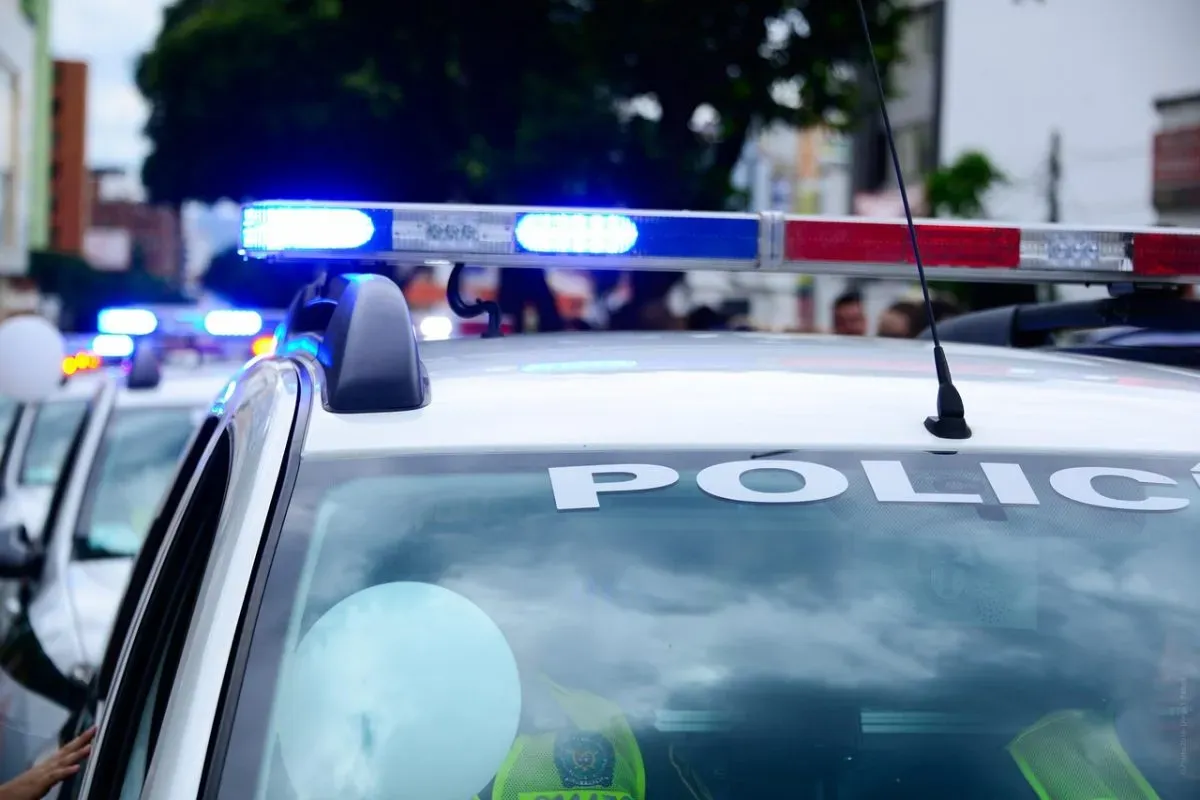
Police officials were quick to respond to the shooting. Metropolitan Zone chief, Commissioner Joel Hurtado Llin, announced an arrest in connection with the crime within hours. The National Police of Panama highlighted the arrest on social media, framing it as a result of rapid and effective police work under their ongoing security initiatives.
“Of course there are red zones and, of course, if you are going to enter a red zone area at two in the morning you have to take the necessary precautions.” [Translated from Spanish]
National Police Director, Jaime Fernández, made that blunt statement when questioned about the area where Parada was killed. He defended the police response as effective while simultaneously acknowledging the persistent danger in certain neighborhoods. His comments underscored a grim reality accepted by both authorities and residents.
Official Acknowledgment of Criminal Control
The reaction from top security officials did not downplay the challenges. Public Security Minister Frank Ábrego aligned with Director Fernández’s assessment. He confirmed that police maintain day and night operations in sectors like Patio Pinel and Santa Ana. Minister Ábrego pointed directly to gangs involved in drug trafficking and other criminal activities as the source of violence.
This official recognition is significant. It moves the conversation beyond isolated crime incidents to a discussion about sustained criminal governance. The scene of Parada’s killing is not an isolated point on a map. It is part of a well known, studied, and warned about geography. Authorities admit these are zones where invisible boundaries exist, boundaries that locals recognize but outsiders do not.
Parada’s murder tragically illustrates how this criminal territorial control can result in immediate, fatal punishment for those who enter without being recognized. The dynamic operates like an informal border checkpoint, or what some analysts call a “criminal customs post.” The fundamental question raised is how such zones, where a citizen can be killed simply for being an outsider, continue to exist so close to the nation’s political and economic center.
For over a decade, academic research, security diagnostics, and crime heat maps have consistently identified specific sectors of Panama City and the district of San Miguelito as high incidence areas. The Santa Ana, El Chorrillo, Curundú, and Calidonia districts appear repeatedly in capital city crime statistics. In San Miguelito, sectors like Belisario Frías and Belisario Porras are frequent subjects of security analysis.
A Pattern of Concentrated Crime Hotspots
The Integrated System of Criminal Statistics (SIEC) from the Public Security Ministry of Panama consistently places Santa Ana among the districts with the highest number of robberies and sustained gang presence. Official crime reports often analyze these districts not as isolated areas but as a continuous urban corridor. In this corridor, dynamics of territorial control, micro drug trafficking, and armed violence repeat themselves.
While Santa Ana may not have the highest absolute number of homicides, it fits a pattern of spatial crime concentration typical of “hot spots.” These are small territories where violent incidents recur persistently. The risk spikes dramatically for anyone who does not recognize the informal limits imposed by criminal structures. The term “red zone,” as used by the National Police, is an operational classification. It denotes a space where gangs, criminal control of territory, and elevated risk for civilians and police officers coexist.
The police captured one suspect linked to Parada’s killing. Ongoing investigations seek to identify and apprehend additional individuals involved. This single arrest, however, does little to dismantle the entrenched system that made the shooting possible. The gangs maintain their hold through intimidation and a de facto authority that fills vacuums left by limited state presence.
Residents of these areas often live under a dual reality. They navigate official state rules and the unofficial dictates of local gangs. The recent vehicle fleet upgrade for security forces, including assets destined for the patio pinel and other critical zones, is part of the government’s response. New equipment aims to improve mobility and response times in complex urban environments.
Security strategy in these zones frequently involves operations described as control territorial. This concept focuses on reclaiming physical control of neighborhoods through sustained police presence and operations. The effectiveness of these operations is a constant topic of debate, as criminal networks often adapt and reassert their influence once police pressure subsides.
The Carnival season shooting exposes a critical vulnerability in urban planning and public safety. Major public events that necessitate widespread traffic changes can inadvertently funnel unaware drivers into high risk areas. Digital navigation algorithms plot the fastest route, not the safest one. They lack the data to distinguish between a congested street and a gang controlled alley.
This creates a perfect storm for tragedy. An unfamiliar driver, a closed road, a digital app seeking an alternative, and a neighborhood where strangers are met with suspicion and violence. The solution is not simple. It cannot be solved by a single police operation or a public warning. It requires a multifaceted approach that addresses deep seated issues of poverty, social exclusion, and economic disparity which gangs exploit.
Authorities face the immense challenge of dismantling criminal governance while building legitimate state presence. This involves not just police and soldiers, but social workers, investment in public infrastructure, job creation programs, and community engagement. The goal is to make neighborhoods like Patio Pinel truly integrated parts of the city, not isolated enclaves operating under different rules.
The death of Rafael Parada is a stark reminder of the work that remains. His case has forced a renewed, if uncomfortable, public conversation about the limits of safety and the geography of risk in Panama’s capital. The path forward requires acknowledging the full scope of the problem, a step officials have begun, and committing to the long term, complex work of reclaiming territory block by block.