


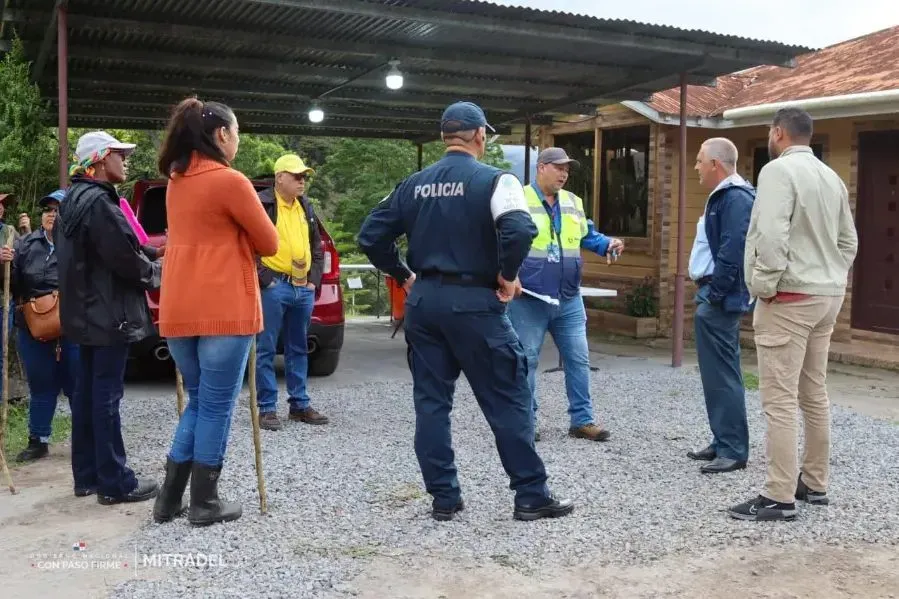
Panamanian labor inspectors discovered ten children performing hazardous work on coffee farms in the western province of Chiriquí. The Ministry of Labor and Workforce Development (Mitradel) conducted the operation last week, removing the minors from dangerous conditions in the district of Boquete, Chiriquí.
An official report from Mitradel detailed that the group consisted of seven boys and three girls. Their ages ranged from seven to seventeen years old. Inspectors located them across 18 different coffee plantations during the harvest period, known locally as the “zafra.”
Children Removed from Hazardous Conditions
Authorities immediately extracted the children from the work areas upon discovery. They were transferred to secure campsites to ensure their safety and well-being. The inspection operation was a coordinated effort involving Mitradel, the National Police, the Ministry of Health, and the non-profit organization Casa Esperanza.
Mitradel officials emphasized that coffee harvest work is legally classified as one of the worst forms of child labour. This classification stems from the significant physical risks and the threat to a child’s development. The ministry cited Panama’s adherence to international standards as the basis for this action.
“Activities inherent to the coffee harvest are classified among the worst forms of child labor according to International Labour Organization Convention 182,” a Mitradel statement read. [Translated from Spanish] The statement further noted these tasks “represent a danger to the health, integrity, and development of minors.”
The joint operation highlights the government’s multi-agency approach to enforcement. Support from police and health officials provided necessary security and immediate welfare checks. Casa Esperanza’s role focused on the social support and transitional care required for the affected children.
Ongoing Challenge in Agricultural Sectors
This incident underscores a persistent national issue. Child labor remains a documented problem in Panama, particularly within the agricultural and informal sectors. Seasonal harvests often see a spike in these violations as farms seek additional labor.
Finding children as young as seven working in such environments points to deep-seated economic pressures. Many families in rural communities rely on every member’s contribution to household income. Enforcement actions, while critical, address the symptom rather than the root cause of poverty and lack of access to education.
Mitradel has not yet announced specific penalties for the farm owners involved. The legal process typically involves fines and mandatory compliance measures. The ministry’s primary focus remains the protection and rehabilitation of the children.
Panama has established laws and ratified international conventions against child exploitation. Translating those legal frameworks into consistent reality across remote rural regions continues to be a struggle. Operations like the one in Boquete depend on targeted inspections and community reporting.
The case now moves to a post-intervention phase. Social services will assess each child’s family situation. The goal is to ensure they do not return to work and can resume their education. Mitradel indicated its regional offices would increase surveillance in Chiriquí as the coffee harvest continues.