


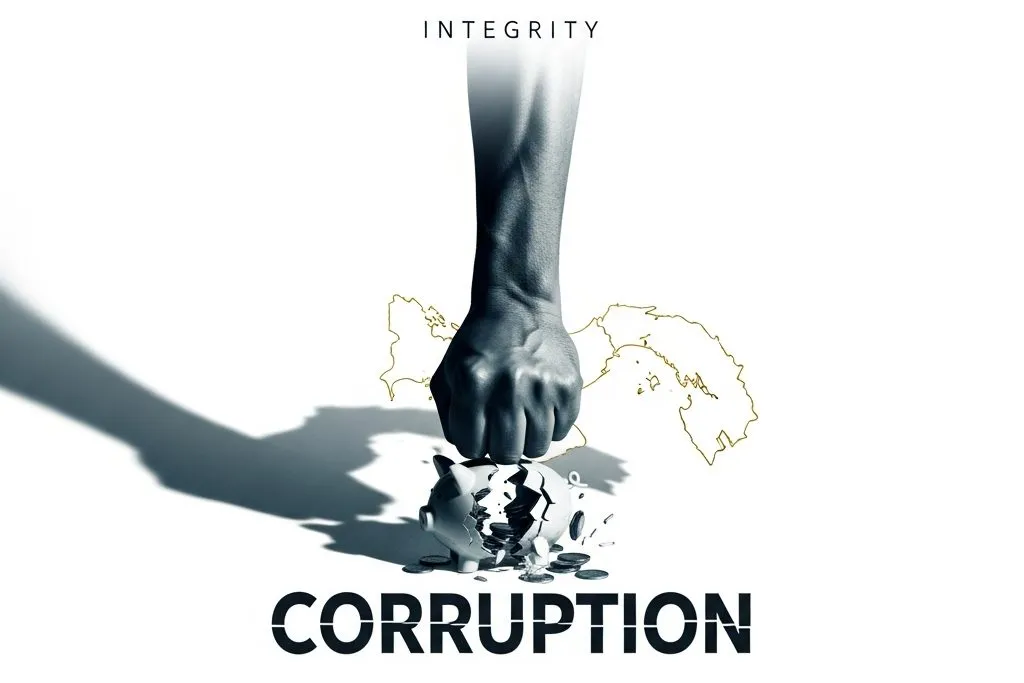
Panamanian authorities are actively pursuing a series of high-profile investigations into former government officials for alleged unexplained wealth. The legal actions, centered on the crime of unjust enrichment, target figures from the previous Laurentino Cortizo administration (2019-2024). This coordinated effort involves the Office of the Comptroller General of the Republic (Panama) and the Public Ministry, signaling a renewed focus on public accountability.
The legal framework for these probes is Law 59 of 1999, which specifically defines and regulates unjust enrichment within Panama’s administrative and penal codes. Unlike other corruption charges, this law does not require prosecutors to first prove a specific corrupt act, such as embezzlement or bribery. Instead, it places the burden of proof on the public servant to legally justify any significant increase in their assets that appears disproportionate to their lawful income.
“If the Comptroller’s Office delays or does not act, there is no way for the Public Ministry to initiate an investigation, even if the official exhibits an ostentatious lifestyle,” said lawyer and deputy Ernesto Cedeño. [Translated from Spanish]
This procedural reliance on the Comptroller’s Office creates a critical bottleneck for investigations. Cedeño, a member of the Seguimos bloc in the National Assembly, emphasized that the Public Ministry typically cannot file charges for unjust enrichment without an initial audit from the Comptroller establishing findings. The current wave of cases suggests that audits are now moving forward after a period of scrutiny.
Recent Cases Highlight Legal Strategy
Several prominent former officials now face the legal consequences of this strategy. One of the most recent cases involves Héctor Brands, a former deputy and ex-director of the Panamanian Sports Institute (Pandeportes). Brands remains in detention while authorities investigate him for alleged unjust enrichment and money laundering. Investigators identified financial movements they say vastly exceed his known economic capacity.
At least nine other individuals have been apprehended in connection with the Brands investigation. A similar pattern emerges in the case of Bernardo Meneses, the former director of the Institute for Training and Human Resources Development (Ifarhu). Meneses has been formally charged with alleged unjust enrichment, embezzlement, and money laundering. His case involves 22 people and revolves around the management of economic aid grants distributed by his former institution.
The Comptroller’s Office has also opened an administrative file for alleged unjust enrichment against José Gabriel Carrizo, the former Vice President of the Republic. In October of this year, the office ordered the seizure of bank accounts, vehicles, and real estate properties as part of that probe. At the municipal level, former San Miguelito mayor Héctor Valdés Carrasquilla faces similar measures due to inconsistencies detected in income collected by the township.
The Broken Gatekeeper: Patrimonial Declarations
The legal problem, however, does not begin with frozen accounts or seizure orders. By that point, officials allege the financial damage is already done. The systemic failure starts much earlier with a flawed preventive tool. Law 59 of 1999 mandates that all public servants submit a sworn declaration of assets before assuming office and another upon concluding their service.
These documents must be filed with the Comptroller General. In theory, they should allow for a clear comparison between a person’s starting and ending net worth, making it possible to detect unjustified increases in a timely manner. In practice, this control mechanism barely functions. The declarations are not public records, which prevents citizens, the media, or civil society from scrutinizing or cross-referencing the information.
All oversight remains concentrated within a single institution. A substantive review depends entirely on whether the Comptroller’s Office decides to activate an audit. The rule exists on paper but operates more as a formal requirement than a real tool for preventing unjust enrichment (legal concept). Tax accountant and fiscal consultant Osvaldo Lau has publicly criticized this gap, writing about the “little interest we have given to the patrimonial declaration.”
This lack of transparent verification creates an environment where significant wealth accumulation can go unchallenged for years. It only comes to light through separate audits or whistleblower reports, often long after an official has left their post. The process relies on internal institutional will rather than a system of automatic checks and public accountability.
Legal Mechanics and Next Steps
When an investigation is initiated, the legal process follows a defined path. Because the burden of proof shifts to the accused official, the state’s role is to demonstrate a clear disproportion between legitimate income and acquired assets. Officials do not need to reconstruct the entire path of potentially diverted funds, a task that involves tracing contracts, intermediaries, and administrative decisions.
Authorities must simply show the numbers do not add up. Once that discrepancy is established, the accused public servant must provide a lawful explanation for their wealth. An inability to do so triggers a series of actions that can include frozen accounts, seized property, financial expert reports, and other precautionary measures. These steps aim to prevent the dissipation of assets while the judicial process unfolds.
The recent cluster of cases from the Cortizo administration suggests a strategic shift. Investigators appear to be leveraging the unjust enrichment statute as a primary tool, perhaps because it presents a potentially simpler path to prosecution than other complex corruption charges. The outcomes of these cases will test the effectiveness of Law 59 and could set important precedents for future political accountability in Panama.
Public reaction remains mixed. Some citizens welcome the investigations as a long-overdue reckoning, while others express skepticism about their timing and political motivations. Legal experts note that for the law to become a true deterrent, the systemic weakness in the patrimonial declaration system must be addressed. Proposals for reform include making declarations public and implementing automated cross-checks with other government databases.
For now, the investigations continue to develop. They represent a significant moment for Panama’s institutions, testing their ability to hold powerful figures accountable after they leave office. The legal concept of unjust enrichment has moved from a seldom-used statute to a central feature of the country’s anti-corruption landscape. Its application in these high-stakes cases will be closely watched both domestically and by international observers monitoring governance in the region.