


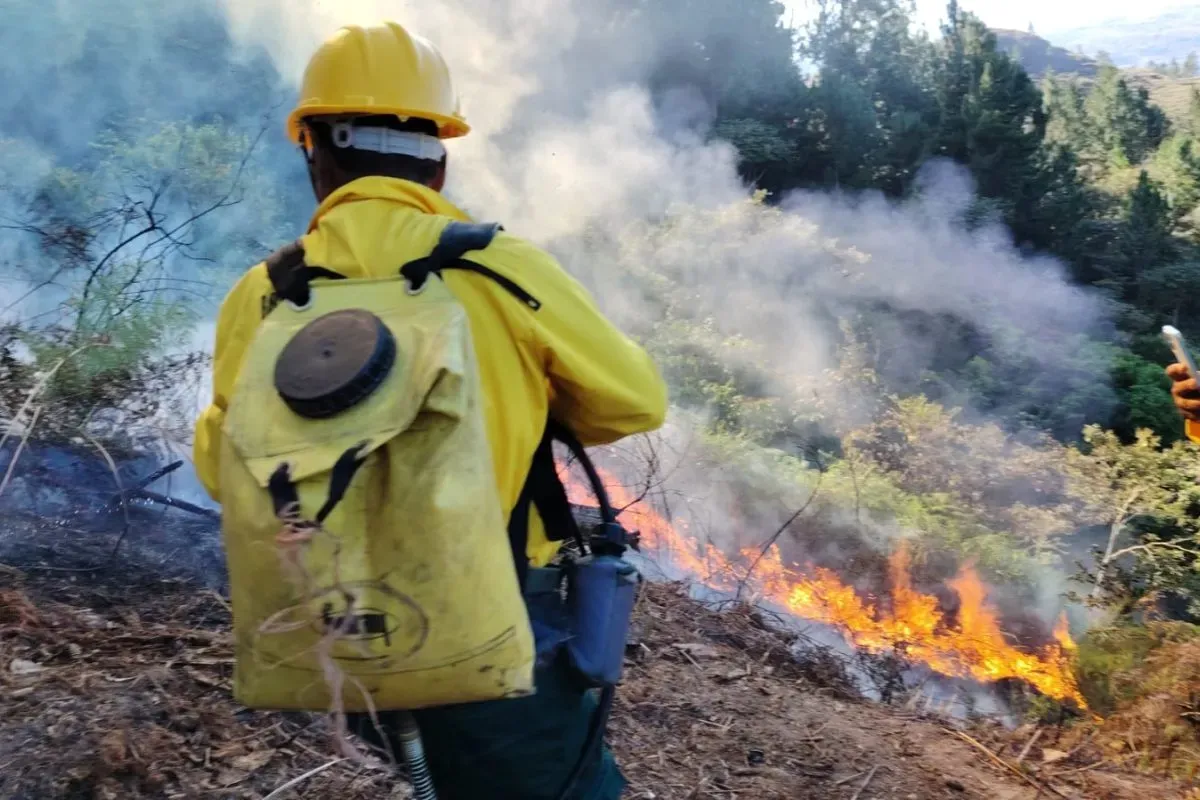
Firefighters and emergency agencies from two Panama regions completed a large-scale vegetation fire simulation this week. The coordinated drill took place in the Tierras Altas district, specifically at the Agrorismo-Volcán farm, to test response protocols for a major forest fire.
This marks the second institutional exercise focused on wildfire preparedness ahead of the region’s driest seasons. Officials designed the simulation to measure reaction times, inter-agency coordination, and the management of critical resources during a high-magnitude emergency.
Testing Response Protocols in Critical Region
The “Tierras Altas 2026 Vegetation Mass Fire Simulation” involved personnel from the Chiriquí and Bugaba regions. Colonel Gonzalo Chan Gil, Deputy Director of the Fire Department, oversaw the strategic exercise. He emphasized its role in refining advanced firefighting techniques for Panama’s mountainous areas.
“This practice allowed us to perfect advanced suppression techniques and strategies,” officials stated in a release. It also aims to “optimize inter-institutional coordination to guarantee a rapid, efficient, and joint response to vegetation mass fires.” [Translated from Spanish]
Such fires pose a direct threat to the environment, public safety, and human life. The risk escalates in highland regions where dry vegetation can cause flames to spread uncontrollably and with startling speed.
A Coordinated Push for Prevention
The drill operated under the national “No to Fire, Yes to Life” campaign. This initiative is spearheaded by Panama’s Ministry of Environment (Panama) to strengthen preventive awareness. The goal is fostering collaborative work between vital institutions before a real crisis hits.
Participating agencies included the National Police, the National Border Service, the Ministry of Health, and the Tierras Altas Mayor’s Office. The core response teams came from the Benemérito Fire Department of Panama and the National Civil Protection System (Panama).
This operational integration seeks to elevate response standards and minimize risks in real-world scenarios. Protecting natural resources and nearby communities depends on it. The popular tierras altas region, known for its coffee farms and tourism, is particularly vulnerable.
Authorities plan to analyze the data collected on communication flow and resource deployment. These findings will help consolidate action protocols. The ultimate aim is ensuring an immediate and effective reaction when an actual wildfire threatens Panama’s highland ecosystems and communities.