


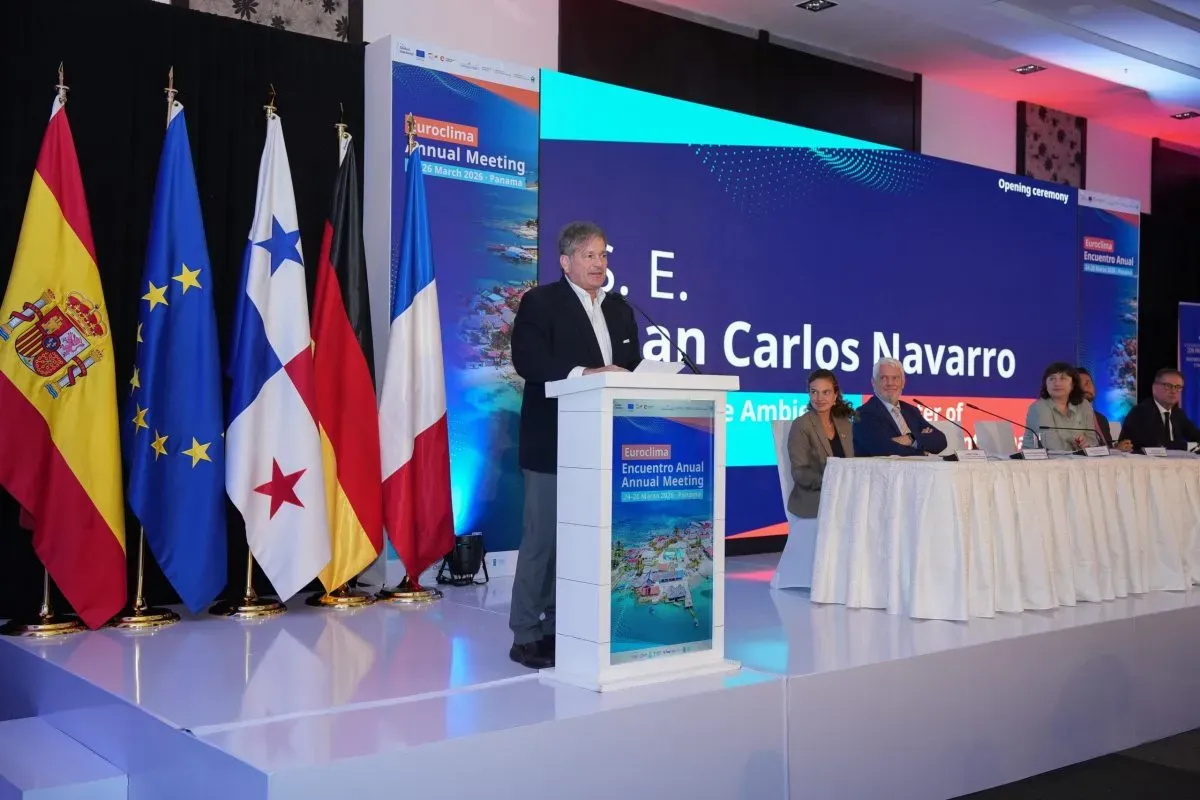
The European Union and Panama are jointly hosting the 2026 Euroclima Annual Meeting in Panama City this week. The high-level event aims to expand regional cooperation and exchange public policy solutions for climate and environmental challenges. It represents a strategic effort to unify priorities and mobilize investment for a green transition across Latin America and the Caribbean.
Panama was selected as the host nation, reinforcing its role as a regional hub for international dialogue. The meeting is organized by the Panamanian Ministry of Environment and the European Union’s Directorate-General for International Partnerships. Officials from 33 countries across both regions are attending the three-day session.
Unified Response to a Borderless Challenge
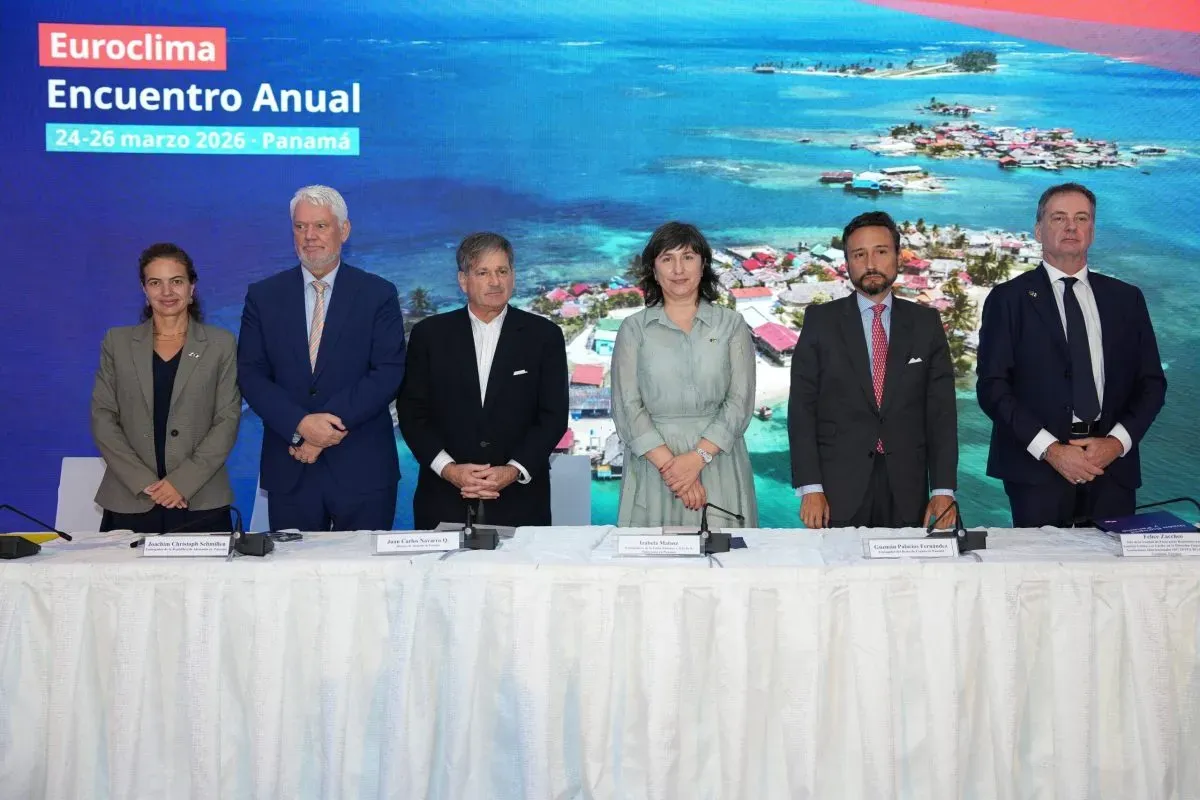
European Union Ambassador to Panama Izabela Matusz framed the gathering as an essential collective response. She emphasized that climate change demands cooperation without limits.
“Climate change knows no borders, and our response should not have any either. Dialogue spaces like this remind us that joining efforts is not just an option but a necessity. Together, Latin America and the Caribbean and the European Union can lead climate action, strengthen our communities’ resilience, protect our biodiversity, and advance the green transition to build a sustainable future for all,” Matusz said. [Translated from Spanish]
Panamanian Environment Minister Juan Carlos Navarro stated the hosting duty reflects international confidence in the country. He described Panama as a bridge for building future green alliances where political will meets European experience and investment opportunity.
Panama’s Integrated Climate Vision
Juan Carlos Monterrey, Panama’s Special Representative for Climate Change, outlined the country’s holistic policy approach. He argued that nature must form the central axis of national development and climate strategy.
“Nature is not a sectoral issue. It is the axis of our development, our climate policy, and our national vision. We have decided to go beyond isolated commitments and advance with a coherent, integrated vision that unites biodiversity, climate, lands, oceans, and plastic reduction. That is the path we have chosen, and we do it through the Nature Pledge,” Monterrey stated. [Translated from Spanish]
This Nature Pledge serves as Panama’s national roadmap. It integrates the nation’s climate and environmental commitments into a single sustainable development vision. The strategy aligns with international agreements and seeks to attract aligned investment.
Aligning with Global Gateway Investment Strategy
The meeting directly supports the implementation of the European Union’s Global Gateway strategy. This initiative focuses on fostering a green and just transition through concrete partnerships. The associated Investment Agenda for the region aims to generate sustainable and inclusive growth based on partner countries’ own priorities.
Discussions in Panama will center on mobilizing public and private capital. Participants will work to improve conditions for accelerating projects in the circular economy and energy transition. The goal is to support actions that reduce emissions and create green jobs. This effort mirrors other international partnerships taking shape, similar to how India is positioning Panama as a key trade hub under its own global gateway initiatives.
Building Blocks for COP31 and Beyond
The working sessions are designed to identify specific cooperation and investment opportunities. They will also strengthen technical capacities and promote practical exchanges between European and Latin American partners. These conversations are expected to contribute to preparing for major regional and international milestones in 2026, including the pathway to the COP31 climate conference.
The Euroclima program ensures coherence with the Global Gateway Investment Agenda. It does this through technical cooperation across eight strategic areas. These include energy transition, sustainable mobility, biodiversity, water management, and sustainable climate finance. The program is implemented by a consortium of agencies bringing complementary expertise.
Panama’s hosting of this event underscores its active diplomacy on environmental issues. The country has previously engaged in complex international processes, including successful United Nations arbitration cases related to development projects. The 2026 Euroclima meeting represents another step in positioning the nation at the center of global sustainability dialogues. It provides a platform for translating political commitments into tangible investment and action.