


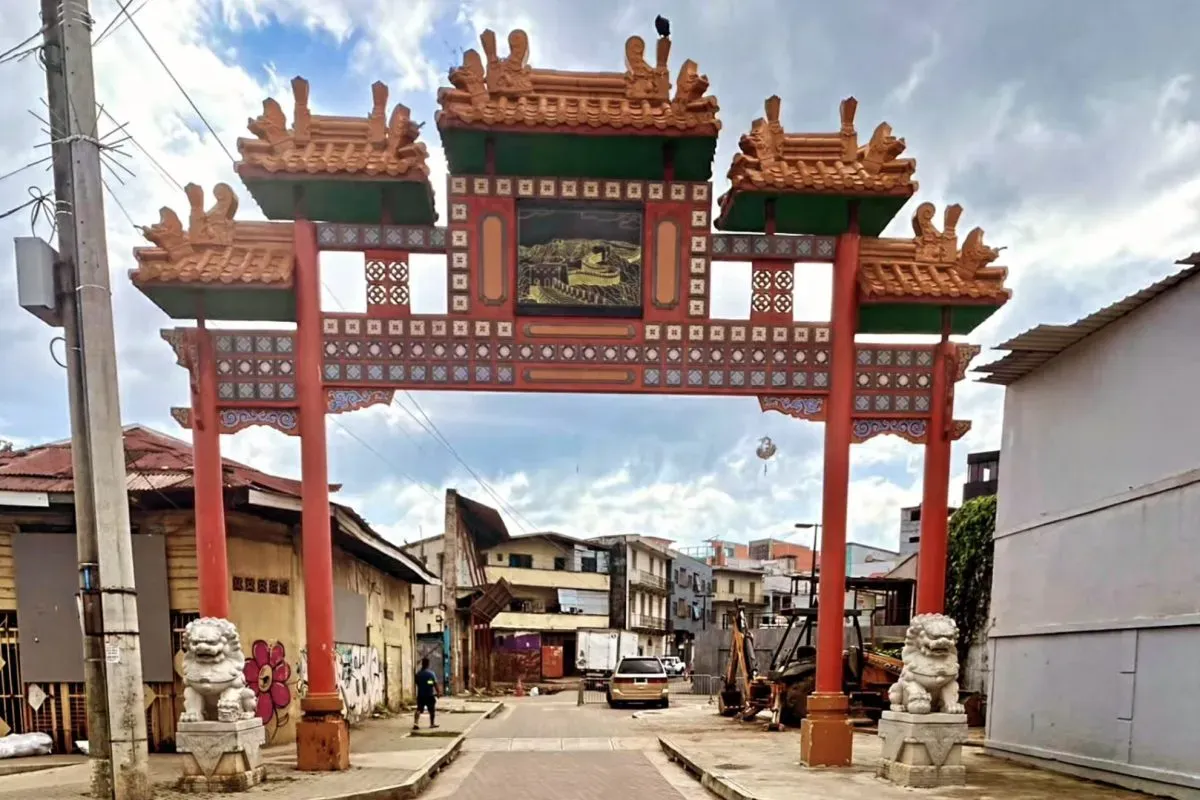
Panama City’s municipal government is pushing to finish rehabilitating three main streets in the historic Barrio Chino, or Chinatown, ahead of the 2026 Chinese New Year celebrations. Urban Planning Director David Tapia confirmed the accelerated timeline this week, noting that work resumed strongly after delays.
The project focuses on Calle 15, Ramón Valdés Street, and Eloy Alfaro Street. These critical arteries connect major points like the Seafood Market, the San Felipe Neri church, and the entrance to the Casco Antiguo, Panama historic district. Deliverables include new paving stones, modern lighting, street furniture, and fully updated sanitary and stormwater systems.
Archaeological Finds and Budget Stability
Initial work started back in 2023 under a previous administration. Progress stalled for about eight months, however, due to unexpected challenges. Crews encountered archaeological artifacts and century-old utility pipes buried beneath the streets.
“Every time we find heritage elements, we must stop work and coordinate with the National Heritage Directorate,” Tapia explained. [Translated from Spanish]
This mandatory coordination with the National Heritage Directorate (Panama) ensures historical preservation but adds time. Administrative complexities of working in a protected zone also contributed to the slowdown. Despite these hurdles, the project’s budget remains unchanged according to municipal officials.
“It is being executed with exactly the same budget and scope with which it was contracted,” Tapia stated. [Translated from Spanish]
Community Partnership for Revitalization
Infrastructure is just one component of the broader plan. The municipality is collaborating with local shop owners, residents, and the Chinese-Panamanian community to ensure economic reactivation follows the construction. Officials argue that physical improvements alone cannot revive the neighborhood.
“If the neighbor and the merchant do not participate, the project does not work,” Tapia emphasized. [Translated from Spanish]
Planned initiatives include promoting cultural activities, commissioning murals, and facilitating facade improvements for businesses. This approach mirrors successful cultural revitalization efforts seen in other parts of the casco antiguo.
The goal is to create a vibrant, attractive district ready to welcome thousands of visitors for the 2026 Lunar New Year festival. Completing the streetscape is considered foundational for that success.
Next Phases and Long-Term Vision
A second construction phase is already on the calendar. It includes work on Veraguas Street, Fernando Yoli Street, and additional sections of Calles 14 and 15. Barring further archaeological discoveries, officials target a June 2026 completion date for these subsequent streets.
The overarching mission extends far beyond pavement and pipes. City leaders envision a full economic and cultural revitalization for one of the capital’s most iconic sectors. They see a restored Chinatown as a key anchor for the entire historic district, boosting tourism and local commerce. The focus now remains on the February deadline, with crews working to transform the neighborhood’s core just in time for its biggest annual celebration.