


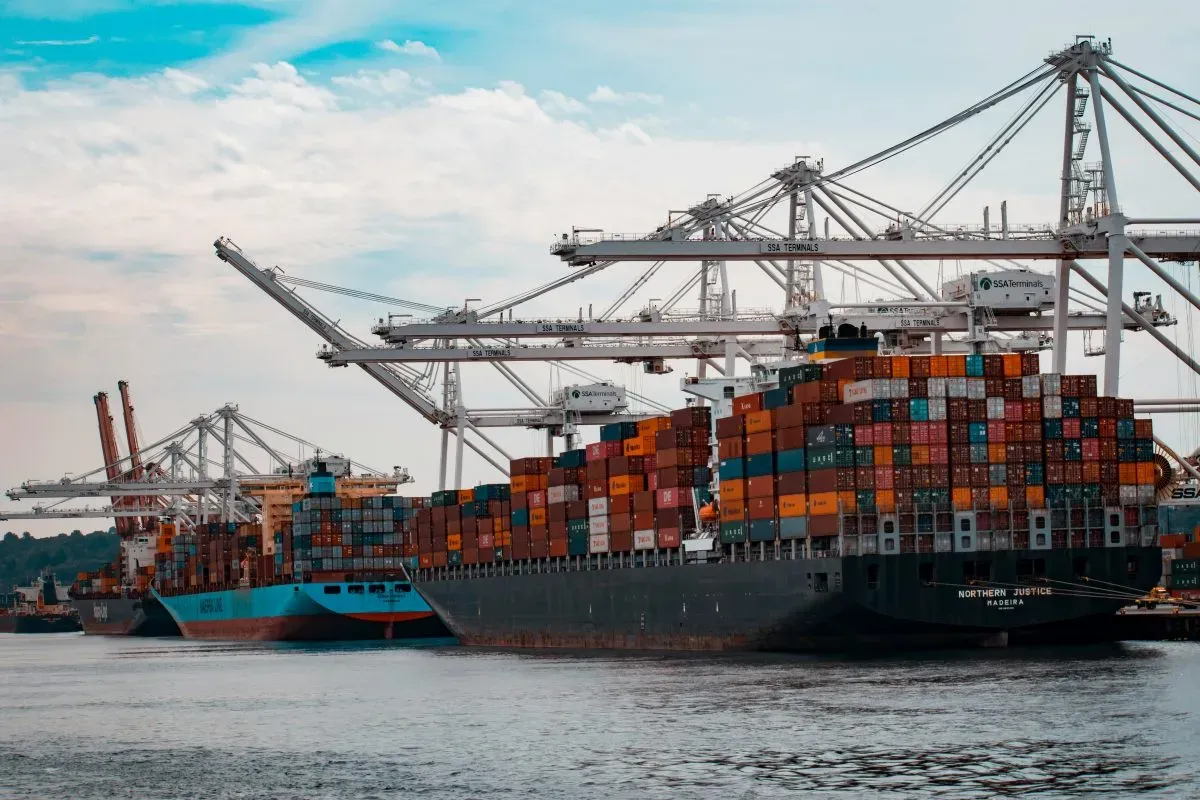
The United States Federal Maritime Commission (FMC) issued a formal warning to China this week. The agency stated it is evaluating potential legal actions in response to China’s intensified inspections and detentions of Panama-flagged vessels, a practice it says threatens U.S. foreign trade.
In a public statement, the FMC argued these targeted maritime actions create unfavorable conditions for shipping. The commission explicitly linked China’s actions to Panama’s recent court-ordered transfer of major port assets away from a Chinese conglomerate.
Geopolitical Dispute Impacts Global Shipping Lanes
FMC Commissioner Laura DiBella framed the ship detentions as an informal punitive measure. She connected them directly to the fallout over port operations at the vital Panama Canal.
“These intensified inspections were carried out under informal directives and appear to aim at punishing Panama after the transfer of Hutchison’s port assets,” DiBella said. [Translated from Spanish]
The commissioner emphasized the broader strategic risk. Panama-flagged vessels carry a significant portion of U.S. container trade. Any sustained disruption could have major commercial consequences for American shippers and supply chains.
This official U.S. intervention marks a pivotal shift. The focus is no longer solely on the ship detentions in Chinese ports. It now encompasses a formal defense of logistical stability and Panama’s role in global trade.
Legal Authority and a Billion-Dollar Arbitration
The United States Federal Maritime Commission clarified its legal standing to intervene. U.S. law grants it authority to investigate foreign government practices that disadvantage American shipping. The agency’s statement opens the door to a formal investigation and subsequent remedies.
This dispute originated from a ruling by Panama’s Supreme Court of Justice. The court invalidated the concession for CK Hutchison Holdings to operate terminals at both ends of the Panama Canal. The Hong Kong-based conglomerate had run ports in Balboa on the Pacific and Cristobal on the Atlantic.
Following the court’s decision, Panamanian authorities appointed interim operators. APM Terminals, part of Denmark’s Maersk, took over Balboa. Terminal Investment Limited, linked to Mediterranean Shipping Company, assumed control of Cristobal. This shift favored European-based shipping giants.
CK Hutchison Holdings launched an international arbitration claim against Panama. The company is seeking over $2 billion in damages. China’s apparent pressure on Panama-flagged shipping coincides with this legal battle, suggesting a coordinated economic response.
The FMC’s warning represents a significant escalation. It moves the issue from bilateral tensions into the realm of potential U.S. regulatory action. American officials are now directly questioning the fairness of China’s maritime enforcement tactics.
Global shipping executives are monitoring the situation closely. Further detentions could force costly rerouting of cargo. Insurance premiums for vessels sailing under the Panamanian flag may also rise, increasing the cost of moving goods to the United States.
Panama maintains the world’s largest ship registry by tonnage. Its flag is considered neutral and commercially vital. Targeting it disrupts a cornerstone of international maritime logistics, a system the U.S. is now signaling it will defend.