


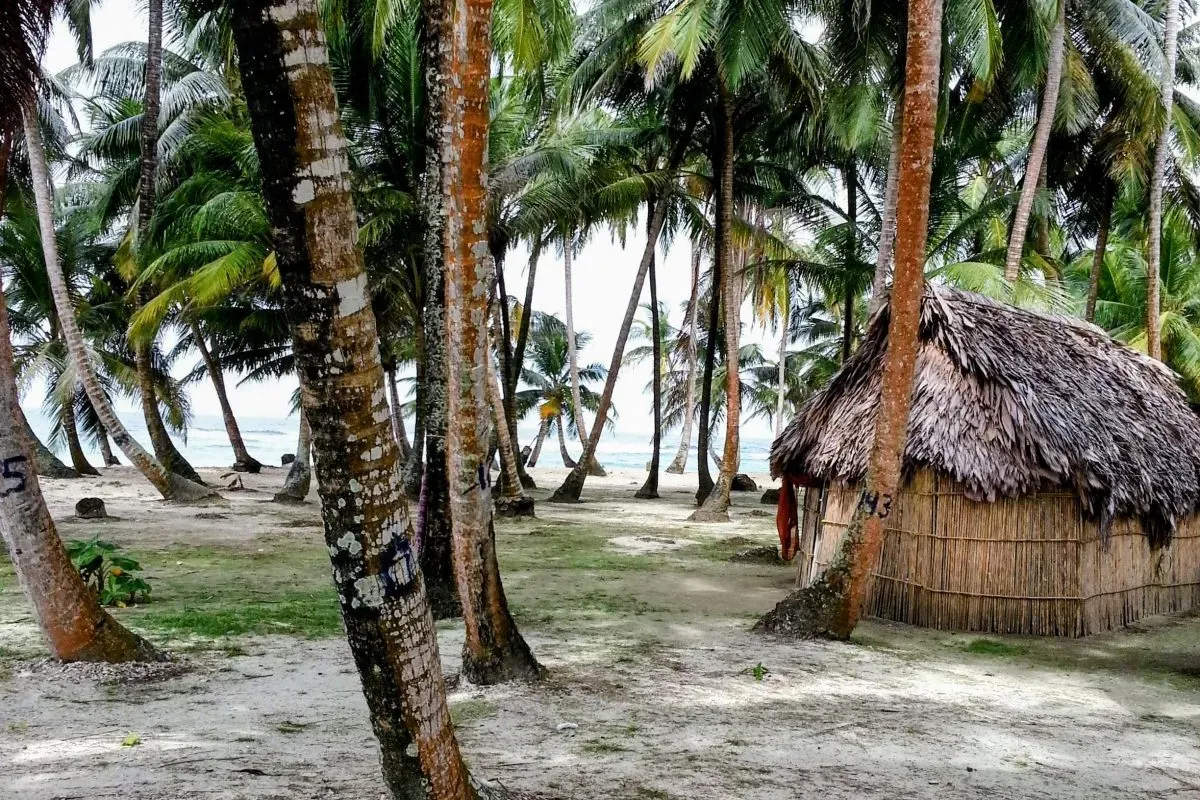
Students across Panama’s indigenous regions are starting the 2026 school year in crumbling, makeshift classrooms. Parents and teachers in the Guna Yala Comarca and Ngäbe-Buglé Comarca are demanding urgent infrastructure repairs from the Ministry of Education (Panama). Their calls come just two weeks into the new academic calendar, highlighting a persistent crisis in remote areas.
Reports from multiple schools describe a dire situation. Classrooms lack walls, roofs, and basic furniture, forcing children to learn in open-air shelters known locally as “ranchos.” The ministry acknowledges hundreds of these temporary structures remain in use, though it claims progress on a replacement program.
“The community has fought for over a decade for the authorities to eliminate about 20 ranch classrooms that still function here,” said teacher Mariano Becker of Quebrada Cayuco School in the Ngäbe-Buglé Comarca. [Translated from Spanish]
His social media posts show wooden classrooms deteriorated from years of use. Becker’s school serves about a thousand students. The ministry confirmed an “integral project” for the school is under evaluation but provided no timeline for construction.
Parents Forced to Build Temporary Classrooms
Frustration is boiling over into community action. In Nobadub, Guna Yala, parents at Escuela Cuba took matters into their own hands. They organized to build new ranch classrooms themselves after their pre-term pleas for help went unanswered. The school only had five permanent rooms for all its students.
Conditions are similarly stark at Cerro Pita Educational Center in Mironó. Parents there describe ranch classrooms without chairs, desks, or proper walls. Some even lack a complete roof. Ministry officials stated new classrooms are under construction at that site to better distribute students.
The problem extends to a complete absence of facilities in some locations. At Cuayacán School in Kankintú district, there is no school building at all. Children undertake long walks to an improvised site where they receive lessons standing up. A viral Instagram video from the area shows classes conducted in open fields.
These reports are not isolated. Ministry data indicates between 1,000 and 1,500 ranch classrooms still exist across Panama’s comarcas. Officials point to 580 ranch classrooms and 212 ranch schools replaced with permanent cement structures in recent years. Critics argue the pace of change is too slow for students learning in the present.
Ministry Cites Ongoing Projects and Bureaucratic Hurdles
The Ministry of Education maintains it is addressing the backlog. Its engineering projects division lists 63 schools currently slated for improvements. These are spread across the Guna Yala, Ngäbe-Buglé, and Emberá regions.
Of those 63 projects, 13 schools have been inaugurated. Twelve more are under construction. The remaining 38 are stuck in administrative procedures. The Nedrini region shows the most advancement, the ministry said, while a new school is being built at the Isidro Guainora Educational Center in the Emberá comarca.
“It is a school that has increased its enrollment this school year. Therefore, the construction project is being evaluated,” the ministry stated regarding Quebrada Cayuco School. [Translated from Spanish]
A separate maintenance program for the 2026 summer break targeted 75 comarca schools. Ministry figures show 35 have completed maintenance, 10 are in process, and 30 are still scheduled for intervention. The scale of need is vast, with 460 schools total located in Panama’s indigenous territories.
Most are primary schools or early childhood centers. A number also offer basic general education covering primary through secondary grades. The geographic isolation of many communities, often accessible only by boat or mountain paths, complicates logistics and raises construction costs.
Infrastructure challenges in the Guna Yala are compounded by other regional issues. This can include severe weather that further damages fragile structures.
A Persistent Problem With Human Cost
The reliance on ranch classrooms represents a significant equity gap in Panama’s education system. Students in urban centers typically learn in modern facilities with reliable utilities. Their peers in the comarcas face a daily environment that can hinder concentration and safety.
Teachers like Becker become de facto advocates, using social media to apply public pressure. Parent groups, tired of waiting, divert their own scarce resources to build temporary fixes. These community-built structures are rarely a long-term solution and often fail to meet basic safety standards.
The situation has sparked protests in previous years. In 2025, several educational centers demonstrated, demanding concrete answers and permanent buildings. Their central message was a simple refusal to accept more ranch classrooms as the norm.
For now, the school year proceeds under a patchwork of conditions. In some communities, construction crews are active on ministry projects. In others, students gather under thatched roofs their parents built. The ministry’s data shows a process in motion, but the lived reality for thousands of indigenous children is a classroom without walls.
The broader challenges of the Guna Yala region, including migration and transportation safety, often overshadow the chronic issue of school infrastructure. Educators argue that investing in permanent schools is a foundational step toward improving other outcomes.
With 38 projects still in paperwork and hundreds of ranch classrooms standing, the race is on. The goal is to replace temporary shelters with real schools before another generation of students graduates from a system defined by its deficits.