


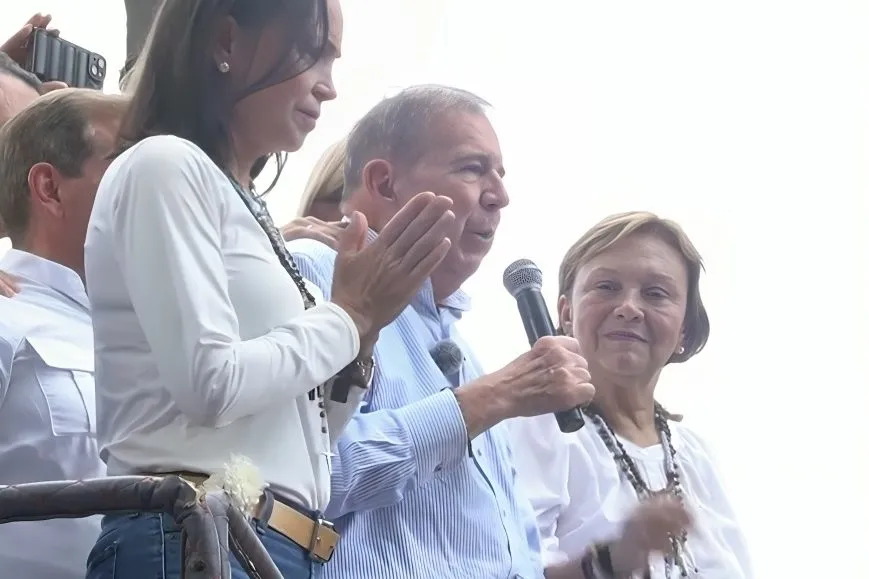
The Government of Panama confirmed it holds physical custody of the original vote tally sheets from Venezuela’s contested 2024 presidential election. This revelation gains critical importance after United States forces captured former Venezuelan leader Nicolás Maduro in Caracas on January 3, 2026. Panama has safeguarded the documents in a vault at the National Bank of Panama since a formal handover ceremony in January 2025.
Panamanian Foreign Minister Javier Martínez-Acha first announced the custodial arrangement during a public event titled “Act of Vindication of Democracy in Venezuela and America.” The documents are copies collected by the political coalition backing opposition candidate Edmundo González Urrutia. They reportedly show González Urrutia winning approximately 65 percent of the votes counted, a direct contradiction to the official results proclaimed by Venezuela’s government-controlled National Electoral Council (Venezuela).
Minister Martínez-Acha delivered a forceful speech at the handover event, directly challenging Maduro’s legitimacy.
“We send a loud and clear message to the dictator Nicolás Maduro: you will not take away our right to freedom and democracy,”
Martínez-Acha stated. [Translated from Spanish] He characterized the official Venezuelan electoral process as a “great fraud” and accused the regime of operating without any shame.
The safekeeping of these records provides a potential legal foundation for political transition talks now underway. U.S. President Donald Trump confirmed Maduro’s capture in a live broadcast, stating the U.S. would administer Venezuela until a “safe, proper, and careful” transition could be secured. Trump added that high-ranking chavista official Delcy Rodríguez had already made contact with U.S. Secretary of State Marco Rubio.
Document Discrepancy Lies at Heart of Crisis
Panama’s role as document custodian stems from a fundamental dispute over the July 28, 2024, election results. The opposition’s tally sheets, now in Panama, allegedly cover 85 percent of polling stations and show a decisive victory for González Urrutia. In stark contrast, the Venezuelan National Electoral Council declared Maduro the winner with 51 percent of the vote. The Council has never publicly released the physical tally sheets to support its proclamation, leading many nations and observers to denounce the election as fraudulent.
This discrepancy prompted Panama to sever diplomatic relations with Venezuela in July 2024. The Government of Panama formally refused to recognize Maduro’s victory. Consular relations between the two countries have remained open despite the diplomatic break.
Opposition leader Edmundo González Urrutia personally presented the documents during his visit to Panama in January 2025. His regional tour preceded Maduro’s scheduled inauguration for another term. The event in Panama City was attended by members of President José Raúl Mulino’s cabinet, legislators, diplomats, and the Venezuelan expatriate community.
Martínez-Acha used the platform to draw historical parallels. He linked current international support for Venezuelan democracy to past global backing for Panama’s own democratic institutions. The Foreign Minister also offered explicit support for opposition figure María Corina Machado, identifying her as a central leader in the movement. Machado would later be awarded the Nobel Peace Prize in 2025 for her work.
Custody Arrangement Takes on New Urgency
The U.S. operation to capture Maduro, code-named “Operation Absolute Resolve,” has abruptly changed the political landscape. It transforms Panama’s document custodianship from a symbolic act of solidarity into a potentially vital component for establishing a new government. The physical evidence of the vote count could be used to legitimize a transitional administration.
Panamanian officials stated the documents would remain in the country’s vaults until they could safely return to Venezuelan territory under what they termed legitimate, democratic leadership. That moment now appears closer. The documents serve as a tangible anchor point for the opposition’s claim to a popular mandate, a claim previously dismissed by the Maduro regime.
Martínez-Acha’s 2025 speech outlined the moral reasoning behind Panama’s decision. He asserted that behind those usurping power in Caracas, only “barbarism, theft, looting, corruption, and persecution of dissidents” remained. [Translated from Spanish] His remarks were met with chants of “Free Venezuela” from the audience, underscoring the emotional weight of the event for the Venezuelan diaspora.
The path forward remains complex. While Maduro is in custody, the structure of his government and military loyalties are still being assessed. The presence of a complete, physically secured set of electoral records in a neutral third country simplifies one element of the crisis. It provides an uncontested dataset from which to begin discussions about representation and popular will.
Panama’s decision to assume this role continues its active engagement in regional democratic advocacy. The country now holds a key piece of Venezuela’s political puzzle, safeguarding it until the moment it is needed to help rebuild a nation.