


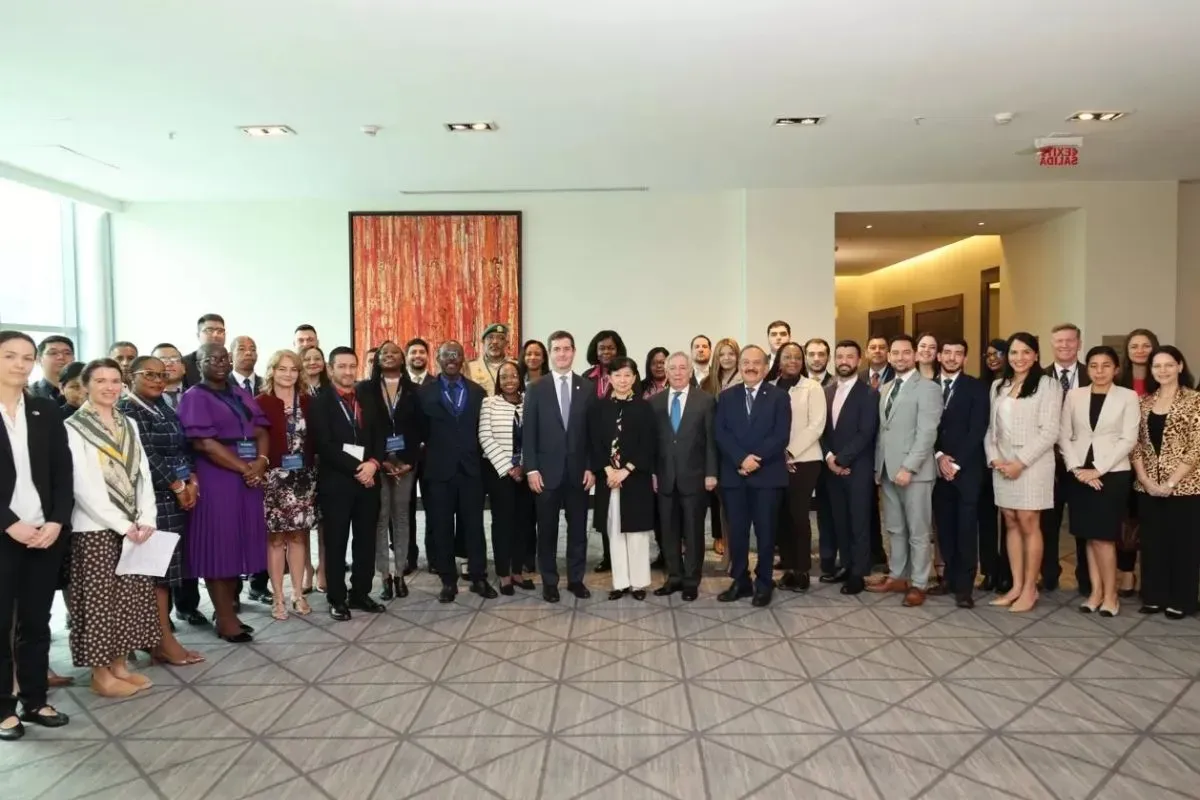
Panama is leading a major regional security initiative this week, hosting a two-day training session for Latin American and Caribbean officials. The event focuses on strengthening measures to prevent the proliferation of weapons of mass destruction. Representatives from across the region gathered in Panama City on Monday to enhance coordination and legal frameworks against this global threat.
The workshop specifically aims to build the capacity of national points of contact responsible for implementing United Nations Security Council Resolution 1540. Adopted in 2004, this binding resolution obligates all UN member states to refrain from supporting non-state actors seeking nuclear, chemical, or biological weapons.
Diplomatic Leadership on Non-Proliferation
Panamanian Vice Minister of Foreign Affairs, Carlos A. Hoyos, opened the meetings by framing them as a national priority. Panama currently holds a non-permanent seat on the UN Security Council, and advancing this resolution is a key objective. Hoyos emphasized the unique challenges and commitments of the Latin American and Caribbean region.
“Panama reaffirms today its unequivocal commitment to the non-proliferation of weapons of mass destruction and to international efforts to prevent non-state actors from accessing sensitive materials, technologies, or knowledge,” said Vice Minister Hoyos. [Translated from Spanish]
He stressed that international cooperation and technical assistance are critical for full resolution compliance. The training seeks to update national action plans, consolidate a regional contact network, and foster cooperation between public, private, and academic sectors. Interactive workshops and case study analyses fill the agenda.
Building a Cohesive Regional Front
Panama’s Ambassador to the UN, Eloy Alfaro de Alba, also addressed the gathering. He chairs the Security Council Committee overseeing Resolution 1540. Alfaro de Alba called the resolution an essential pillar of the international non-proliferation architecture but acknowledged implementation remains a long-term challenge.
He detailed the core obligations for states, which include enacting robust national legislation and establishing effective internal controls. These measures are designed to stop the spread of materials related to weapons of mass destruction and their delivery systems.
“The strategic role of national points of contact is crucial for coordinating internal efforts, communicating with the 1540 Committee, and strengthening international cooperation,” stated Ambassador Alfaro de Alba. [Translated from Spanish]
This meeting is only the second such regional training for Latin America and the Caribbean since 2016. Its occurrence in Panama highlights the country’s growing role as a hub for diplomatic and security dialogue. The nation often serves as a convener for discussions that shape the broader agenda on complex transnational issues.
International Support for Capacity Building
The event enjoys strong backing from major international organizations. Izumi Nakamitsu, the UN Under-Secretary-General for Disarmament Affairs, underscored the training’s relevance amid rising global security challenges. She reiterated her office’s commitment to providing technical support to member states.
Support also comes from the European Union. Petra Letavayová, First Secretary of the EU delegation in Panama, reaffirmed the bloc’s political and financial backing for multilateral non-proliferation work. She described Resolution 1540 as a central pillar of the global regime.
Logistical and technical support is being provided by the UN Office for Disarmament Affairs (UNODA), the Security Council’s 1540 Committee, and the Organization of American States through its Inter-American Committee against Terrorism (CICTE). The UN Regional Centre for Peace, Disarmament and Development in Latin America and the Caribbean (UNLIREC) is also a key partner.
Participants are now engaged in intensive working sessions. They are sharing best practices and discussing common obstacles. The ultimate goal is to create a more resilient regional security architecture, one that can effectively deny dangerous actors the means to acquire catastrophic weapons. Panama’s leadership in this effort marks a significant step in collective regional security.