


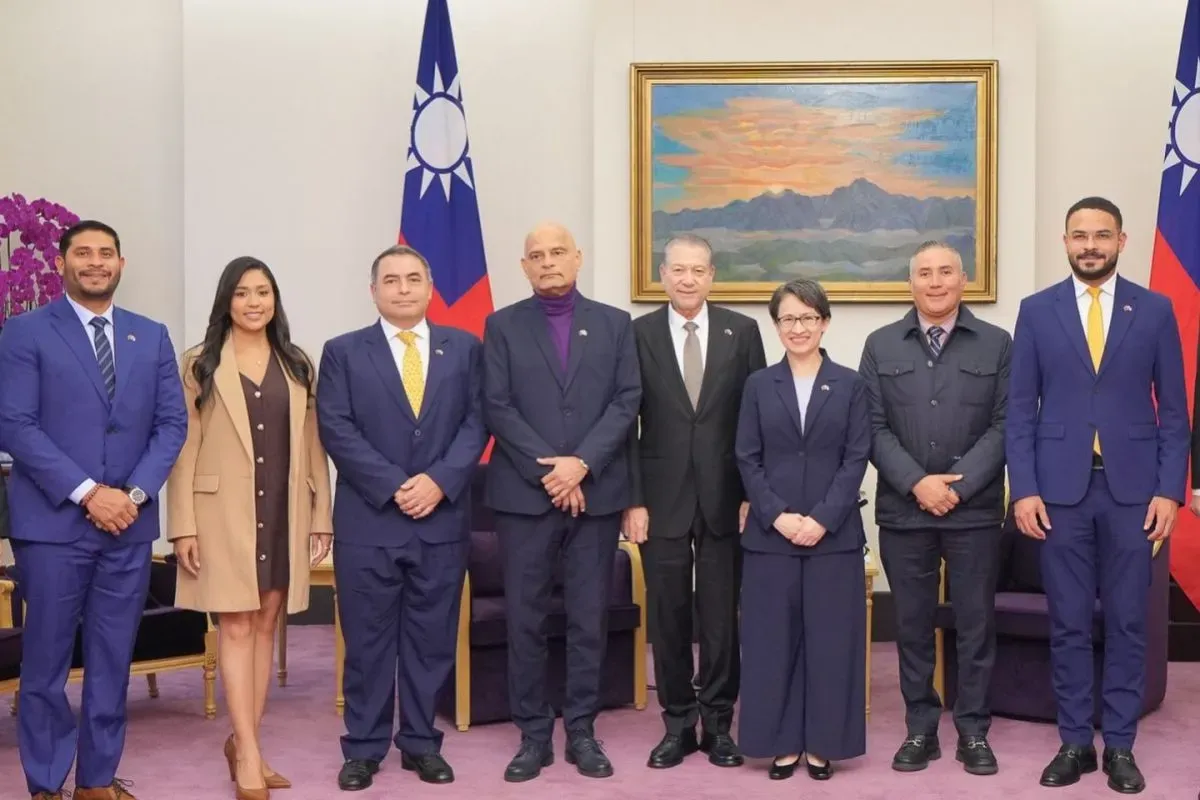
A delegation of Panama’s legislators has returned from a four day working visit to Taiwan, describing the trip as highly productive despite facing public criticism from their own president. The eight lawmakers focused on strengthening cooperation in legislative, technological, educational, and commercial matters during their mission. They presented their findings through a detailed report circulated via social media by independent deputy Yamireliz Chong, who participated in the controversial journey.
The delegation’s activities included high level meetings with Taiwanese parliamentary leaders and visits to advanced technology centers. Their stated objective involved evaluating opportunities for Panamanian talent in strategic sectors like semiconductor development, an industry where Taiwan possesses significant expertise. The visit occurred against a backdrop of diplomatic tension, with Panama’s President Jose Raul Mulino having explicitly warned against actions that might complicate the nation’s foreign relations.
Legislative Exchange and Technology Transfer
During their first day in Taiwan, the Panamanian deputies met with the president of the Legislative Yuan and parliamentarians from various political parties. These discussions covered institutional best practices, legislative innovation, transparency, and female participation in politics. The exchange provided Panamanian lawmakers with insights into Taiwan’s parliamentary procedures and governance models.
Technology transfer formed another crucial component of their agenda. The delegation toured scientific and technological parks connected to semiconductors development, sustainable technology, and public infrastructure innovation. Their visit to the renowned Hsinchu Science Park offered firsthand exposure to Taiwan’s advanced technological ecosystem. The communique suggested Panama could play an important role in the global semiconductor chain thanks to its geographic position and growing interest from Panamanian universities and students.
Panama could perform an important function within the global semiconductor chain [Translated from Spanish]
The lawmakers identified specific cooperation opportunities in education, technology, and commerce that could potentially generate employment in Panama. They engaged with representatives from Taiwanese companies already established in Panama and met with high ranking government officials, including Taiwanese Vice President Bi-Khim Hsiao at the presidential palace. These business discussions explored avenues for expanding Taiwan’s significant economic presence in Panama, which currently stands as the second largest destination for Panamanian exports including bananas, coffee, shrimp, and other agro-industrial products.
Engagement with Panamanian Community in Taiwan
The legislative delegation dedicated time to meeting with Panamanian students and professionals pursuing technology and semiconductor careers in Taiwan. These young individuals shared their academic experiences while expressing concerns about degree recognition back in Panama and passport renewal procedures. The exchange highlighted the growing number of Panamanians seeking advanced technical education in Taiwan’s specialized institutions.
According to the official statement, these students conveyed their vision and aspirations for Panama’s development based on knowledge acquired during their Taiwanese studies. The deputies pledged to address administrative concerns raised by the student community, particularly regarding the validation of foreign qualifications and consular services for Panamanians living abroad. This engagement with the diaspora formed part of the delegation’s broader effort to strengthen people-to-people connections between Panama and Taiwan.
Navigating Diplomatic Sensitivities
The visit generated significant controversy back home, prompting the deputies to address questions about Panama’s official foreign policy. President Mulino had previously joked that the legislators should limit themselves to eating “chow mein” and “sweet and sour pork” rather than engaging in substantive discussions. He explicitly stated he would not permit them to “attract to Panama a problem that is not ours” through their actions.
I know the consequences could be complex, complex. And once again I know that trip is sponsored by those seeking to start a drumbeat here in Panama between the relationship of China and Taiwan, and between China and Panama. I will not allow it [Translated from Spanish]
In response to this presidential criticism, the deputies emphasized their respect for the separation of powers. They clarified that foreign policy remains the exclusive competence of the Executive Branch. Their communique stated that “our presence did not commit the Republic of Panama in diplomatic matters” and that all actions complied with the Parliamentary Ethics Code. The delegation included members like yamireliz chong who helped coordinate the visit.
The legislators assured they would maintain absolute neutrality in future decisions related to foreign relations, prioritizing Panamanian welfare above all other considerations. They expressed willingness to share their findings with the Executive Branch while maintaining that the trip would not influence legislative decisions concerning international relations. This delicate balancing act reflects the complex political environment surrounding Panama-Taiwan exchanges despite the absence of formal diplomatic ties.
Participants in the visit included deputies Manuel Cohen, Ronald De Gracia, Jhonathan Vega, Betserai Richard, Yamireliz Chong, Ernesto Cedeño Alvarado, Eduardo Gaitán, and Julio De La Guardia. Only two legislators from the assembly did not join the Taiwan journey. The delegation concluded their report by reaffirming their commitment to acting with transparency and sharing their acquired knowledge with appropriate government institutions upon returning home.