


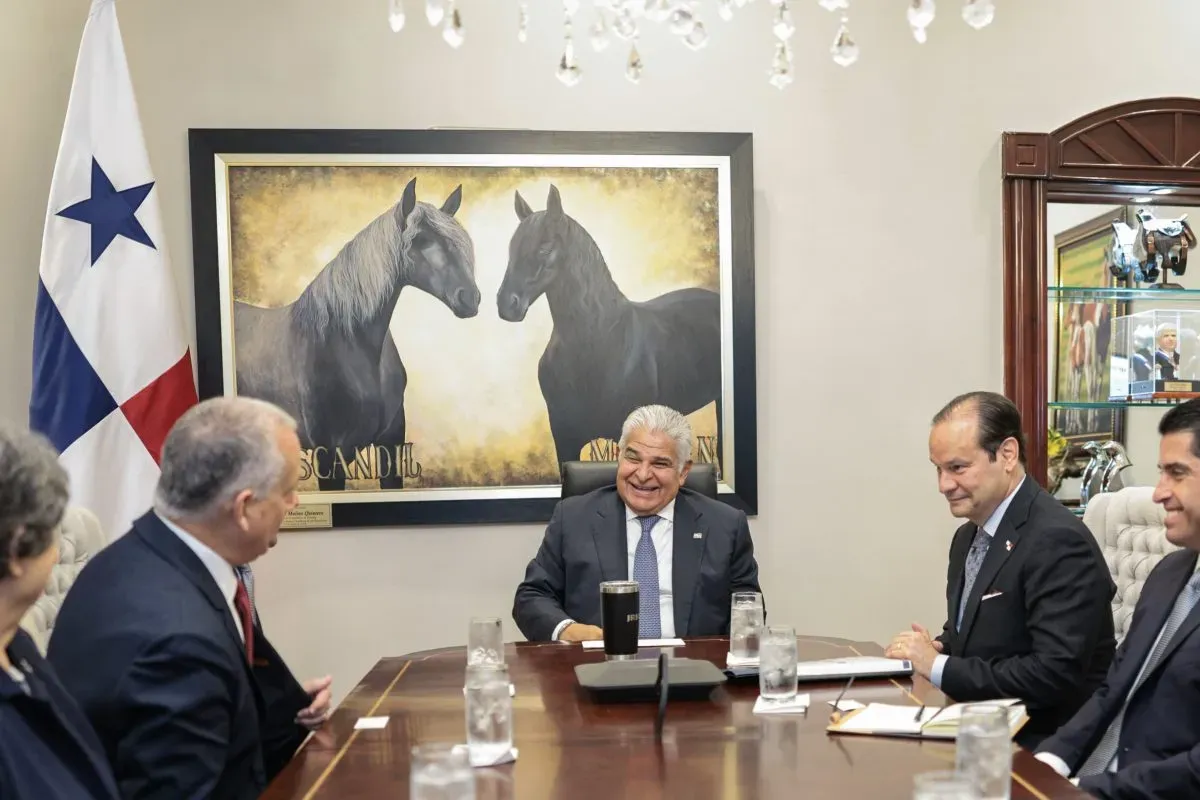
Panama’s government says it would grant temporary asylum to members of Nicolas Maduro’s administration if it helps usher in a political transition in Venezuela. Vice Foreign Minister Carlos Hoyos made the statement in a television interview this week, outlining a potential role for Panama in the regional crisis.
The offer comes amid heightened military tensions in the Caribbean and a diplomatic freeze between Panama and Caracas. Panama severed formal diplomatic ties with Venezuela following the contentious 2024 presidential election, which much of the international community deemed illegitimate.
Conditional Offer of Safe Haven
Hoyos clarified that the lack of formal relations currently prevents Panama from acting as a mediator. His government’s proposal is a conditional one, focused on supporting a specific outcome. The asylum would be extended only if it directly aids a transfer of power.
“Panama would be willing to welcome members of Maduro’s Government if that were to facilitate an eventual transition process with the legitimately elected government of Venezuela, led by Edmundo Gonzalez and Maria Corina Machado, so they can assume command,” Hoyos said. [Translated from Spanish]
He emphasized Panama’s historical role as a neutral actor in regional disputes. President Jose Raul Mulino has expressed the same willingness to assist, according to the vice minister. Consular services for strictly migratory issues were partially restored in September, but full diplomatic engagement remains suspended.
Regional Tensions and Strategic Concerns
The political climate has deteriorated further with recent U.S. military deployments in the Caribbean near Venezuela. Washington frames the move as part of counter-narcotics strategy, while Caracas calls it a direct threat aimed at regime change. This military posture compounds existing instability.
A recent alert from the Federal Aviation Administration (FAA) warned airlines to exercise extreme caution over Venezuelan and southern Caribbean airspace. The advisory cited a “potentially dangerous situation,” worsening regional air connectivity problems.
Hoyos also voiced concern about potential impacts on the Panama Canal. Any disruption to this critical global trade artery would have worldwide consequences. The waterway contributes approximately $3 billion annually to Panama’s economy. He doubted conflict would reach the canal, however, noting the United States has a paramount interest in its uninterrupted operation.
U.S. Relations Stabilizing
The interview touched on Panama’s recently repaired relationship with the United States. Bilateral ties were strained earlier this year after comments from then-U.S. President Donald Trump about “taking back” the canal. Hoyos stated that impasse is now resolved.
Discussions with Washington are progressing positively on trade, security, and migration. The Government of Panama feels more aligned with current U.S. policy. “What comes next will be beneficial for both countries,” Hoyos told the EFE news agency. [Translated from Spanish]
Panama’s offer places it in a delicate position. It seeks to support a democratic transition in Venezuela led by figures like corina machado without escalating regional conflict. The proposal remains hypothetical, contingent on a political shift within Venezuela that has not yet materialized.