


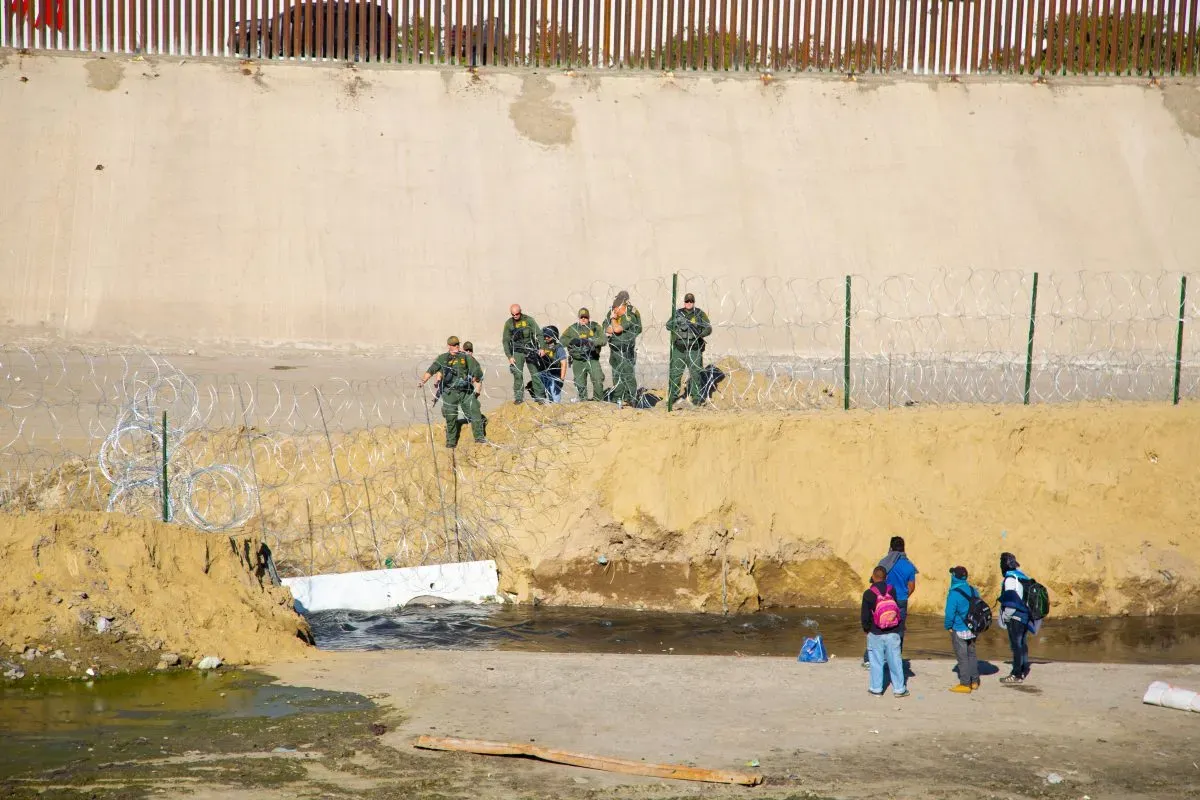
The flow of migrants through Panama’s treacherous Darién Gap has collapsed this year, falling by over 99 percent according to official figures. Panamanian authorities directly attribute this unprecedented drop to new border control measures enacted by United States President Donald Trump and reinforced security operations in neighboring countries. In a parallel shift, the nation is now witnessing a significant reverse migration of people returning south from the U.S.
Only 3,086 migrants crossed the jungle region in 2025, a staggering decline from the 302,203 people who made the journey in 2024. This represents a 99.1 percent reduction in one of the Western Hemisphere’s most active irregular migration corridors. The director of Panama’s National Migration Service of Panama, Roger Mojica, stated the trend shows no signs of reversing soon.
“The indications point to this trend continuing during the next year,” said Roger Mojica, director of the National Migration Service. [Translated from Spanish]
Mojica confirmed the subsequent closure of all migrant reception camps within the Darién province, including the major facility at Lajas Blancas. That camp had operated for years as the primary processing point for thousands of people weekly emerging from the dangerous jungle crossing.
A Reversal of Direction and Its Dangers
While northbound traffic has nearly vanished, a southbound movement has taken its place. Official data shows 22,392 migrants have transited Panama from north to south in 2025, passing through Caribbean coastal communities like Miramar in Colón Province. Their final destinations are various South American nations, primarily Colombia and Venezuela. This new dynamic is reconfiguring regional migration patterns.
This reverse journey is not without severe risk. The dangers were tragically highlighted on the morning of November 9 when a boat carrying migrants capsized off the coast of Colón. A three-year-old girl died in the incident. A joint statement from Panamanian authorities revealed the vessel was only authorized for artisanal fishing, had an expired navigation permit, and departed from an unapproved dock.
It was carrying 18 adults and three minors when it sank. Most passengers were Venezuelan nationals heading to Colombia. The incident underscores the perils of using informal maritime routes which lack minimum safety standards.
New Routes Emerge as Economic Shifts Cause Concern
Recent reports from Colombia’s Ombudsman’s Office indicate this return migration is not solely using Caribbean routes. A new Pacific Ocean path is emerging for people returning from Central America after failing to reach the United States. Irregular networks are reportedly transporting them by boat from Jaqué in Panama’s Darién Province to Buenaventura in Colombia’s Valle del Cauca department.
The dramatic decline of the migration crisis has exposed a deep structural economic problem for Indigenous communities within the Darién Gap. For years, their local economy became intensely dependent on the constant flow of travelers. Bishop Pedro Hernández Cantarero of Darién, who has worked in the region for two decades, described a relationship where homes functioned as lodging, food, and transport points.
“In some cases, they generated incomes of up to five thousand dollars weekly,” Bishop Hernández explained. “This dynamic became a dependent way of life, which ended up displacing other forms of work and production.” [Translated from Spanish]
The bishop called on Panama’s central government to direct attention and development support to these populations. The goal is to prevent the collapse of the migration-derived economic model from triggering a new social crisis. The sudden end of the migrant flow has left a void for communities that had grown reliant on it.
Panama’s role as a major transit country appears fundamentally altered, at least for now. The enforcement policies of destination countries up north have produced a rapid and stark effect on the ground. The humanitarian drama of the jungle crossing has given way to a different set of challenges, including the safety of those returning and the economic stability of the region they pass through. Officials like roger mojica continue to monitor the situation as regional migration patterns undergo this significant transformation.