


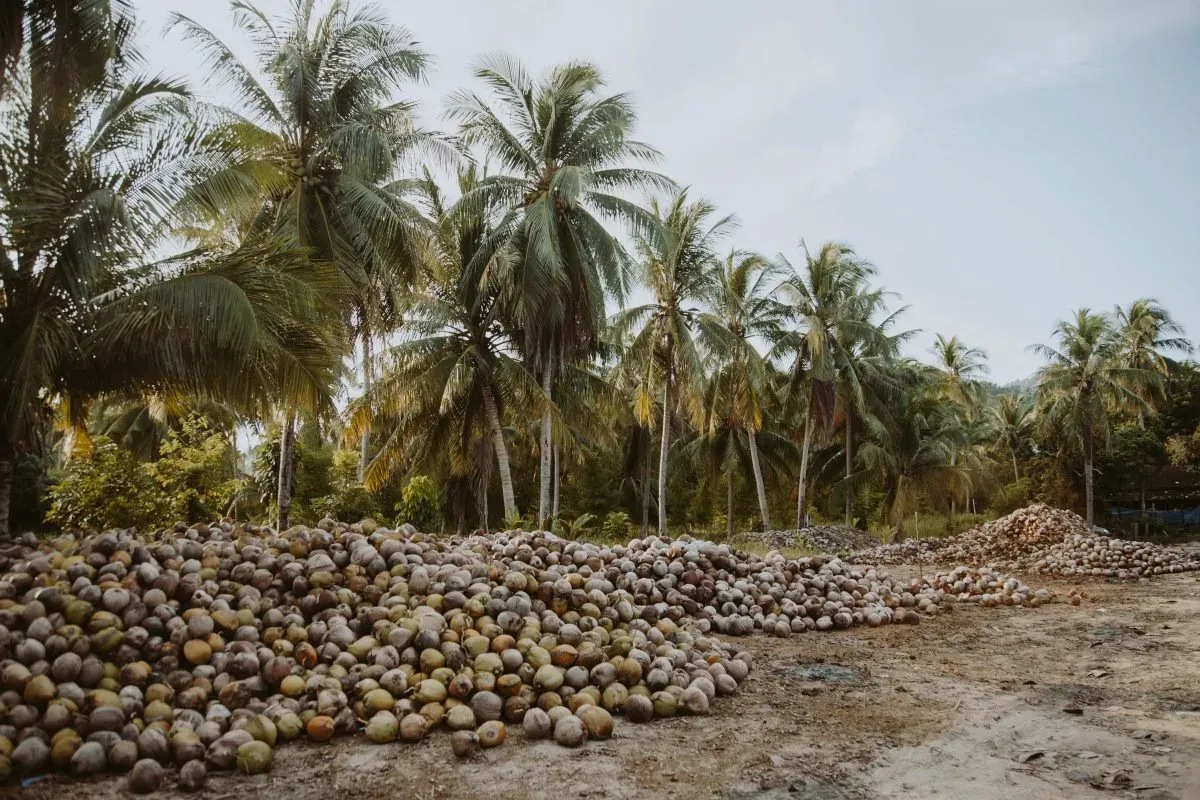
A new technological improvement program for coconut cultivation is now underway in Panama’s Costa Abajo region of Colon. The Ministry of Agricultural Development (Panama) initiated the project to boost productivity, sustainability, and resilience for this traditional local crop. Officials aim to revitalize the coconut sector by introducing modern, sustainable farming practices.
The program establishes three demonstration plots using an agroforestry model. This approach integrates rigorous seed selection, proper nursery preparation, and associated crops to diversify production and optimize land use. A specialized fertilization system incorporating boron, essential for healthy coconut palm development, is also a core component.
Carlos Salcedo, the regional director of MIDA in Colon, emphasized the program’s long-term goals.
“This is not just about planting more trees. It is a comprehensive strategy to transform a traditional sector with technology and knowledge, ensuring it becomes a more profitable and climate-resilient activity for our farmers,” [Translated from Spanish]
Early results from the initiative are already visible. Workers have planted 450 new coconut palms, accompanied by 600 plantain plants as an associated crop. This strengthens the agroforestry model promoted in the area. Furthermore, project technicians prepared 11 seedbeds and nurseries containing 1,650 seedlings.
Foundations for Future Expansion
Those seedlings form the foundation for significant expansion planned for the next agricultural cycle. They are slated to plant 11 new hectares of coconut palms. The program also implements permanent monitoring for early pest detection and control. This proactive measure seeks to reduce sanitary risks and field losses, which have historically impacted yields.
Farmers in the costa abajo region have cultivated coconut for generations, often using methods passed down through families. While traditional knowledge holds value, changing climate patterns and market demands require updated techniques. The ministry’s program directly addresses this need by providing hands-on training at the demonstration sites.
Agricultural engineer Luisa Fernandez, a project coordinator, explained the on-the-ground methodology.
“We begin with the selection and typing of mother plants, ensuring we propagate from the most robust and productive specimens. Every step, from the seedbed to final transplantation, follows a technical protocol designed for maximum survival and growth rates,” [Translated from Spanish]
The integration of plantains alongside the coconut palms offers immediate practical benefits. It provides farmers with an additional, faster-growing source of income while the coconut trees mature. This diversified approach improves food security and land economics for participating families. It represents a core principle of sustainable agro-industry development.
Building a More Resilient Agricultural Sector
Panama’s Ministry of Agricultural Development views this project as a pilot with potential for national replication. Success in Colon could lead to similar programs in other coconut-producing provinces like Darien and the Comarca Guna Yala. The overarching goal is to strengthen the entire national coconut value chain, from production to potential industrialization.
Officials anticipate the new techniques will significantly increase per-hectare yields over the coming years. Healthier trees with improved nutrition and pest management are expected to produce more and higher-quality fruit. This increase in raw material supply could eventually attract processing investments for coconut water, oil, and other derived products.
The program’s launch signals a focused governmental effort to support traditional agriculture with science and innovation. By investing in technology transfer for crops like coconut, Panama aims to enhance rural livelihoods and food sovereignty. The 1,650 seedlings in nurseries today are a tangible investment in that future.