


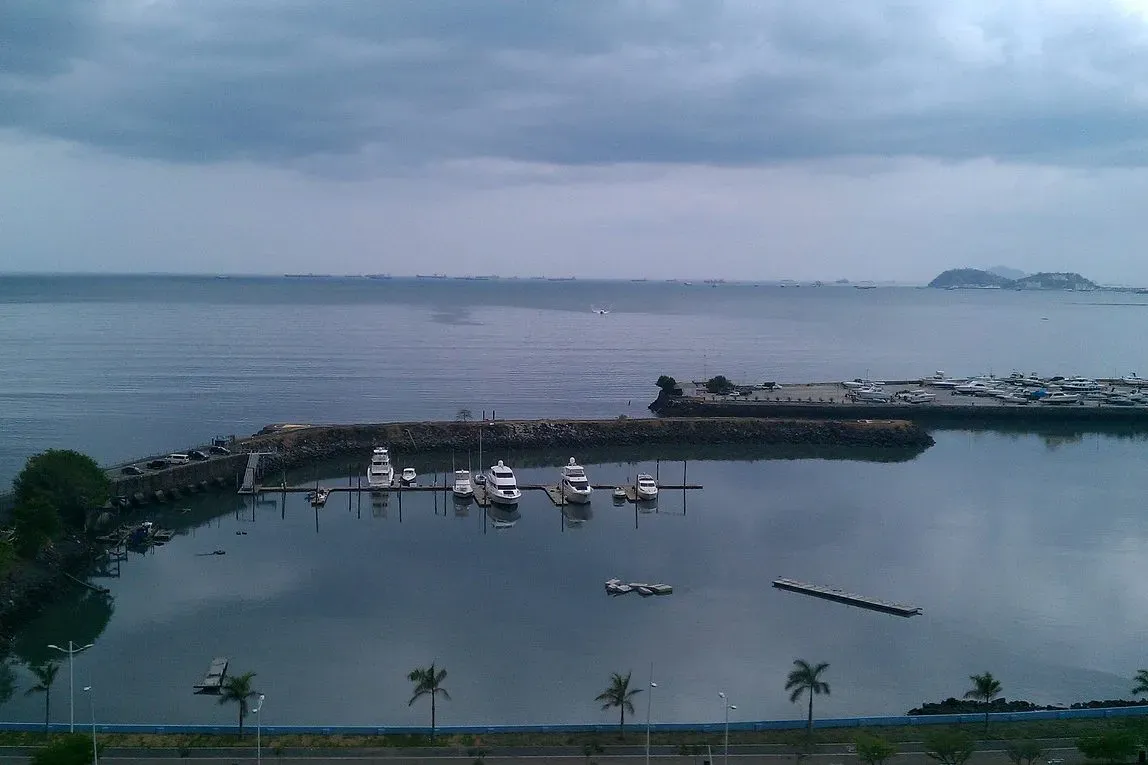
A critical seasonal ocean event that has sustained Panama’s Pacific coast for generations failed dramatically in early 2025. For the first time in at least four decades of recorded data, the annual upwelling in the Gulf of Panama did not occur, leaving fisheries depleted and coral reefs vulnerable. A new study published in the Proceedings of the National Academy of Sciences links the collapse to altered wind patterns, delivering a stark warning about climate disruption in tropical seas.
The Gulf of Panama has historically relied on a predictable cycle. From December through April, strong northerly trade winds push warm surface water aside, allowing cold, nutrient-rich water from the depths to rise. This process, known as upwelling, fertilizes the ocean surface, sparking massive blooms of phytoplankton that form the foundation of a rich marine food web.
A System Out of Breath
Satellite imagery and direct ocean measurements in 2025 told a different story. Maps that typically show high chlorophyll concentrations, indicating plankton growth, remained alarmingly blank. The water column stayed stratified and warm, with the cooling effect of upwelling barely perceptible. The seasonal cooling that usually drops surface waters to around 19 degrees Celsius (66°F) never reached past 23 degrees (73°F).
“The tropical Panamanian sea has lost its vital breath,” said biologist Aaron O’Dea of the Smithsonian Tropical Research Institute (STRI). [Translated from Spanish]
Researchers determined the cause was not a lack of cold deep water, but a failure of the atmospheric engine. The Panama wind jet, the consistent northerly winds needed to drive the upwelling, formed far less frequently. Calm periods lengthened, and the cumulative wind force never reached the threshold required to lift the nutrient-rich water to the surface.
Immediate Ecological and Economic Fallout
The consequences materialized swiftly across the ecosystem. With the nutrient supply cut off, phytoplankton populations crashed. This collapse rippled up the food chain, leading to sharp reported declines in small pelagic fish like mackerel and sardines, as well as squid. The situation poses a direct threat to local food security and the livelihoods of small-scale fishers whose annual catch depends on this seasonal bounty.
Coral reefs, which typically use the cool upwelled water as a buffer against dry season heat stress, were left unprotected. The study warns this increases the risk and severity of bleaching events, endangering Panama’s vital coral reefs. The event underscores how quickly climate impacts can destabilize marine systems that have supported coastal societies for centuries.
“For the first time, we have observed how changes in an atmospheric and oceanic circulation system exceed a threshold and lead to reduced biological production,” explained Ralf Schiebel of the Max Planck Institute for Chemistry.
A Warning and a Monitoring Gap
Scientists caution that it is premature to definitively blame global warming for a systematic weakening of this specific upwelling. The 2025 event does, however, align with broader concerns about shifting wind patterns in a hotter world. The study’s authors argue the Panama failure should be seen as an early test of resilience for tropical oceans globally.
The episode also exposed a significant gap in global climate monitoring. While major temperate upwelling zones are closely watched, many tropical systems are not. The detailed understanding of the 2025 failure was only possible because a research yacht had begun systematic surveys in the region two years prior.
“If our oceanographic mission had not taken place, no one would have known the upwelling had stopped,” noted researcher Hanno A. Slagter.
This lack of oversight is troubling. Similar breakdowns could be occurring unnoticed in other poorly monitored tropical regions, leaving fisheries managers and coastal communities without warning. The future of the Gulf of Panama’s upwelling now hinges on complex interactions between trade winds, large-scale climate patterns like El Niño, and global greenhouse gas emissions. Whether 2025 was a rare anomaly or the start of a new, unstable normal remains an urgent question for Panama’s environment and economy. The nation’s push for greater economic diversity, including a read more focused agricultural export strategy, may take on new importance if marine resources face sustained decline.