


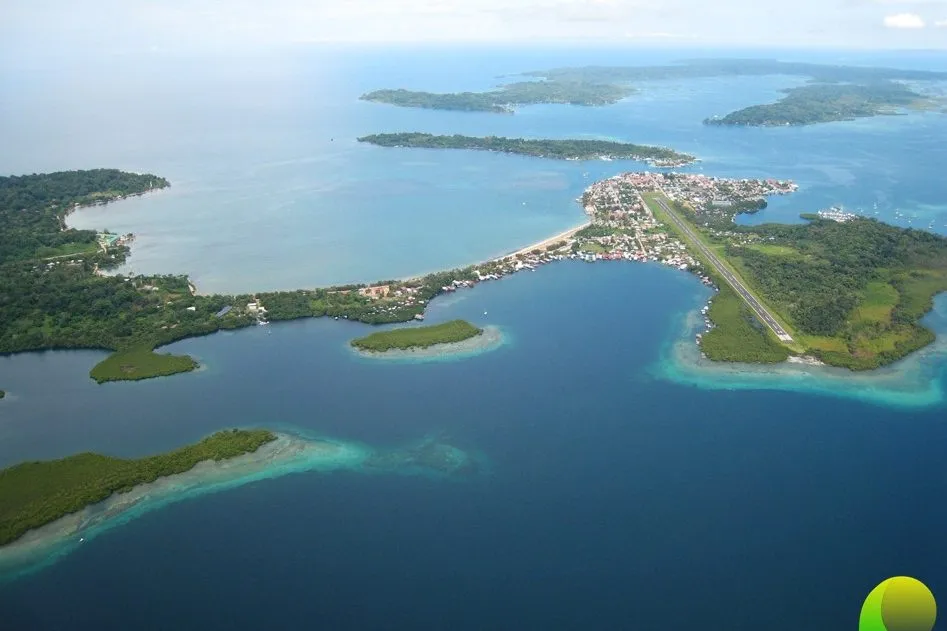
Panama’s Civil Aviation Authority is initiating a major modernization of the José Ezequiel Hall International Airport on Isla Colón in Bocas del Toro. The agency confirmed a $3 million initial investment this week, marking the start of a phased project that could exceed $25 million. This expansion aims to transform the gateway to a key tourist archipelago to meet growing demand and modern aviation standards.
The launch follows the recent finalization of a critical land acquisition. The authority purchased 20 hectares of adjacent property for approximately $6 million, securing the space needed for the comprehensive overhaul. Funds for the land buy came from the National Aeronautical Infrastructure Development Fund, known as FEDIAN.
General Director of the Civil Aviation Authority, Captain Rafael Bárcenas, outlined the administrative hurdles now cleared. He stated that the purchase process involved completing a series of legal and financial requirements mandated by the state. These steps included settling pending tax payments and obtaining clear property titles from the seller, procedures which extended the timeline before construction could begin.
“The procedure has already passed the stages required by the Executive Branch and the Cabinet Council, and the disbursement of funds is in its final phase,” Bárcenas said. [Translated from Spanish] “With the land purchase secured, the institution can move forward with executing the priority works.”
The first phase, funded through an internal reallocation of the authority’s own budget, will focus on urgent operational and safety upgrades. Work is scheduled to begin imminently. Officials identified additional funds after a thorough budget review, boosting the initial allocation from $1.2 million to nearly $3 million for these starter improvements.
Initial Upgrades Target Safety and Basic Operations
Captain Bárcenas explained that the immediate $3 million investment will address several technical deficiencies. The plan includes installing perimeter fencing to enhance security, a measure considered vital for an airport where people and animals occasionally cross the active runway. Other priority items involve modifying taxiway turn radii to accommodate larger aircraft and upgrading approach and landing lighting systems.
These lighting improvements will include Precision Approach Path Indicator (PAPI) systems. PAPIs provide pilots with a critical visual guide to maintain the correct glide slope during landing. The air authority also plans targeted work on the existing terminal building and aircraft parking apron. Bárcenas believes these actions will raise the airport to an acceptable standard for improved air connectivity, particularly for flights linking Isla Colón with Panama City’s main International Airport Tocumen.
Current passenger capacity at the island airport sits around 50 people. Preliminary designs for a future new terminal show a facility spanning approximately 4,000 square meters. It would handle between 100 and 150 passengers simultaneously during arrival and departure operations. This increased capacity is essential for managing the evident strain during peak tourist seasons in the popular Bocas del Toro province.
Long-Term Vision Includes New Terminal and Fuel Depot
The complete master plan for the airport, already in an advanced design stage, envisions a total transformation. A second and more costly phase would construct the new passenger terminal and install vital fuel storage tanks. The absence of on-site fuel depots is a major operational constraint. It forces aircraft to refuel off-island, which limits direct flight options and increases operational costs for airlines.
Bárcenas identified another key structural issue. The current taxiway platforms are too narrow, preventing larger aircraft from making wide turns. This limitation restricts the types of planes that can safely use the airport. Expanding these maneuvering areas is a key priority for improving both safety and the airport’s economic potential.
“One of the airport’s structural problems is related to the taxiways,” Bárcenas explained. [Translated from Spanish] “In their current state, aircraft face difficulties making wide turns, which prevents the operation of larger planes. The expansion of these areas is key to improving ground maneuverability and safety.”
If fully executed, the project would relocate the terminal to the opposite end of the existing runway. This strategic move would allow for the construction of a new access road. That road would let area residents reach their homes without having to cross the active landing strip, a common and hazardous occurrence under the current layout. The Civil Aviation Authority views this as a significant community benefit alongside the aviation upgrades.
Panama’s push to upgrade this regional airport aligns with broader goals to develop tourism infrastructure outside the capital. The national government has previously engaged in a plan to boost air traffic for major events. Success in Bocas del Toro could serve as a model for other regional projects. Experts in airport infrastructure note that phased approaches are often necessary for complex projects in environmentally sensitive and logistically challenging island locations.
No official completion date for the entire $25 million project has been announced. Its progression beyond the initial $3 million phase remains contingent on future budget allocations and detailed feasibility studies. For now, the focus is on the imminent safety and operational upgrades, a first concrete step in modernizing a bottleneck for one of Panama’s most famous tourist destinations.