


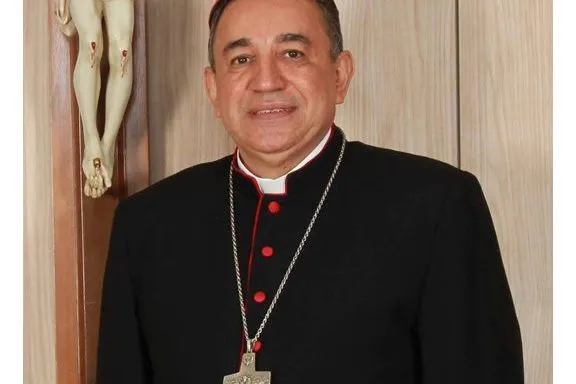
Panama’s top Catholic leader has issued a public plea for a national recommitment to human values. Archbishop José Domingo Ulloa Mendieta spoke out this week following a series of violent incidents that have shaken the country. His statement directly addresses a recent attempted Femicide and rising homicide statistics.
The call comes amid growing public concern over crime. A brutal attack in western Panama on January 24 intensified the national conversation. In that incident, a 25-year-old man stabbed his mother and attempted to set their home on fire with her inside. The victim suffered burns over 20 percent of her body and remains hospitalized in serious condition. Authorities in Chiriquí Province arrested the suspect on charges of attempted femicide.
Official Statistics Reveal a Persistent Problem
National crime data underscores the broader context of the Archbishop’s message. Panama recorded more than 593 homicides in 2025 according to official figures. This number represented a slight increase from the previous year. The National Integrated System of Criminal Statistics also documented multiple cases of femicide and gender-based violence last year.
The trend appears to be continuing into 2026. Panamanian National Police reports show 19 homicides occurred in just the first two weeks of January. This early data points to another challenging year for law enforcement and community safety.
“We have to work more on values, on respect for others, so that someone who thinks or feels differently is not seen as an enemy.” [Translated from Spanish]
Archbishop Ulloa argued that violence stems from deeper societal issues. He described it as a symptom of “voids in the hearts of people” and a widespread lack of respect. The leader of the Archdiocese of Panama warned that social polarization, often amplified online, fuels this discord. He observed that differences of opinion on digital platforms can quickly escalate into verbal and even physical aggression.
Ulloa specifically urged leaders across all sectors to take action. He called on religious, political, and economic figures to promote dialogue and social cohesion actively. “As believers, that void is filled by God, but we also have to work on education in values,” he added. [Translated from Spanish]
Education Reform Cited as a Critical Solution
The Archbishop’s statement extended beyond spiritual guidance to include concrete policy recommendations. He emphasized the urgent need for structural education reform. This reform, he suggested, must go beyond curriculum updates. It requires the active participation of students, parents, and teachers in the holistic formation of young people.
Panamanian authorities are already engaged in related discussions. Both the Ministry of Education and the National Assembly’s Education Commission are currently facilitating a dialogue process. They are meeting with civil society groups, business leaders, unions, and family associations. The goal is to analyze potential reforms to the country’s Organic Education Law.
Archbishop Domingo Ulloa has previously advocated for social accountability within his own institution. His latest intervention places the church firmly within a national debate on security and morality. The appeal connects immediate criminal acts to long-term cultural and educational challenges. It frames the response to violence as a collective responsibility extending far beyond law enforcement.
Community leaders are now assessing the impact of this high-profile intervention. Whether it will translate into new collaborative initiatives remains unclear. The ongoing legislative discussions on education may provide the first test for the Archbishop’s proposed path forward.