


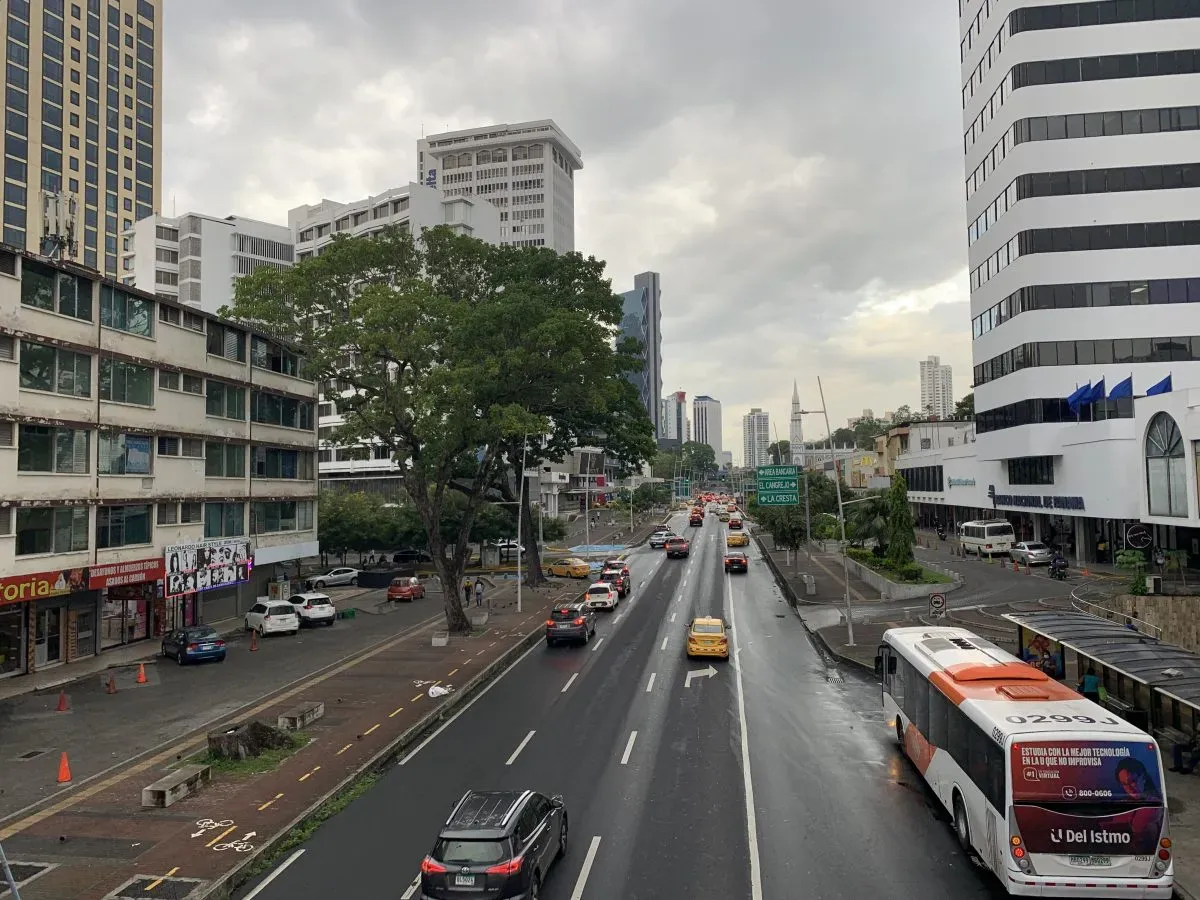
The Mayor’s Office of Panama has published bidding documents for a major urban renewal project along Avenida Nicanor de Obarrio, commonly known as Calle 50. Officials set a reference budget of $8 million for the study, design, and construction of improvements to this critical financial corridor in the heart of Panama City.
The project will focus on a 1.7-kilometer stretch between Avenida Federico Boyd and Via Brasil within the Bella Vista district. This area functions as a primary artery for the metropolitan region, supporting intense commercial, financial, and pedestrian activity. The initiative directly targets longstanding public space and mobility deficiencies that have plagued the zone for years.
Addressing Historic Deficiencies in Public Space
Official documents outline a list of problems the renovation must solve. These issues include a lack of universal accessibility, discontinuous sidewalks, insufficient tree cover, and poor lighting. The area also suffers from a notable absence of public seating and numerous obstacles that compromise pedestrian safety. The planned urban renewal seeks a comprehensive fix.
Calle 50’s history informs its current challenges. Originally developed as an exclusive residential sector between the 1930s and 1940s, it has transformed into a dense hub for corporate towers, banks, hotels, and restaurants. This evolution happened without commensurate updates to its public infrastructure. The corridor is now serviced by 13 routes of the Panama Metro Bus (MiBus) system, which recorded an average of 1,550 daily users in September 2024.
“The project aims to address the historic mobility and public space quality deficiencies in the area,” the official bidding document states. [Translated from Spanish]
Prospective bidders must account for current conditions and ensure their proposals integrate all elements needed for execution. The Mayor’s Office specifically mandates coordination with other ongoing or planned urban interventions nearby. This includes the Via Brasil renewal, the main collector construction for the Matasnillo River, and an ongoing project to bury overhead utility cables along the same road.
Creating a Green Urban Corridor
A central vision for the project is the transformation of Calle 50 into a green urban corridor. Planners want solutions that mitigate environmental issues like recurrent flooding and the urban heat island effect, both exacerbated by extensive paved surfaces. The final design must incorporate green infrastructure, strategic tree planting, climate-adapted street furniture, and resilience measures against climate change.
Some preparatory work has already been completed, allowing the main project to move forward swiftly. Partial burial of telecommunications and subscription television cables is finished. The utility company Naturgy has also built underground electrical infrastructure in the Obarrio sector. These advances clear significant logistical hurdles.
The city’s focus on this key thoroughfare is part of a broader effort to reclaim and enhance public spaces. Similar recovery projects have been undertaken in other vital neighborhoods, including recent work in the Bella Vista area. The Calle 50 project represents a larger, more integrated investment in the city’s core.
A site visit for interested bidders is scheduled for February 9, 2026, meeting at the Evolution Tower building at the intersection of Avenida Nicanor de Obarrio and Avenida Aquilino de la Guardia. This kickstarts the formal procurement process for one of the capital’s most watched urban redevelopments.