


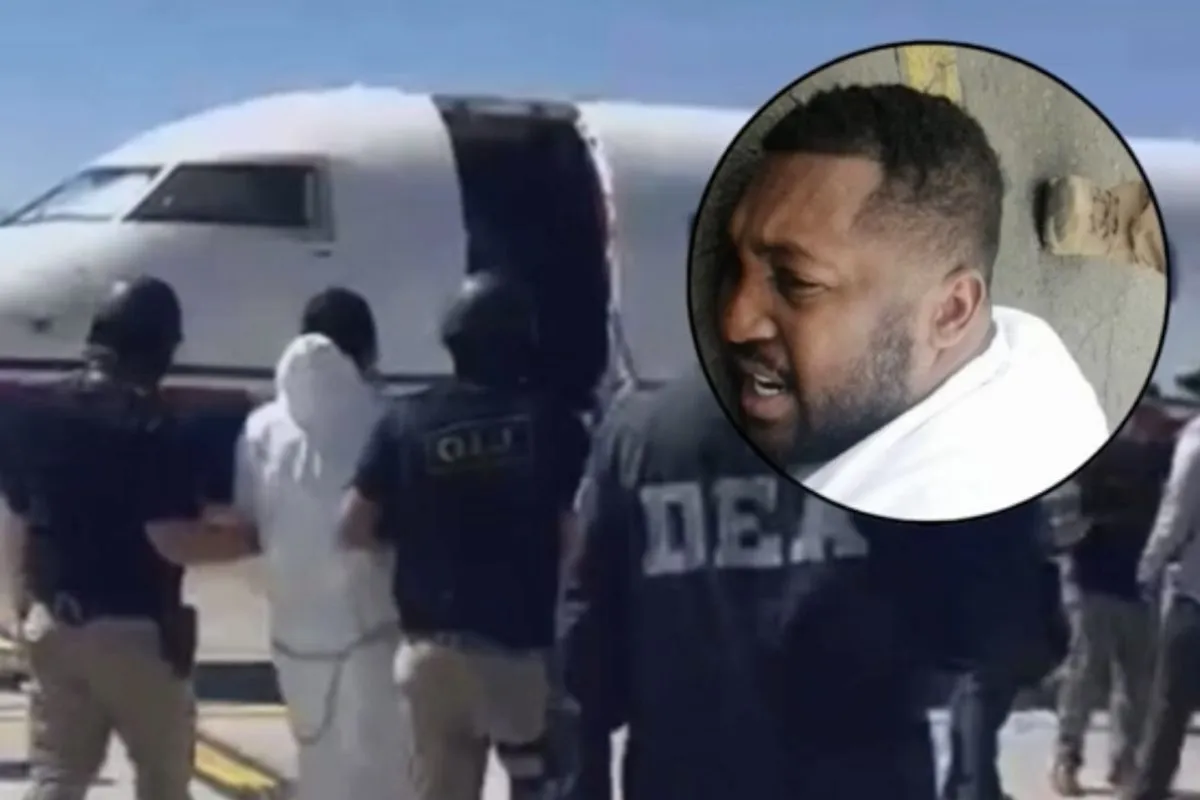
A United States federal court in Los Angeles has sentenced Jorge Ruben Camargo Clarke, alias Chollo Chorillo, the leader of the Panama-based Baghdad gang, for his role in a conspiracy to distribute multi-ton quantities of cocaine destined for the United States. The conviction followed a high-profile trial that dismantled the operational structure of one of Panama’s most dangerous criminal networks, according to a statement from the U.S. Embassy in Panama.
Camargo Clarke, widely known by his alias “Cholo Chorrillo,” was found guilty on all counts of international drug trafficking. Authorities captured him in Costa Rica in 2022 as he attempted to evade justice. After a lengthy legal process, he was extradited to the United States in March 2023 to face federal charges.
“Camargo contributed directly to the flow of illicit narcotics into American communities. This conviction represents a significant blow to a criminal network responsible for extreme violence, instability, and large-scale drug trafficking.” [Translated from Spanish]
The U.S. Embassy statement emphasized the collaborative nature of the investigation. The case involved coordinated work between the Drug Enforcement Administration (DEA) and Panamanian police and judicial authorities. Their forensic contributions and expert testimony proved decisive in establishing Camargo Clarke’s criminal liability.
Transnational Network Exposed at Trial
Prosecutors presented compelling evidence during the trial. They directly linked the Baghdad gang leader to logistical operations that facilitated the movement of drugs from Panamanian territory to distribution points within the United States. The evidence showed the gang operated not just as a local distribution structure in marginalized neighborhoods of Panama City but also as a strategic node for international drug trafficking.
This successful extradition and prosecution marks a milestone in the fight against organized crime in Central America. It resulted in the U.S. conviction of a criminal leader whose activities generated extreme violence and destabilization in Panamanian communities. The embassy extended its sincere gratitude to Panamanian institutions for their commitment to the rule of law.
The sentence sends a clear message about cross-border justice. Leaders of violent criminal organizations involved in large-scale drug trafficking will be held accountable regardless of where they try to hide. The United States remains steadfast in its cooperation with Panama to combat organized crime and strengthen security for both nations.
This case highlights the ongoing challenge of transnational crime in the region. It also demonstrates the effectiveness of international judicial cooperation. The conviction disrupts a major supply chain and deals a strategic blow to a gang that had expanded its influence far beyond local criminal activity.