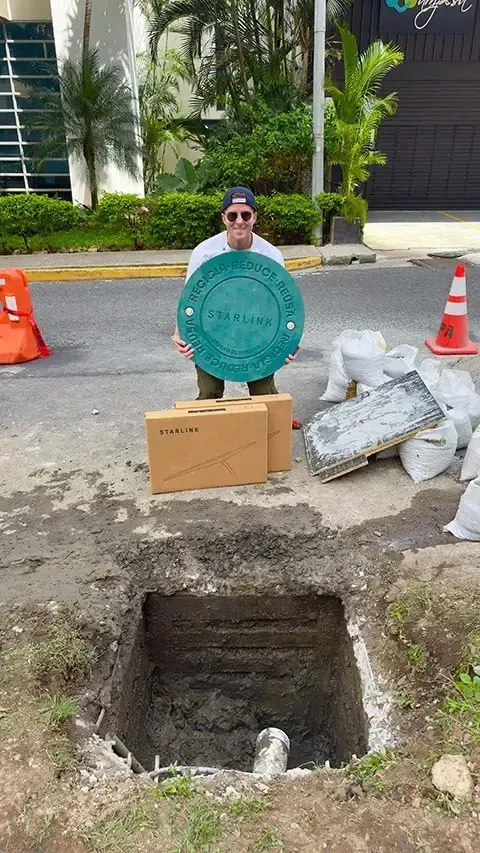
Walking through Panama City‘s streets, residents might not notice a small but significant change beneath their feet. Mayor Mayer Mizrachi recently announced the installation of the 200th recycled manhole cover in the capital district. It’s a quiet revolution in urban infrastructure that combines environmental goals with practical city management.
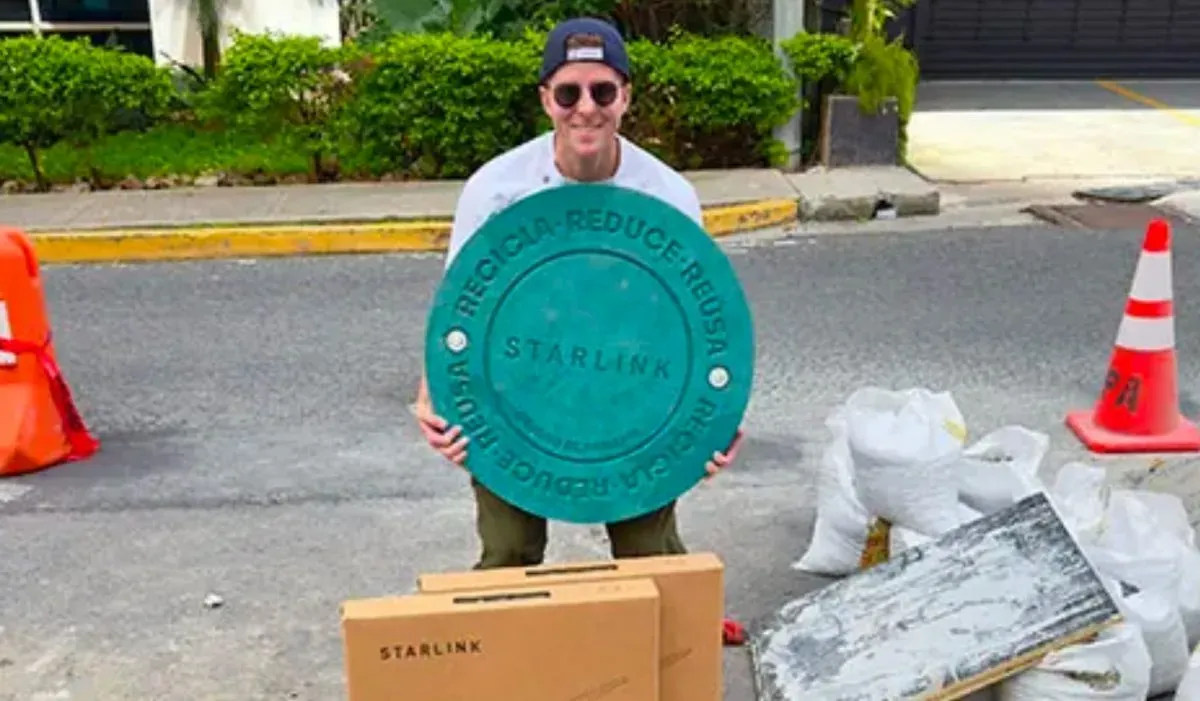
The 200th cover was adopted by Starlink, the satellite internet company known for its global connectivity ambitions. This marks a growing trend where tech firms invest in local Starlink urban sustainability projects as part of their corporate responsibility programs. The initiative transforms discarded plastic into durable street furniture that can withstand heavy traffic and tropical weather.
Each cover represents plastic that would otherwise end up in landfills or waterways. The program operates through public-private partnerships that cost the municipality nothing. Companies sponsor individual covers, funding their production and installation while getting their names associated with environmental stewardship.
Campaign Promise Becomes Concrete Reality
Mizrachi ran on a platform promising to modernize the city’s public space infrastructure. The manhole cover project delivers on that pledge while addressing multiple urban challenges at once. Traditional iron covers get stolen and sold for scrap, creating dangerous holes in sidewalks and streets. Recycled plastic covers have no resale value, making them theft-proof.
The material also lasts longer than metal in Panama’s humid, salty coastal environment. Plastic doesn’t rust or corrode. It flexes slightly under pressure rather than cracking. City engineers have noted fewer replacement needs compared to traditional covers.
This approach aligns with broader regional trends. The Economic Commission for Latin America and the Caribbean has promoted recycled plastic infrastructure as a solution for developing nations facing waste management crises. Panama City joins a growing list of municipalities turning environmental problems into infrastructure solutions.

Private Sector Steps Up
The partnership model allows companies to contribute without writing checks to the government. Instead, they directly fund production of covers that bear their logos. Starlink’s participation signals how tech companies view urban sustainability as part of their operational footprint.
Other international firms have adopted covers too. The program has grown steadily since its launch, with each new installation adding to the network of recycled materials across the capital. City officials track each cover’s location and condition, building data on long-term performance.
Local environmental groups have praised the initiative for creating visible proof that recycling works. When residents see covers made from what was once trash, it reinforces the value of separating waste at home. The project bridges the gap between abstract environmental goals and tangible urban improvements.
Scaling Up for the Future
The 200th cover represents progress but city planners have much larger ambitions. Panama City generates thousands of tons of plastic waste annually. Scaling this program could absorb significant portions of that waste stream while upgrading infrastructure across all districts.
‘The project represents an important milestone for sustainable urban development in Panama’ [Translated from Spanish]
Mizrachi’s administration has signaled interest in expanding the program to include other recycled materials. Park benches, bus stops, and signage could all follow the same model. The key is maintaining private sector interest and ensuring consistent quality standards.
For now, the 200 covers scattered across the capital serve as quiet ambassadors for a different way of building cities. They prove that sustainability doesn’t require dramatic changes or massive budgets. Sometimes it starts with what’s under our feet.