



PANAMA CITY , Public Security Minister Frank Ábrego pushed back Wednesday against criticism over the National Police presence inside Panama’s prisons, arguing that the force has filled a security vacuum created by an incomplete 18-year-old law that was meant to give the penitentiary system control over custodial duties.
The minister’s remarks came one day after former penitentiary system director Chanan Singh questioned the continued deployment of police officers as prison guards, a role Ábrego said the law never fully transferred to civilian custodians.
“Descubrió el agua tibia”, fue la respuesta del ministro de Seguridad Frank Ábrego, al exdirector del Sistema Penitenciario Chanan Singh, quien denunció el control de la Policía en las cárceles. https://t.co/6ZtnSh5hKJ
— Destino Panamá (@destinopanama_) November 12, 2026
Penitentiary System Control Remains Incomplete
Ábrego said the legal framework governing penitentiary system control has never been fully implemented since it was enacted nearly two decades ago. “Eighteen years ago the National Police should have left the prisons according to law,” Ábrego said. “The law has not been completed as such, and instead of the penitentiary system having greater control over the prisons, the National Police is the one that has had to enter and assume the role of police custodians in the great majority of Panamanian prisons.”
The minister defended the work of uniformed officers inside detention facilities and dismissed Singh’s allegations of irregularities as nothing new. “Did he discover warm water?” Ábrego said. “We, since before he was penitentiary director, every day, every month, every week carry out search operations in the different cellblocks of all the prisons in Panama.”
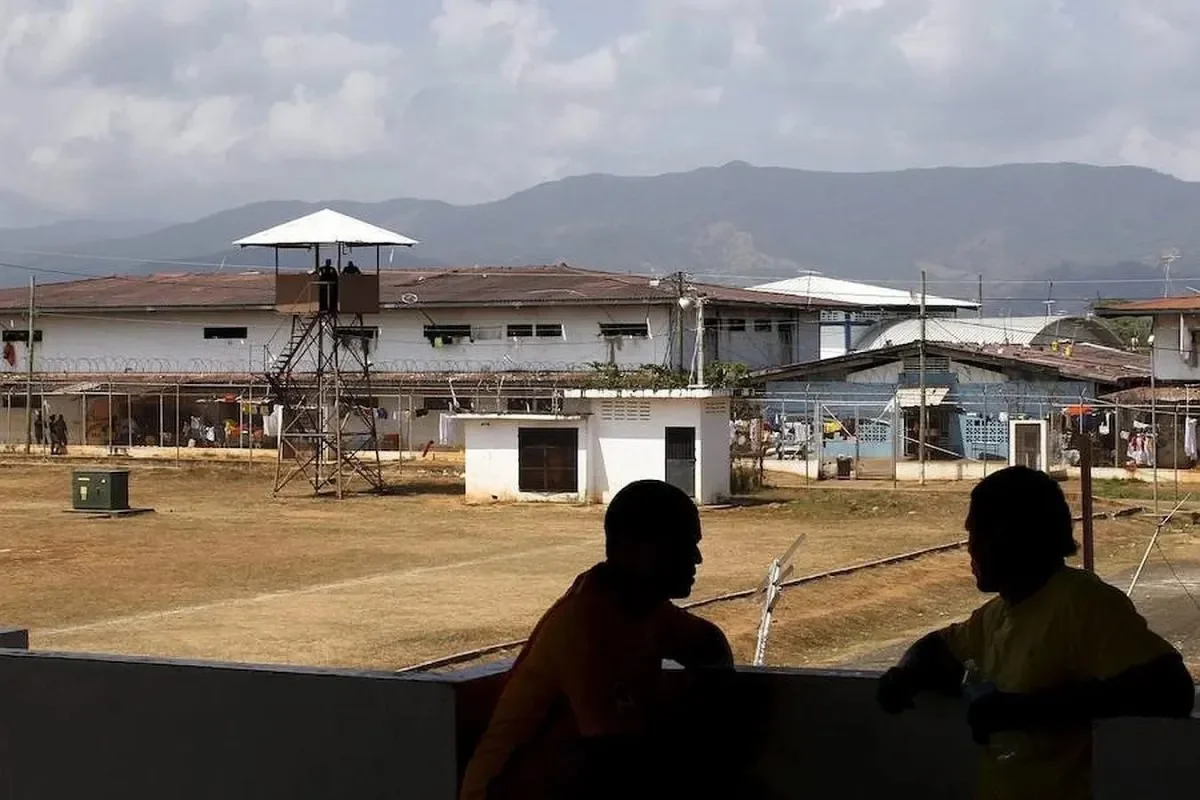
Corruption Inside Prison Walls Acknowledged
Ábrego did concede that some security personnel have been compromised by criminal networks operating from within the prison system. He acknowledged that police officers, prison custodians, and penitentiary system officials have all been found collaborating with detainees in illegal activities.
“Are there police officers who collaborate with this? Yes. Are there penitentiary custodians who do it? Of course there are. Are there officials of the penitentiary system who also collaborate with these detainees? Of course there are. It is a constant fight,” Ábrego stated.

Prisoner Transfers Require Director Approval
On the matter of inmate transfers, which have been a point of contention in recent weeks, Ábrego maintained that no prisoner can be moved without proper authorization. “Without the signature of the directors as such, no transfer can be carried out,” he said.
The controversy over police involvement in prison operations has reignited debate about Panama’s long-delayed transition to a civilian-run corrections model. Security analysts note that the continued reliance on National Police personnel inside prisons reflects deeper structural problems in the country’s penitentiary administration, including budget shortfalls and chronic understaffing of civilian custodial ranks.
Singh’s departure from the penitentiary system director post and his subsequent public comments have drawn attention to persistent governance challenges within Panama’s prison network, where overcrowding and organized crime influence remain pressing concerns for the new administration.