


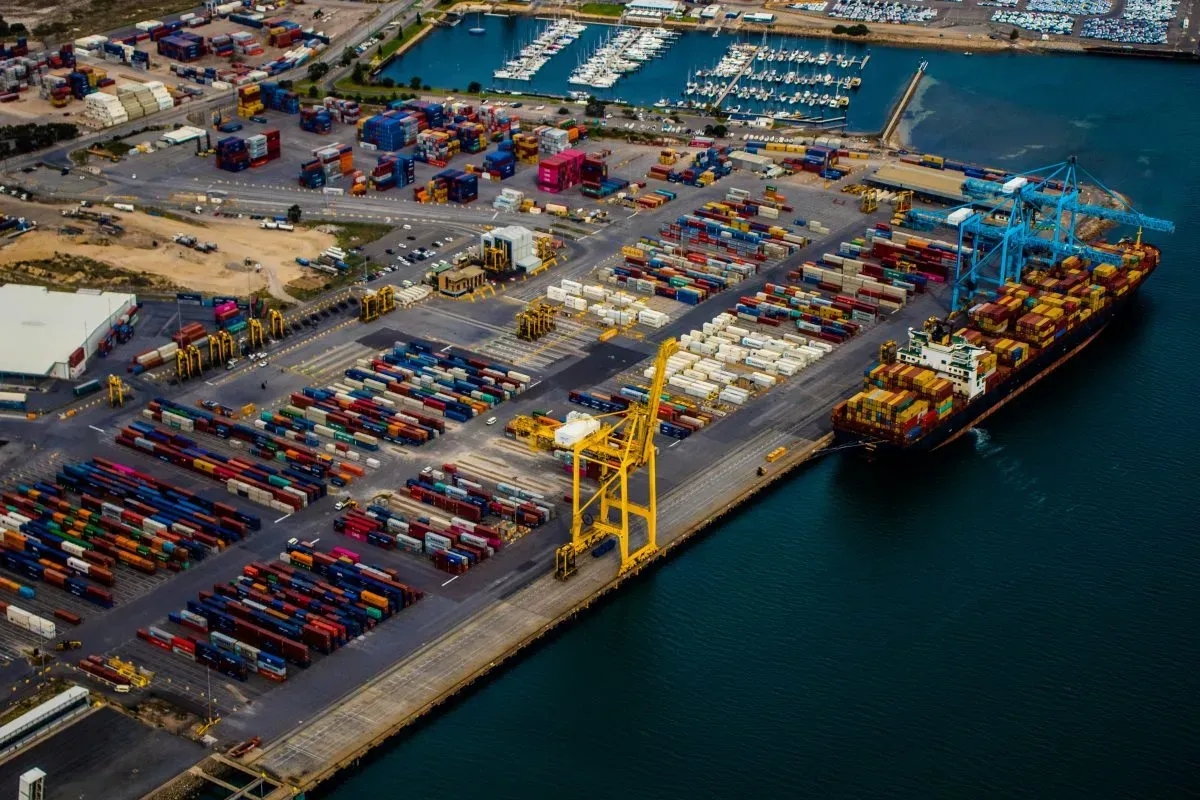
The Panama Maritime Chamber has publicly endorsed the proposed Puerto Barú port project during a session of the Chiriquí Provincial Council. The business guild framed the initiative as a strategic national work essential for improving connectivity and generating jobs in western Panama. This declaration adds significant institutional weight to the project, which aims to transform the area around David into a major Pacific logistics hub.
René Gómez, president of the maritime chamber, argued that Puerto Barú aligns with a broader national vision for infrastructure modernization. He cited other major investments like a gas pipeline, the Río Indio water project, and port developments in Telfers and Corozal as evidence of coordinated planning. The goal is to strengthen Panama’s position as a regional maritime center while decentralizing port activity away from the capital.
“Puerto Barú not only expands the country’s port capacity, it becomes a strategic solution for logistical resilience, regional competitiveness, and the continuity of national trade,” said Gómez. [Translated from Spanish]
The chamber emphasized that multi-purpose ports are a critical link for effective connectivity between Panama City and the provinces. Officials stated these facilities would enable two-way cargo flow and strengthen operational resilience against disruptions on the Pan-American Highway. This would create a more decentralized and robust national port network.
Local Support and a Call for Skilled Workers
National government support was also reaffirmed at the meeting. Commerce and Industries Minister Julio Moltó highlighted the project’s potential to attract investment and consolidate the Chiriquí Province as a Pacific logistics pole. Furthermore, representatives from 105 communal boards and all 14 mayors in Chiriquí signed an institutional note to the Supreme Court. They are seeking a timely legal ruling to allow construction of Puerto Barú to advance as a work of national interest.
The Panama Maritime Chamber stressed that workforce training must begin immediately for the project to achieve real social impact. Gómez urged academic institutions to start preparing local personnel at least three years before port development arrives. He warned against dependence on bringing in workers from other provinces or abroad.
“We always encourage academies, training centers, and universities to prepare personnel from these communities at least three years before port development arrives. These ports can take two or three years to build, but the human resource must be ready beforehand. Our mission, as a non-profit guild, is to support education in the maritime, logistical, and port sector,” Gómez stated. [Translated from Spanish]
This focus on local capacity building underscores a shift in how major projects are discussed. The chamber insists Puerto Barú must be seen as part of a modern port ecosystem enabling sustainable provincial development. This includes dignified jobs, technical training, and lasting economic dynamism for the region.
Sustainability and Integral Development
Gómez also placed a strong emphasis on environmental stewardship accompanying logistical development. He called for all such investments to comply with local and international environmental protection standards. The vision promoted is one of integral sustainability, balancing economic, social, and environmental factors.
“We are talking about integral sustainability: economic, social, and environmental,” Gómez said. [Translated from Spanish] “We urge the promoters of this and other port projects to comply with the principles governing responsible financing and operation, endorsed by national and international entities.” This statement reflects growing global pressure on infrastructure projects to meet higher ecological benchmarks.
The chamber’s active participation in provincial planning forums reinforces its role as a key technical actor in national port development. Its endorsement seeks to build a coalition between the state, local governments, and the private sector. The ultimate objective is a more connected, competitive, and equitable country, with projects like Puerto Barú serving as a test case for this collaborative model. The project’s progress now partially hinges on the awaited Supreme Court pronouncement, which local leaders hope will clear the path forward.