


Panama’s Environment Minister Juan Carlos Navarro issued a stark warning about a growing continental threat this week. He stated that illegal mining and deforestation, now largely funded by drug trafficking profits, pose a severe risk to the nation’s water and economic security. Navarro made these comments during his opening address at the 2026 International Economic Forum in Panama City on January 28, organized by the Development Bank of Latin America and the Caribbean.
The minister framed environmental protection as an absolute prerequisite for genuine economic progress. He argued that the two concepts cannot be separated, dismissing the idea of development without environmental safeguards as a dangerous fantasy. His remarks placed Panama’s domestic challenges within a broader regional crisis of organized crime exploiting natural resources.
“There is no economic development without the environment. That is a fantasy,” Navarro told La Prensa. [Translated from Spanish]
A Continental Plague Fueled by Narcotics
Navarro described the convergence of illegal mining and deforestation as a “continental plague.” He explained that sophisticated criminal structures are using these environmentally destructive activities to launder money from the drug trade. This creates a dual threat, damaging ecosystems while strengthening transnational criminal networks. The problem, he stressed, extends far beyond Panama’s borders, affecting the entire Latin American region.
“Illegal mining and deforestation today are financed by drug trafficking. This is a problem that does not only affect Panama, but all of Latin America,” the minister asserted. [Translated from Spanish]
In Panama, authorities have detected these illegal operations in sensitive areas. These include the vital Canal watershed, Chagres National Park, the Donoso district, and the remote Darién Gap region. Navarro warned that the groups involved are often armed and employ highly damaging methods. They use heavy machinery and toxic chemicals like Cyanide, which leads to the destruction of rivers and forests.
The national response has escalated accordingly. The minister confirmed that the state is now deploying specialized units from the National Police and the National Border Service (Senafront) to confront these armed incursions. This militarized response underscores the serious security dimension of what was once viewed primarily as an environmental violation.
Water Security and the Canal at Risk
Navarro provided a specific and alarming detail about the spread of contamination. Traces of cyanide have already been detected in water bodies within the Panama Canal watershed itself. He was quick to note that current levels remain within permissible limits, calling the situation a warning signal rather than an immediate crisis. The potential consequences of inaction, however, are monumental.
“We are not at critical levels, but this is an alert signal that we cannot ignore,” Navarro stated. [Translated from Spanish]
The minister connected the contamination directly to national stability. The affected watershed is not just the source of water for the canal’s locks. It also provides drinking water for over two million people in the metropolitan region and supports the country’s hydroelectric generation. Compromising this resource, as highlighted by former presidential candidate Juan Carlos Navarro in past discussions on environmental threats, puts Panama’s core infrastructure in jeopardy.
Navarro reminded the forum of a recent, costly precedent. A severe drought three years ago, linked to climate change, cost the Panama Canal nearly one billion dollars in lost revenue. That event underscored the waterway’s vulnerability to shifts in rainfall and watershed health. It proved that environmental damage translates directly into economic loss.
Addressing a Legacy of Irresponsible Mining
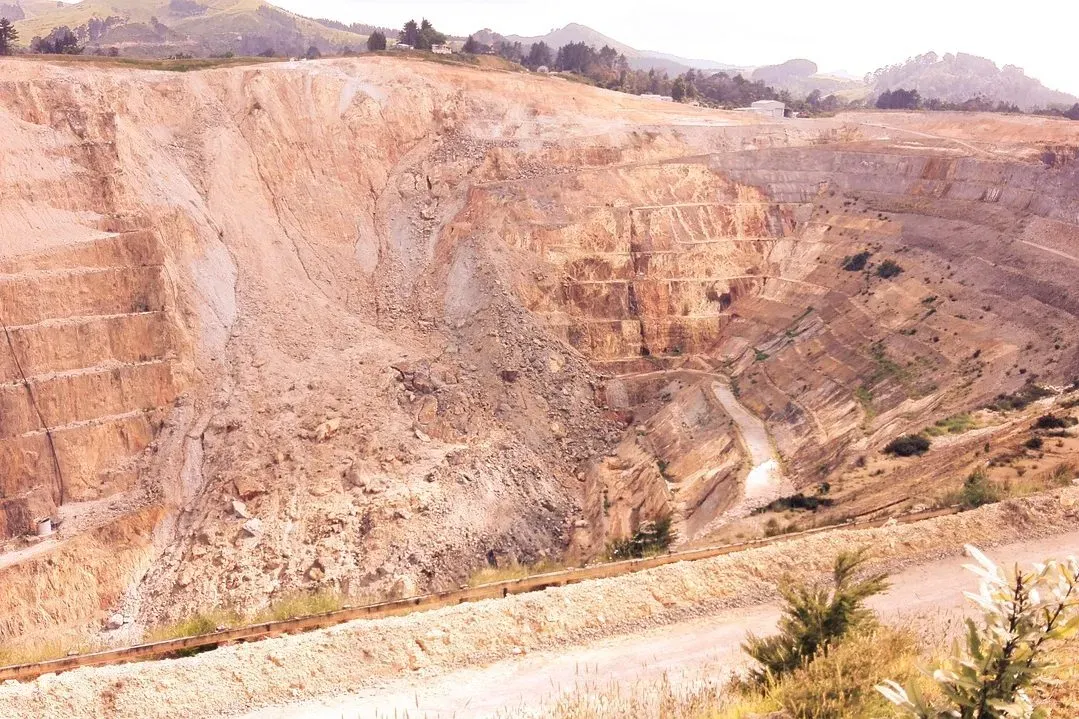
The minister also addressed the contentious issue of a large copper mine in Donoso. He characterized the situation as a complex inherited problem from previous administrations. Navarro pointed to irresponsible past decisions, including concessions granted without proper environmental management plans. The site now presents a massive environmental, economic, and social challenge for the government.
A comprehensive audit of the mine is currently underway, with final results expected in April. Navarro promised that any future decisions regarding the site will be based on technical criteria and made public. He emphasized his primary duty is to the environment, not to the mining industry, a stance consistent with his advocacy for sustainable economic development.
“I am the Minister of Environment, not of mining. My responsibility is to protect the country’s natural resources,” Navarro emphasized. [Translated from Spanish]
Some immediate risk reduction has already been achieved. Authorities have overseen the export of stockpiled copper concentrate and ammonium nitrate from the site. The minister, however, tempered expectations for a quick fix. He explained that the orderly closure of a major mine is a process that can take decades, requiring strict controls and proper infrastructure to manage extracted materials.
A Sustainable Path Forward for Panama
Despite the challenges, Navarro presented a vision for Panama to become a regional model for sustainable development. He pointed to the Panama Canal itself as a global example of efficiency and stewardship that the country can emulate in other sectors. Key to this future is a critical infrastructure project, the expansion of the canal’s hydrological watershed.
This project aims to incorporate the western basin of the Indio River. Navarro argued this work should have been completed at least a decade ago to bolster water security. He insisted it must now move forward with strict environmental safeguards and the active participation of local communities, not through imposed decisions. The goal is to guarantee the potable water supply and shield the maritime route from climate change effects.
The minister’s overall message was one of urgent, principled action. He acknowledged the scale of problems like Illegal mining fueled by narcotics, but affirmed his commitment to confronting them. Navarro concluded by stating his readiness to defend environmental priorities within the government cabinet, ensuring they remain central to Panama’s policy decisions. His appearance at the economic forum strategically positioned environmental security as the non-negotiable foundation for the country’s long-term prosperity.